A quiet revolution in the biology of ageing
For most of human history, women didn’t live long enough to experience menopause, let alone the decades beyond it. Today, women spend almost half their lives in a post-reproductive state, yet science and society continue to overlook its impact on female longevity.
Longevity discourse revolves around peptides, fasting, and cellular reprogramming.
But for women, the most powerful form of reprogramming happens within. It begins when hormones, the molecular conductors of our physiology, start to fluctuate.
Perimenopause is the moment when biology opens a door: a decade-long window in which the female body rewrites its genetic instructions for the next stage of life.
It is not a decline. It is design.
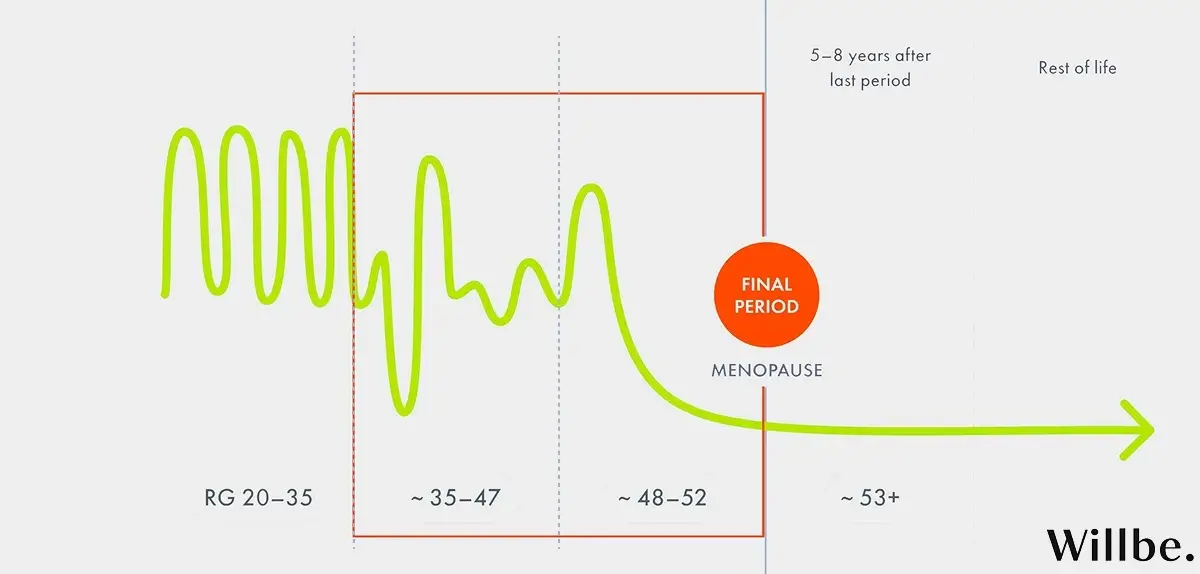
Ageing and hormonal decline go hand in hand.
Hormones: The missing language of longevity
Every conversation about ageing begins and ends with genes. Yet the most potent regulators of genetic activity are not found in sequencing reports but in the rhythmic messengers that carry life forward – our hormones.
Estrogen, progesterone, and testosterone govern far more than reproduction.
They direct (1) mitochondrial energy, (2) modulate inflammation, (3) influence collagen synthesis, (4) sharpen cognition, and (5) stabilize mood. When they decline, the orchestra falls out of rhythm.
What we call “ageing” is often this loss of harmony, the dimming of signals that once kept thousands of genes performing in synchrony.
To understand female longevity, we must therefore speak two languages simultaneously: genetics and hormones. Only together do they describe how women truly age.
Perimenopause as reprogramming, not breakdown
During perimenopause, hormone levels don’t simply fall, they fluctuate wildly, sending new and sometimes confusing instructions to every tissue in the body.
Skin thins, sleep fragments, emotions sharpen, focus blurs.
These changes aren’t random; they are the visible face of an invisible recalibration.
Hormones act as epigenetic switches, turning genes on or off according to new environmental cues.
In this sense, perimenopause is not a malfunction, but a remodeling phase, the body re-engineering itself for longevity in a world our ancestors never reached.

Recognizing this shifts the narrative from crisis to creation. The same turbulence that brings discomfort also brings plasticity.
It is a window when lifestyle, nutrition, and mindset can exert outsized influence on future healthspan.
From symptom management to system mastery
Culturally, we have medicalised perimenopause into a list of symptoms to suppress.
Yet treating hot flashes while ignoring underlying biology is like repainting a collapsing wall.
The real question is not what is wrong? But what is changing?
When estrogen and progesterone oscillate, they alter metabolism, immune signaling, and gene expression.
Some women adapt easily; others struggle.
The difference lies partly in inherited variants that determine how efficiently hormones are produced, transported, and cleared what could be called one’s hormonal archetype.



Understanding that fingerprint transforms perimenopause from a guessing game into a science of precision. It reveals why the same therapy, supplement, or lifestyle change can restore one woman and fail another.

Personalized approach of Happy Mammoth – product recommendations based on your quiz results.
Shaping a new paradigm
Willbe. is shaping a new paradigm, one that sits at the intersection of hormones and genetics, designed for the 51% of the world’s population.

Yulia Mintchin, the founder of Willbe.
Finally, science allows us to understand perimenopause longevity not as a mysterious decline, but as a predictable, genetically-driven biological transition.
It enables us to shift from symptom management to prevention-first precision medicine:
- How are you genetically wired to respond to ageing?
- Where does your risk lie for age-associated diseases?
- Which symptoms of aging are genetic, and which are lifestyle-driven?
These are no longer abstract questions.
They’re measurable, actionable, and deeply personal – the foundation of a new era in female longevity.
The science behind the shift
For decades, perimenopause was reduced to a checklist of symptoms: hot flashes, weight gain, brain fog. But modern science is reframing it as something much more profound – an epigenetic reprogramming event that determines how fast or slow we age.
At Willbe, this is described through two complementary frameworks:
- Hormogenetics™ – how your genes influence your hormones: how efficiently you produce, metabolize, and clear them.
- Hormogenomics™ – how your hormones, in turn, regulate your genes: the molecular signals that decide which biological systems stay “on” or “off.”
Together, they explain why two women with the same hormone levels can live entirely different realities, one thriving, one struggling.
Hormones are the master conductors of genetic expression.
When they decline, the music of the body changes.
And this is where longevity science meets innovation, because once we understand how a woman is genetically wired to age, we can begin to design health, performance, and beauty that work with biology rather than against it.
The new frontier for wellness and beauty
For beauty, nutrition, and performance brands, understanding your client’s biology is no longer a luxury, it’s the foundation of modern strategy.
“Your unique biology should be the single overriding factor in the way you are treated, nourished and supported.” Yulia Mintchin, Willbe.
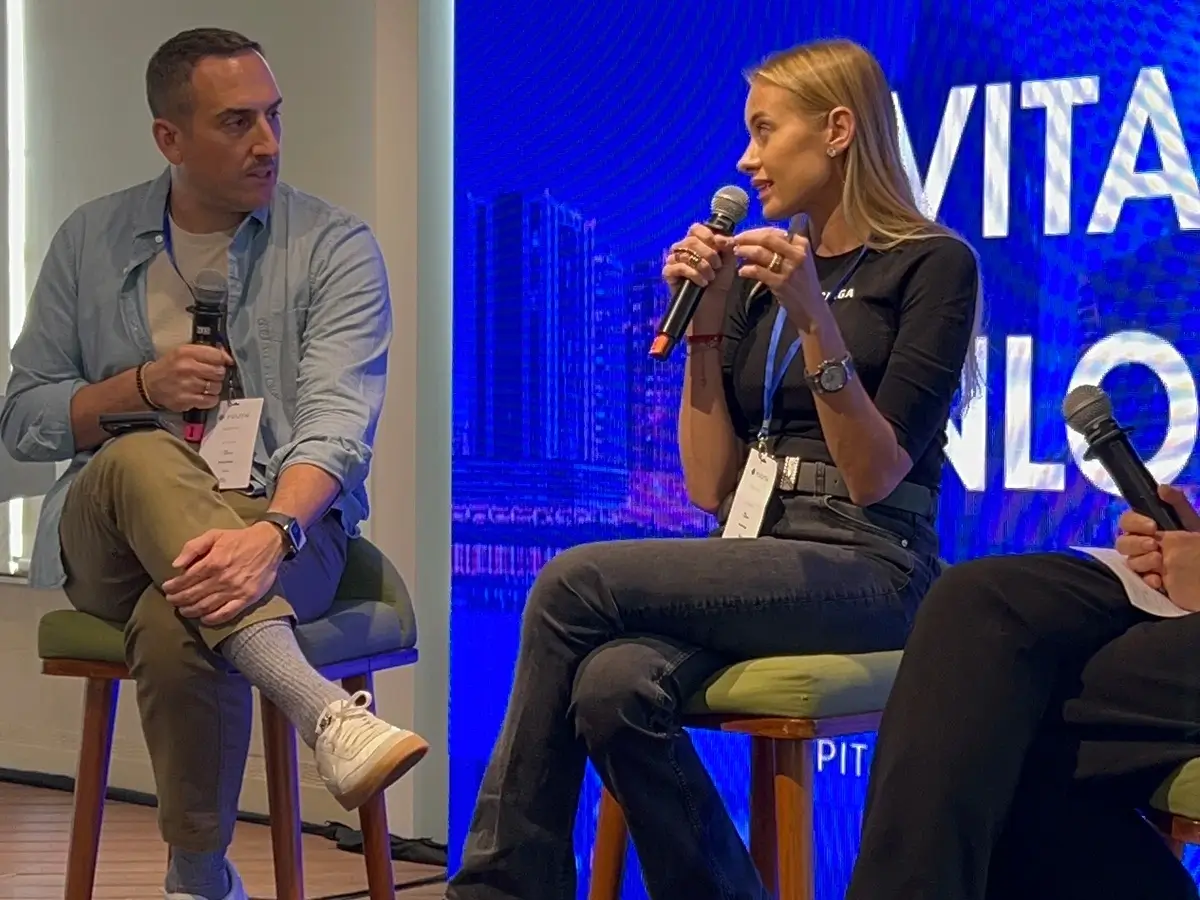
John Cafarelli and Yulia Mintchin on stage at INNOCOS Longevity Summit in Dubai.
Perimenopause longevity is where health, aesthetics, and identity converge.
It is the decade that determines whether a woman will age with resilience or resistance, with confidence or confusion.
In a culture obsessed with staying young, few realize that the architecture of longevity is built here, not later.
The cellular processes that define skin elasticity, metabolic efficiency, cognitive sharpness, and emotional stability are all rewritten in this phase.
For the beauty and supplement sectors, this represents both a moral and market opportunity: to evolve from surface-level promises to precision-based, biology-informed innovation.
INTRODUCING THE INNOCOS LONGEVITY EVENTS
Every year, INNOCOS brings together the brightest minds in longevity science. Doctors, entrepreneurs, spa and clinic professionals, and brand founders meet in various parts of the world – Geneva, Dubai, Silicon Valley – to discuss the latest innovations in the field.
Be up to date by following the INNOCOS Linkedin page.
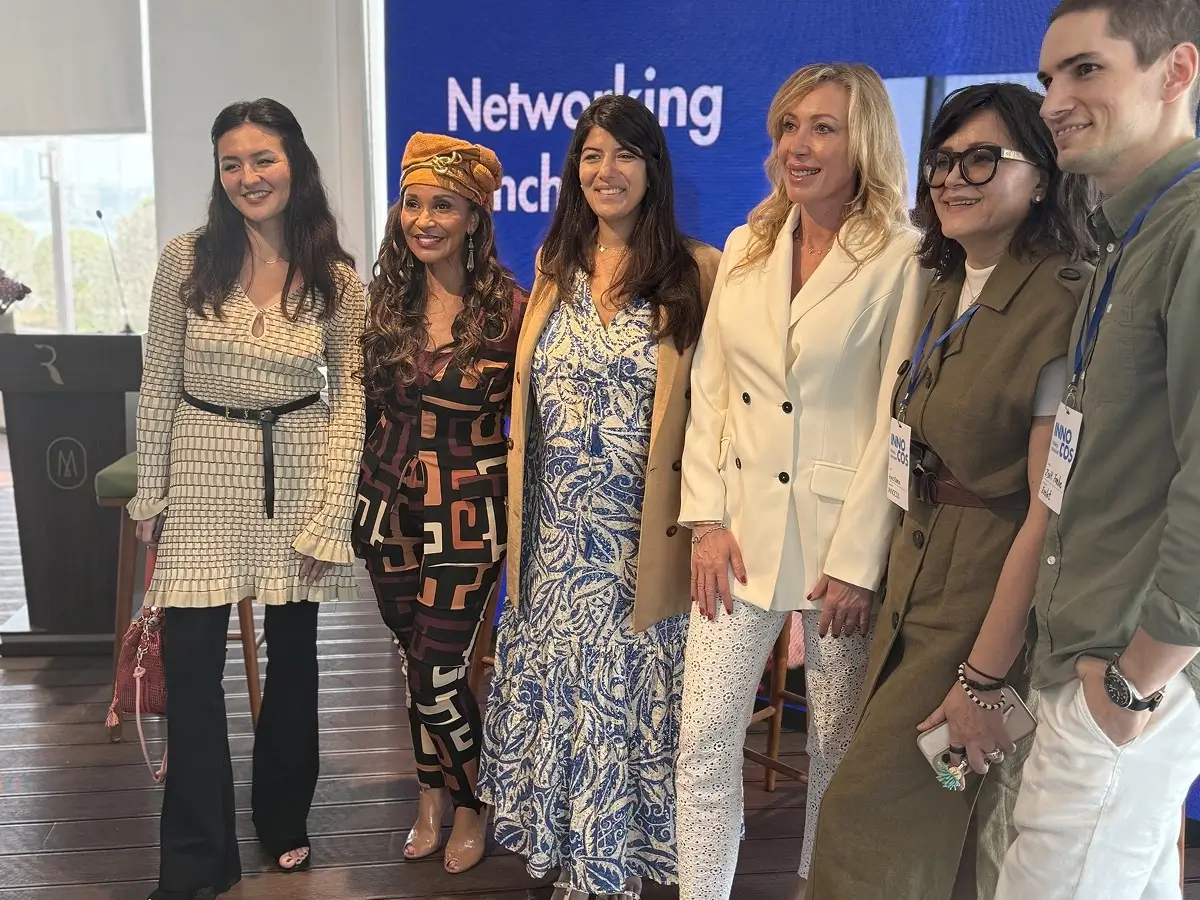
INNOCOS Longevity Summit spa panelists in Dubai
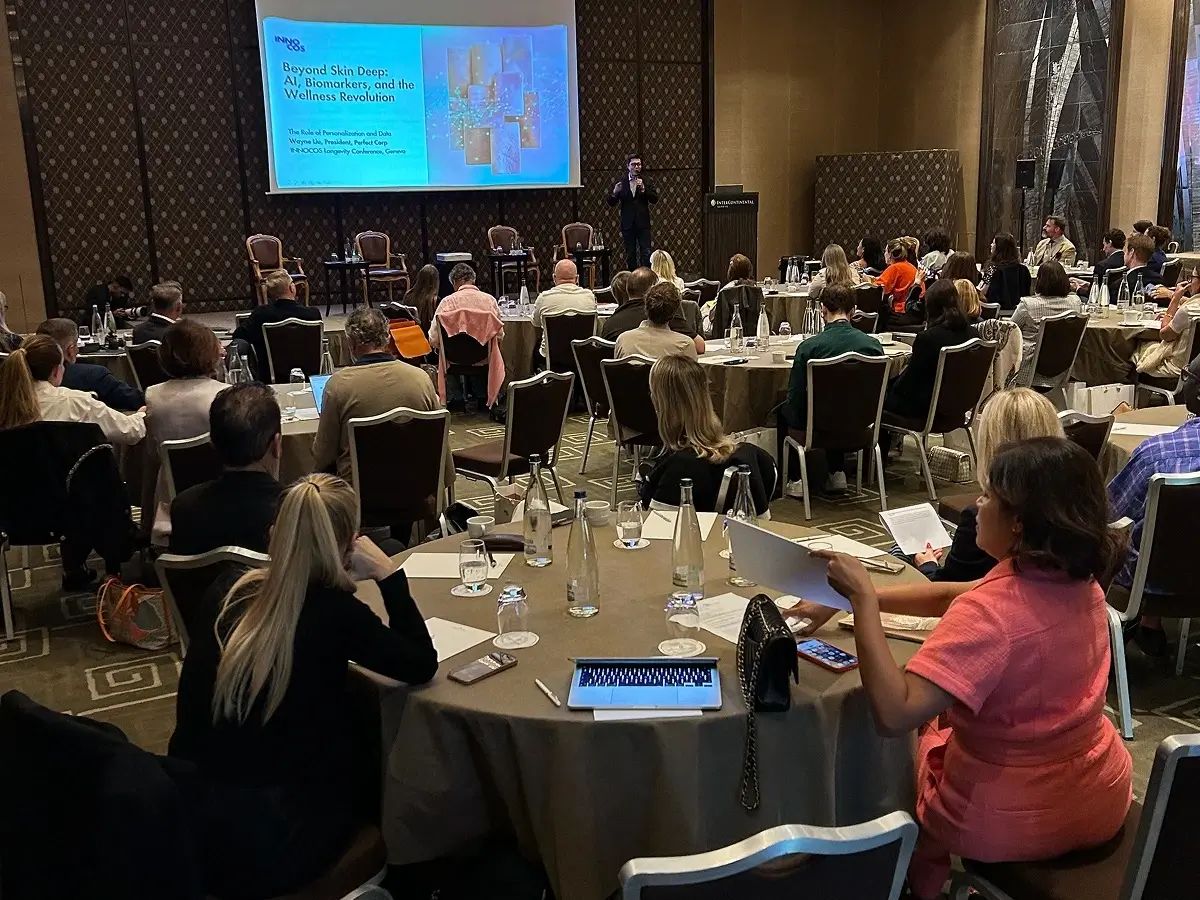
INNOCOS Longevity Summit Geneva event
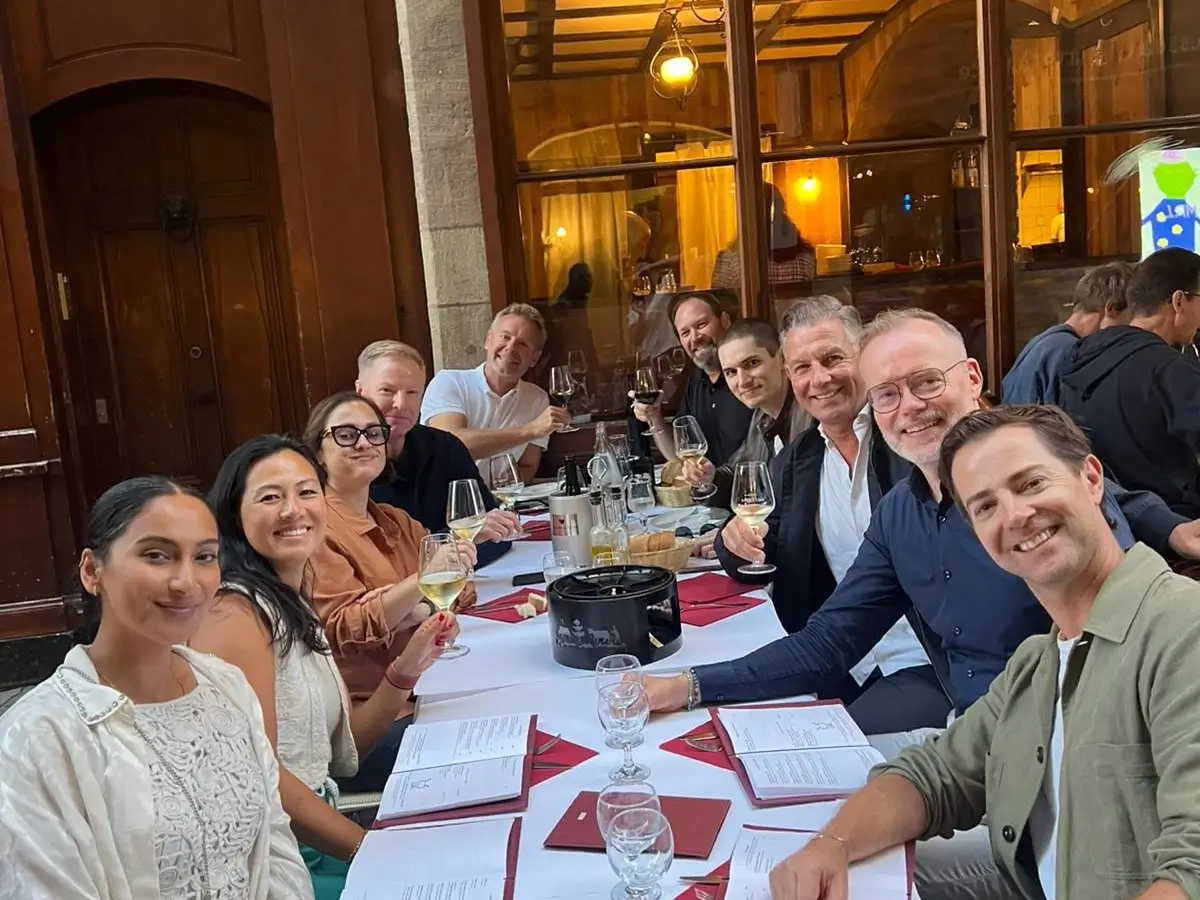
INNOCOS Longevity Summit Geneva dinner
From science to strategy
Understanding the genetic and hormonal interplay that governs ageing opens the door to personalisation on a new scale.
Imagine:
- A beauty brand formulating for unique hormonal archetypes, supporting collagen and skin hydration in rhythm with hormonal transitions.
- A supplement brand optimizing formulations for genetic detox pathways or receptor sensitivities.
- A longevity ecosystem helping women reprogramme ageing by aligning nutrition, stress regulation, and hormonal optimization.
This is personalisation grounded in molecular truth, the kind that turns female longevity from a vague aspiration into measurable, everyday reality.

Redefining longevity
To see perimenopause as the front door to longevity is to change the narrative of ageing itself. It’s no longer about symptom suppression but system intelligence about understanding the biology behind vitality and the genes behind change.
Women are not passive recipients of ageing; they are active participants in how it unfolds.
The same mechanisms that once shaped fertility now hold the keys to long-term energy, cognition, and resilience.
Longevity is not about living longer, it’s about living younger, longer.
And it begins the moment hormones start to whisper that change is coming.