
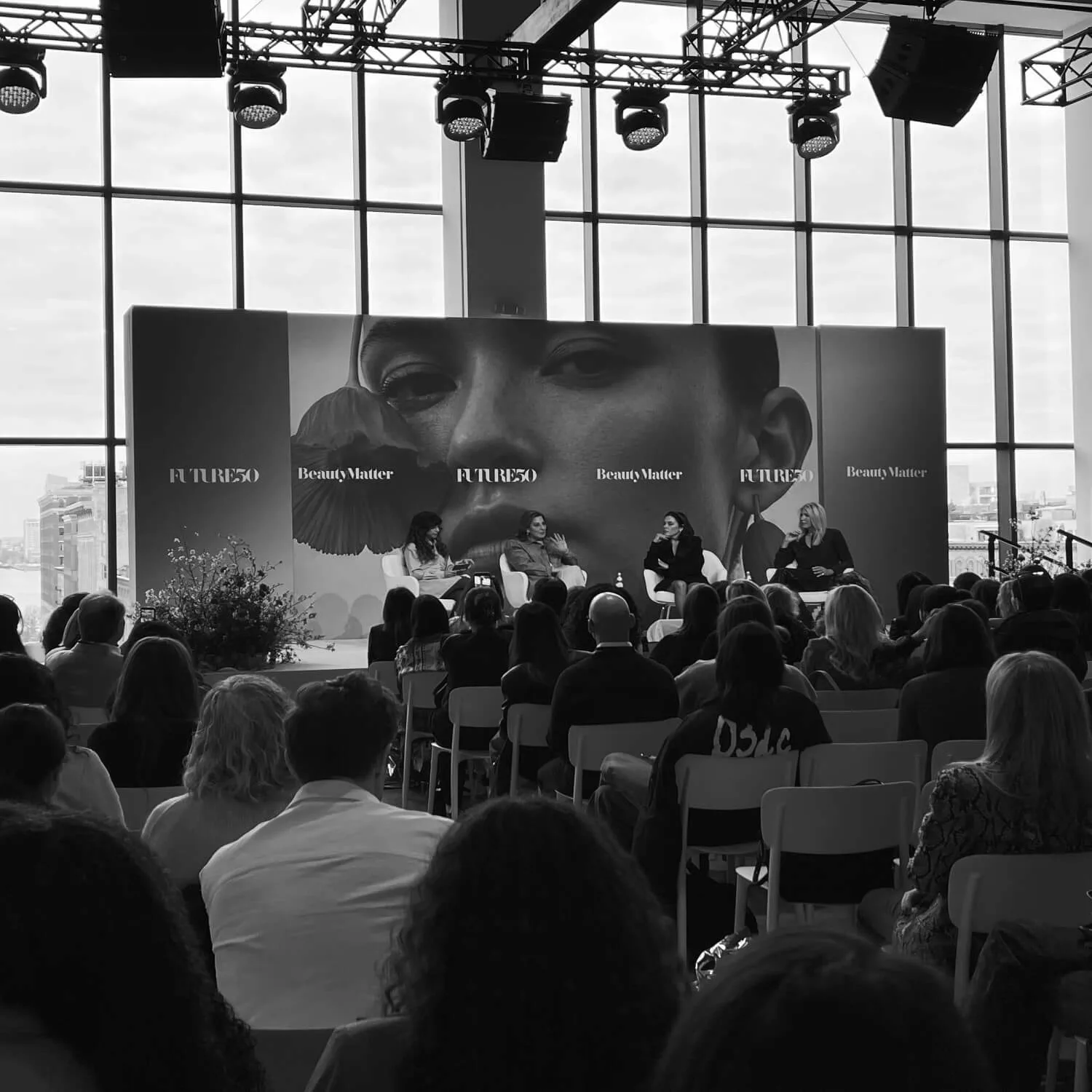

BeautyMatter Future50, New York
On March 19th, 2026, BeautyMatter brought together founders, retailers, investors, and operators in New York City for one day of conversations the beauty industry is actually having.
Nine sessions. No BS, just pure value. Every panel was different. But one idea connected all of them:
The brands that will matter in the next decade are being built on fundamentals the industry keeps undervaluing.
Not virality. Not trend-chasing. Not the next hero ingredient every brand will slap on a label by Q3.
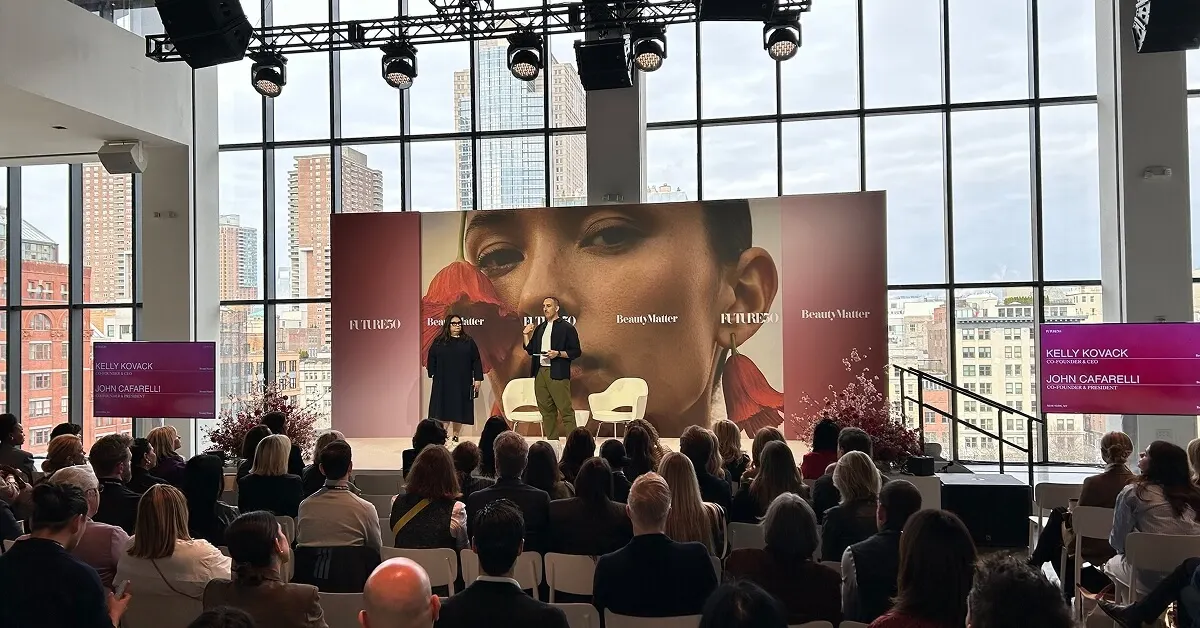
Kelly & John are opening the event
What follows are the biggest lessons from the panels, the moments that stopped the room, and what they mean for anyone building or scaling a beauty or supplement brand right now.
The Era of "Clinically Inspired" Is Over
Carolina Reis de Oliveira, Co-Founder and CEO of OneSkin, said something at FUTURE50 that reframed how I think about brand building entirely.
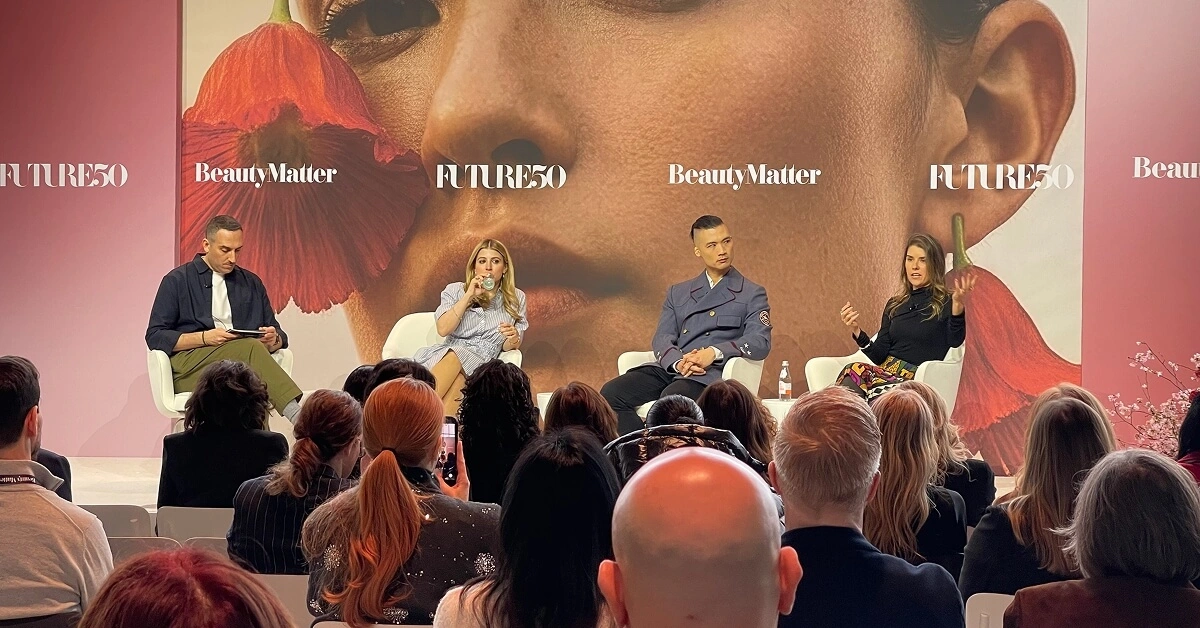
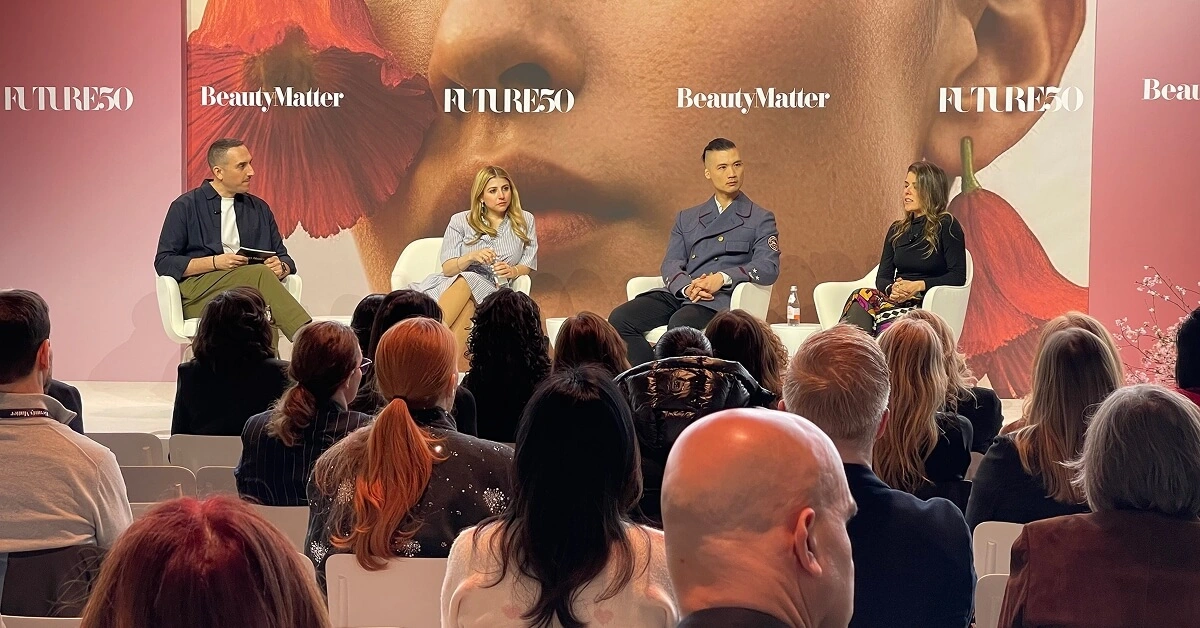
Maintaining Momentum: The Path To Sustainable Growth panel
OneSkin spent $7 million on peptide research before they had a single commercially viable product. Five years of science before the first sale. No customers, no revenue, no proof it would work in the market.
Just a bet on the research.
Most founders would have launched at month six with “clinically inspired” on the label and moved on. OneSkin waited until the science was real and then built a brand around it.
The result?



For years, the beauty industry ran on trend-driven marketing. A hero ingredient goes viral, every brand reformulates around it, and the consumer moves on to the next one six months later. The cycle repeats. Nobody wins long-term.
Science-based marketing breaks that cycle, because it can’t be copied and pasted onto the next trend.
And the language gap is widening fast.
- “Dermatologist-tested.”
- “Science-backed.”
- “Clinically inspired.”
- “Evidence-informed.”
These claims are everywhere. They cost nothing to make and mean increasingly less to a consumer who has heard all of them before.
Evidence-based messaging is different. It means published research. Measurable outcomes. A mechanism you can explain and defend. It means your brand can answer the question every skeptical consumer is now asking: prove it.
OneSkin doesn’t say the science backs them up. They are the science. That’s a completely different category of brand.
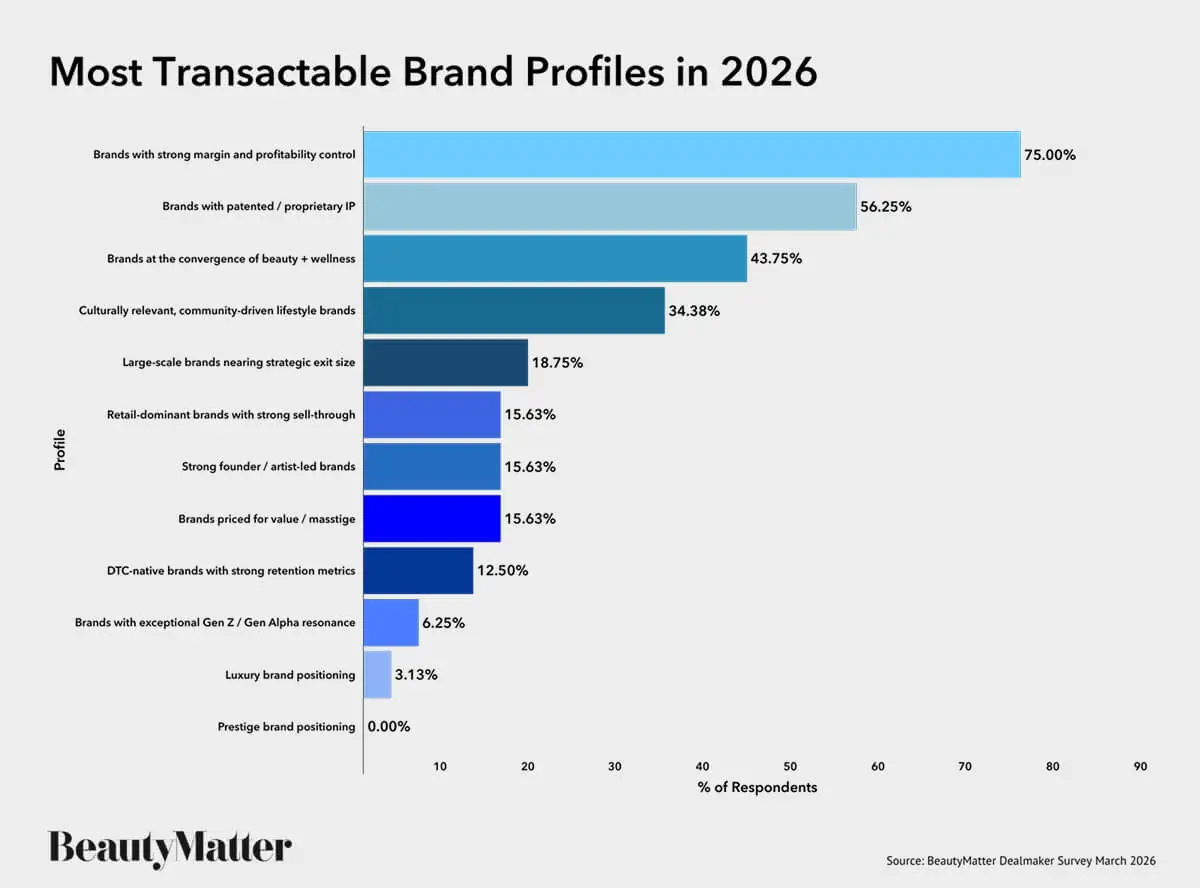
And investors are starting to notice. BeautyMatter’s 2026 Dealmaker Survey found that 56% of dealmakers ranked brands with patented ingredients and technology among the most attractive profiles for investment and M&A, second only to profitability or a clear path to it.
The brands that will define beauty over the next decade are being built in labs right now.
The research isn’t the backstory. It’s the edge.
The Brand That Chose Its Customer Over Its Image
Eight months after launch, Bubble entered 4,000 Walmart doors. Not Sephora. Not Ulta. Walmart.
Every industry veteran thought they were crazy. An indie brand, fresh out of the gate, planting its flag in the most mass retail environment in America. It went against everything the prestige beauty playbook said you were supposed to do.
Three years later, Bubble is in 18,000 stores across 18 countries. $500 million recurring revenue. No private equity. Profitable early. And a community of 100,000 brand ambassadors who helped choose the name, the packaging, and the retail strategy from day one.
So what did Shai Eisenman understand that everyone else missed?
Accessibility isn’t a price point strategy. It’s a brand value.
The prestige-by-association playbook is real and it works for certain brands. But it starts with the wrong question. “What retailer makes us look premium?” is a brand ego question. Bubble asked a different one entirely: where is our customer, and can she actually get there?
She might not have a driving license. She might not live near a Sephora. She might be in a town where Walmart is the only option within reasonable distance. That’s not a lesser customer. That’s your customer.
And this is the part of the retail conversation that almost never gets said out loud in rooms like FUTURE50: distribution is not just a revenue decision. It’s a statement about who your brand is actually for.
Bubble’s Walmart bet wasn’t a compromise forced by circumstance. It was a deliberate choice made from a clear brand conviction, that great skincare should be available to everyone, not just the consumer who lives near a mall with a Sephora on the second floor.
The industry rewarded that conviction with scale most brands spend a decade trying to reach.
Choosing the right retail partner is about alignment.
Presence Without Alignment Is Just Noise
There is a version of every beauty brand that is technically everywhere. TikTok. Instagram. Amazon. Sephora. DTC. Meta ads running around the clock. An email list. A retail shelf in three markets.
Multichannel? Absolutely. Omnichannel? Rarely.
Rina Yashayeva put it plainly at FUTURE50:
“There are so many brands that are multichannel. But it doesn’t necessarily mean that they’re omnichannel. They are everywhere, but they’re not aligned.”
The difference sounds subtle. It isn’t.
Multichannel means your brand exists in multiple places. Omnichannel means your brand feels like the same brand in every place. And that second thing – consistency of experience, story, and message across every touchpoint – is where most brands quietly fall apart.
Here’s what misalignment actually looks like in practice.
- Your TikTok creative is cinematic and brand-forward.
- Your Amazon listing looks like it was set up in twenty minutes.
- Your DTC site tells one story.
- Your retail shelf tells another.
- Your paid media is driving thousands of visitors to a product page that isn’t ready to convert them.
- Your channels are competing against each other for the same customer instead of guiding her forward together.
She notices. She might not articulate it. But she feels the disconnect and it quietly erodes the trust your content worked so hard to build.
Genevieve Head-Gordon of OUAI made this concrete at Beautymatter FUTURE50. For years, OUAI measured each channel separately – Amazon’s profitability, DTC’s profitability, Sephora’s profitability. All in isolation. All competing with each other on paper.
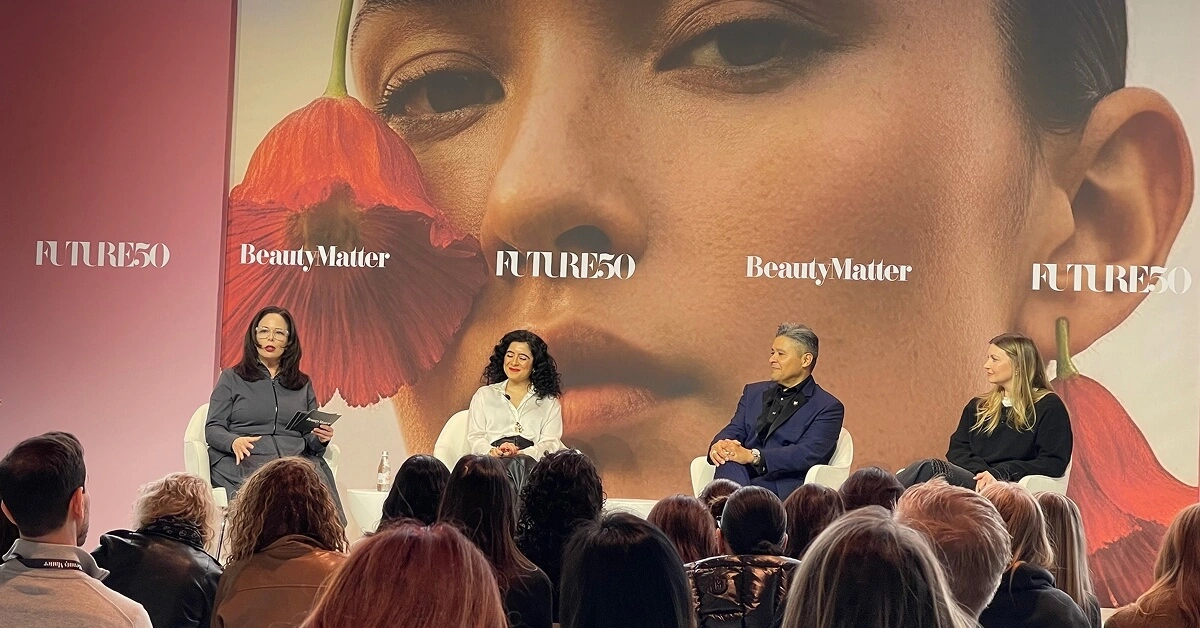
Moving Beyond Omnichannel: Scaling When Discovery, Retail, And Channels collide panel
The problem? That’s not how the customer shops.
So they shifted to a single consumer-level view. Instead of asking “which channel is making money?” they started asking “what is each channel actually doing for the customer journey?” Some channels convert. Others educate. Others build awareness that only shows up as revenue three touchpoints later.
Once OUAI started measuring all of it together, the investment decisions got smarter, the internal competition between channels disappeared, and the brand started growing again meaningfully, for a ten-year-old brand that had every reason to plateau.
The insight is simple: the consumer was never thinking in channels. She was thinking about your brand. And she expects your brand to feel coherent wherever she finds it.
This is the foundation of what we built the Omnipresence Strategy around at Evolut. Not putting beauty and supplement brands everywhere, but making sure that everywhere they show up, it’s the same brand, the same story, the same experience. Paid media, organic social, email, content, and retail all pulling in the same direction. All speaking to the same customer. All connected.
Because the brands that win in this environment are not just present. They’re unmistakable on every channel, at every touchpoint, every single time.
The $279 Billion Consumer the Beauty Industry Keeps Overlooking
There was a moment during the Gen X panel at BeautyMatter FUTURE50 that stopped the room.
Not because of a shocking statistic. But because three women on a stage said, plainly and without apology, what the beauty industry has been failing to acknowledge for years.
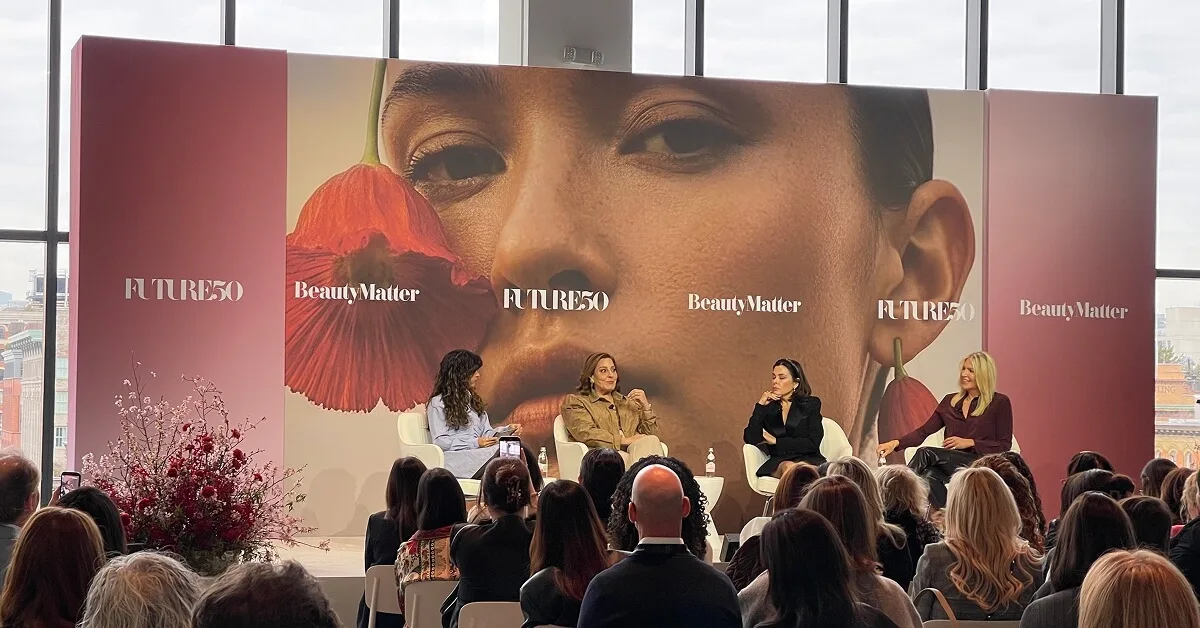
Beauty’s Lost Generation panel
This consumer exists. She has money. She knows exactly what she wants. And most brands are still not talking to her.
The numbers alone should have triggered a category-wide correction years ago. Gen X spends $279 billion per year on beauty, a figure projected to grow to $430 billion over the next decade. These are not niche numbers. This is one of the largest concentrations of discretionary beauty spending in the market.
And yet the industry’s default response has been to look the other way and chase the next generation down.
So why has it taken this long?
Part of it is structural. Beauty has always been obsessed with youth, not just as an aspiration, but as an operating assumption. The consumer who matters is the one discovering the category for the first time, building her first routine, forming brand loyalties that will supposedly last decades. Marketing to her feels like planting seeds.
What the industry consistently underestimates is the consumer who already has those loyalties and the purchasing power to act on them decisively.
The Gen X woman is not experimenting. She knows what works for her skin. She has decades of category experience. She has disposable income and the confidence to spend it without needing to be convinced by a trend. And perhaps most importantly, she has a strong sense of identity that she built long before a brand told her who she should be.
She doesn’t respond to manipulation. She responds to respect.
Laura Geller, who has been building her brand for nearly 30 years, put it simply. She goes on her brand’s reviews late at night – after her team has already responded – just to write back to customers in her own voice. Not as a strategy. Because these women are her friends, her peers, and her customer in the most literal sense. She is her.
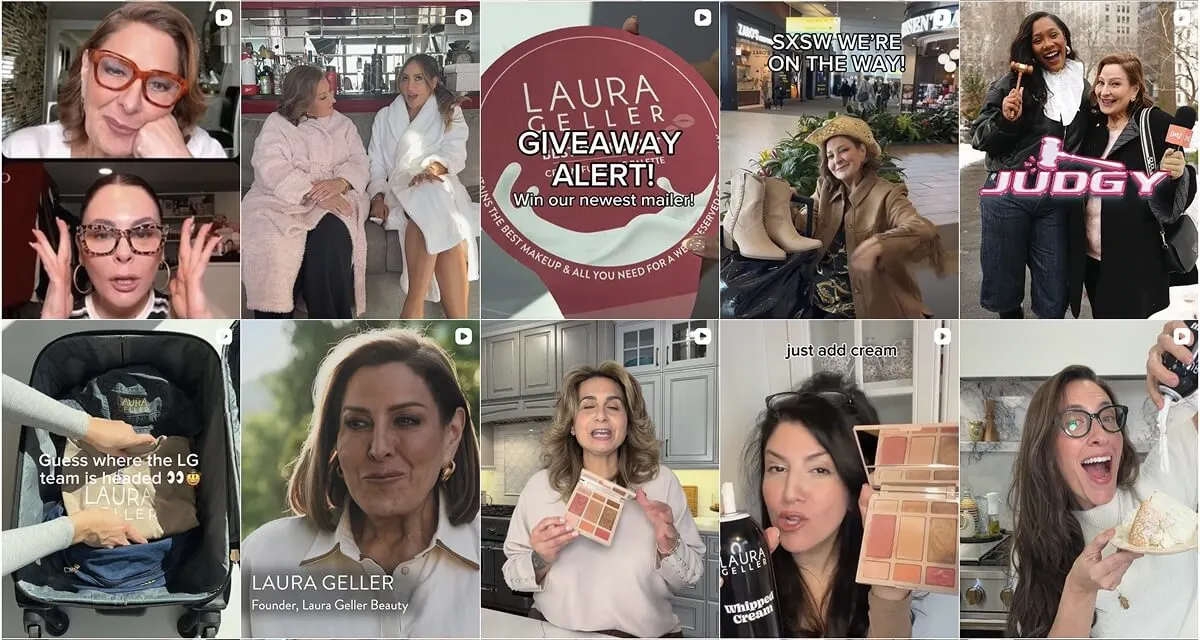
Laura Geller Beauty’s Instagram feed
Sarah Creal launched her brand on December 5th, 2022, after waking up one morning and asking why nobody was formulating for her, educating her, or reflecting her back in a way she found aspirational. She surveyed 2,000 women over 40 before developing her first product. She only casts models over 40. She only tests on women aged 40 to 65, because testing a formula on a 20-year-old and calling it transfer-proof tells you nothing about how it performs on the skin that actually needs it.
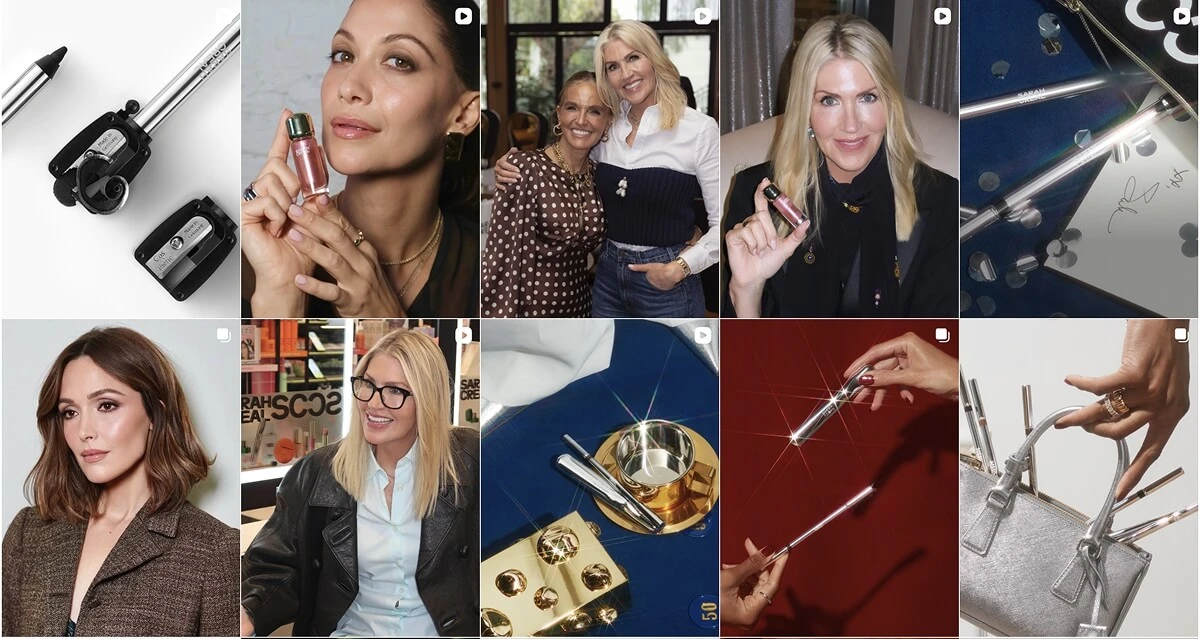
Sarah Creal Beauty’s Instagram feed
Erica Taylor built an audience of 1.9 million Instagram followers by doing something radical: treating the Gen X woman like an intelligent adult. No fluff, no mood boards, no before-and-afters that promise the impossible. Just direct, honest education about what works, what doesn’t, and exactly where to buy it.
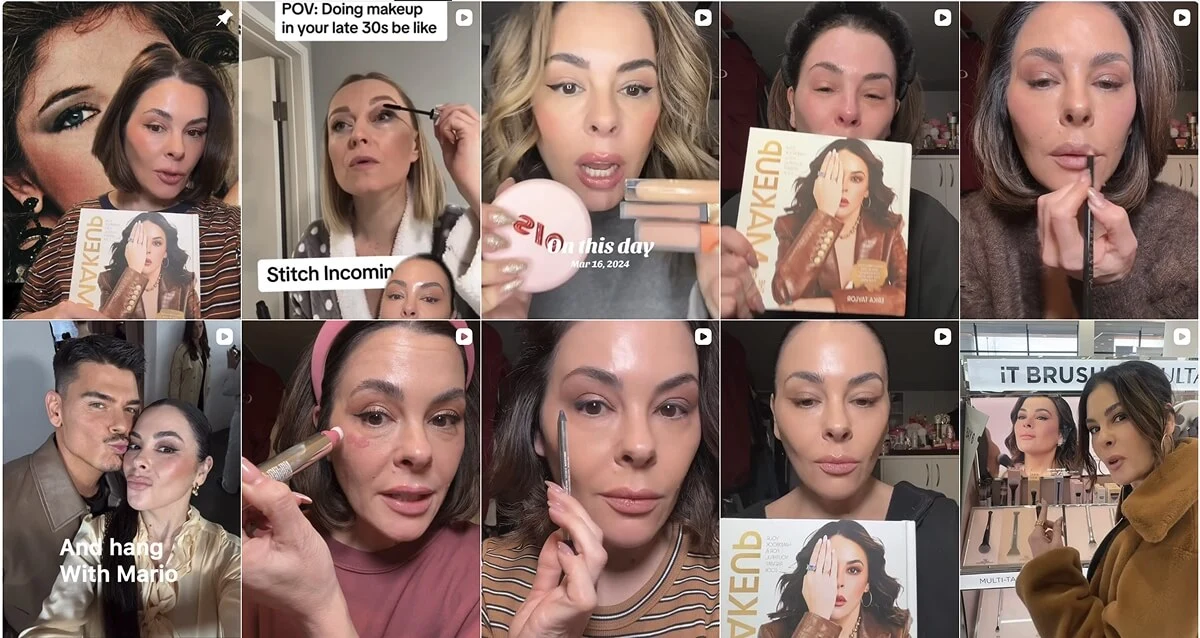
Erica Taylor’s Instagram feed
Her audience’s message to brands is clear:
“Don’t come for us just because you want the demographic. Come for us with a product that really was made and works for us. Just tell us what it is, where to put it, and where to buy it.”
That’s not a hard brief to fulfill. And yet most brands are still getting it wrong.
The mistakes are consistent.






She doesn’t buy from logos. She buys from people she believes.
And here is the shift that makes this moment genuinely different from previous attempts to court this consumer. Gen X didn’t accept the narrative that aging means disappearing. They rejected it loudly, publicly, and with their wallets. They are not the golden girls. They are not stepping back from beauty. They are demanding that beauty step up to meet them.
Fifty percent of millennials will be 40 by 2028. (!!) The consumer the industry has been ignoring is not a niche. She is the market.
The brands that recognize this now will not just find an underserved audience. They will find the most loyal, highest-spending, most brand-rewarding consumer in the entire category.
She has been here the whole time.
The Consumer Never Thinks in Channels. Brands Do.
Here is a customer journey that played out in thousands of variations on the day you are reading this.
(1) A woman sees a haircare product in a Get Ready With Me on TikTok. (2) She goes to the brand’s website – a few hundred reviews, not enough to convince her. (3) She opens Amazon – thousands of reviews, video shorts of real people using it in real conditions. (4) That’s where she buys.
She didn’t think about the brand’s retail exclusivity agreement. She didn’t care which channel got credit for the conversion. She didn’t respect the funnel.
She just wanted the product.
Meanwhile, inside the brand, three teams are arguing about whose sale it was.
This tension – between how consumers actually move through the world and how brands have structured themselves to track and measure that movement – was one of the most important threads running through the Moving Beyond Omnichannel panel at BeautyMatter FUTURE50.
Reuben Carranza, Executive Chairman of Bansk Beauty, framed it directly. Brands think in channels. Consumers think in moments. And the gap between those two things is precisely where growth stalls, budgets get wasted, and otherwise strong brands fail to scale.
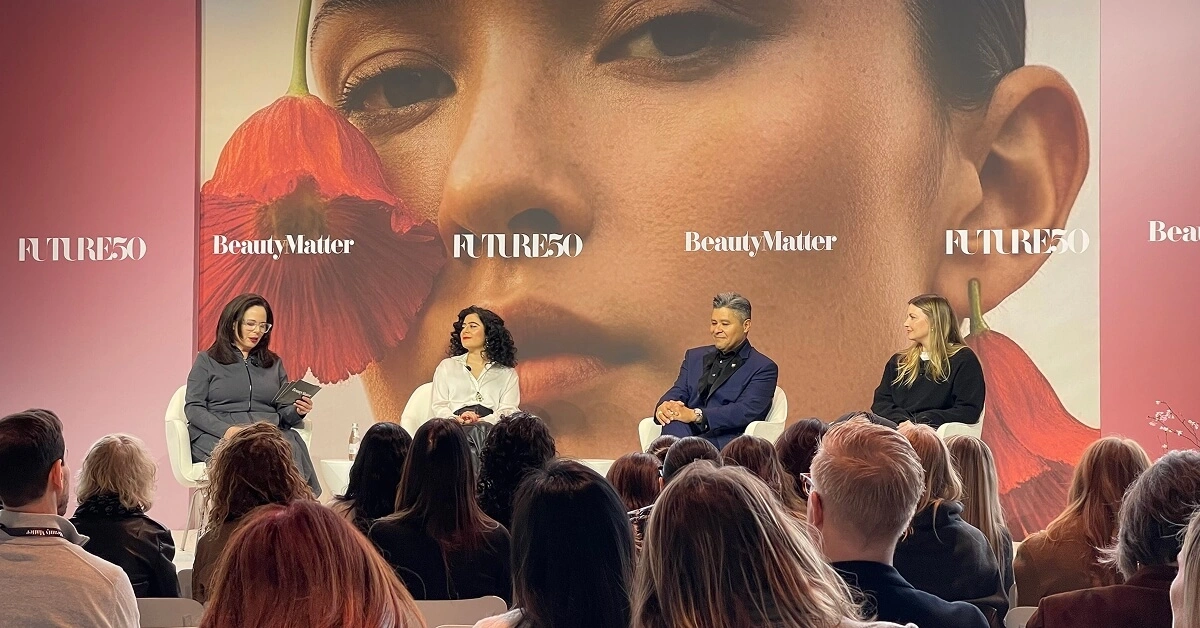
Moving Beyond Omnichannel: Scaling When Discovery, Retail, and Channels Collide panel
The data makes this uncomfortably concrete. The average overlap between a brand’s DTC customer base and their Amazon customer base is just 10 to 15 percent. That means 85 to 90 percent of Amazon customers are not cannibalizing existing revenue, they are incremental. A entirely different set of people who would simply not have found the brand any other way.
And yet brands continue to pit their channels against each other, protect their DTC at the expense of their Amazon presence, and make distribution decisions based on internal politics rather than consumer behavior.
TikTok Shop and Amazon Are the New Trust Test
For years, trust in beauty could be built through PR, retailer validation, and a compelling brand story. That still matters. But trust now gets stress-tested in two places where people actually buy.
- TikTok Shop rewards a claim that lands in three seconds, a story that feels real in a creator’s voice, and a routine that looks doable.
- Amazon rewards a product page that does the heavy lifting, clear positioning on who it’s for and when results show up, and proof that’s easy to scan.
The insight that surfaced at INNOCOS Silicon Valley — and that Sohun Sanka of Reacher framed sharply — is that “science-backed” doesn’t automatically win anymore. Proof has to survive both environments.
Not different stories for each channel. One core promise, built to work everywhere.
The brands that scale are the ones that understand TikTok and Amazon aren’t competing for the same moment. TikTok creates the desire. Amazon converts the conviction.
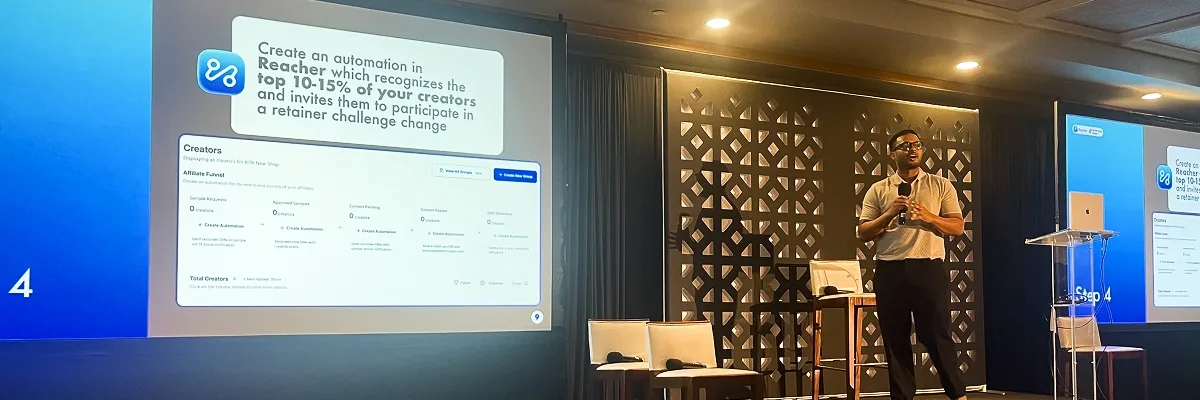
Genevieve Head-Gordon of OUAI described the misunderstanding that most brands share: the belief that the Sephora consumer and the Ulta consumer and the Amazon consumer are fundamentally different people who require different strategies. They are not. It is the same woman. She discovered your brand in Sephora, validated it on Amazon, checked your DTC site to confirm it works for her specific needs, and bought wherever was most convenient that afternoon.
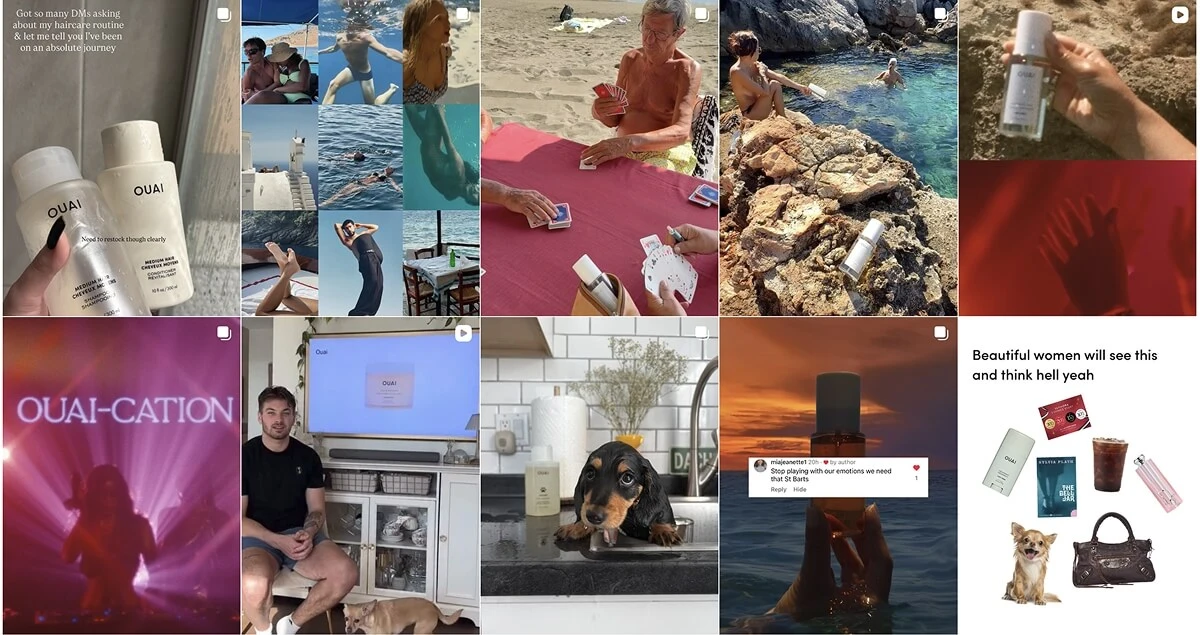
OUAI Instagram feed
She is not loyal to your channel. She is loyal to your product. And she expects the experience of finding, evaluating, and buying that product to feel seamless, regardless of where in her journey she happens to be.
This is what Front Row calls connected commerce. Not omnichannel, which has become a word that means being present in many places. Something more specific and more demanding than that: the full integration of discovery, validation, and conversion across every touchpoint, in a way that feels like one coherent brand experience rather than a collection of disconnected channel strategies.
It requires creative consistency. The cinematic TikTok that introduces your brand should feel connected to the Amazon listing she lands on three days later. If it doesn’t – if she saw a beautifully produced video and clicked through to three bullet points and a stock photo – the trust built in that first moment evaporates instantly.
It requires supply chain alignment. The best connected commerce strategy in the world is worth nothing if she drives to the store, finds your shelf empty, opens her phone, and discovers your Amazon listing is out of stock too.
And it requires a willingness to let go of the idea that any single channel owns the customer.
Nobody owns her.
She moves freely, she decides independently, and she will find the path of least resistance to the product she wants. The only question for brands is whether that path runs through you or around you.
The Retailer Doesn't Need You. Until They Do. Here's the Difference
For most of the modern beauty era, retail was a distribution problem. You made the product, negotiated the terms, shipped the stock, and hoped the gondola didn’t end up in the wrong aisle.
That model still exists. But alongside it, something fundamentally different has emerged.
The retailer in 2026 is not just a distributor. They are a curator, a validator, a trend forecaster, and increasingly, a brand-building partner. And the criteria by which they decide who gets that partnership have become considerably more sophisticated than a strong sell-in presentation and a favorable margin.
Three very different retail perspectives came together at BeautyMatter FUTURE50 and what was striking was not where they differed, but where they completely agreed.
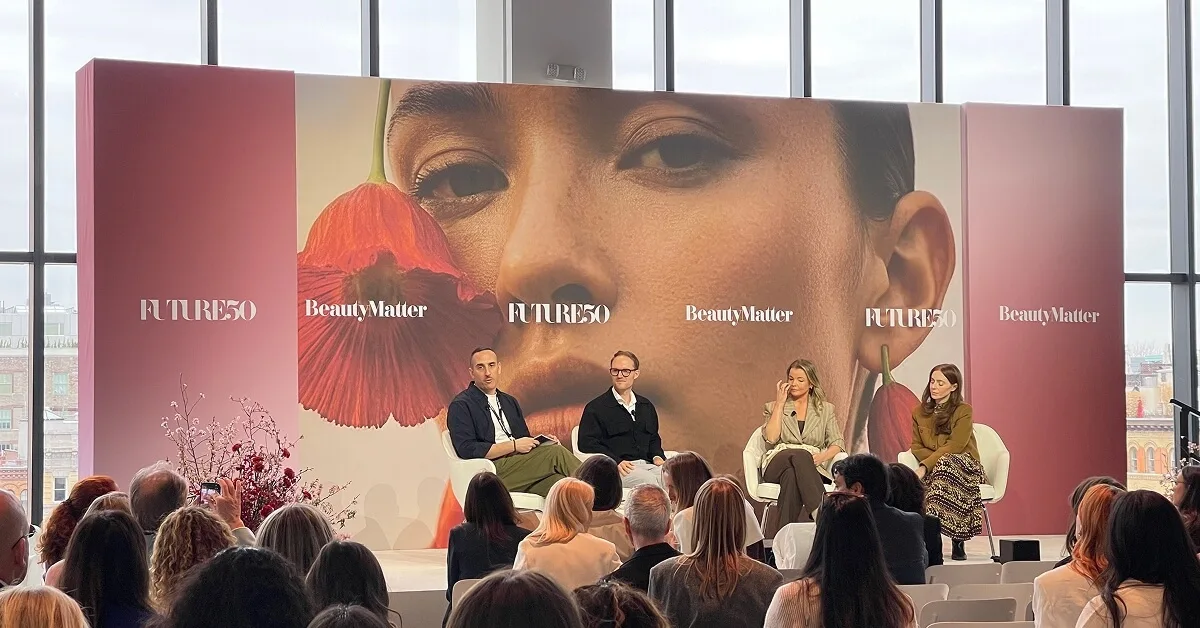
Gatekeepers Of Growth: How Retailers Will Define The Next Era Of Beauty panel with ohn Cafarelli, Co-Founder + President, BeautyMatter / Grace Vernon, Head of Boots Ignite, Foresight + Trends, Boots UK / Mohammad Alshammari, International Business Development Manager, Boutiqaat
Grace Vernon of Boots Ignite can take a brand from discovery to launch in eight weeks. Not eight months. Eight weeks. She is in founders’ Instagram DMs when she spots something worth backing. She has met brand founders in cafes to get contracts signed and guided first-timers through warehouse logistics they had never encountered. The partnership is real, but the foundation has to be there. As Grace put it directly:
“…you only get one chance to launch in retail. If it doesn’t perform, it is very hard to get back in.”
The red flag, she said, is not a brand that isn’t ready. It’s a brand that isn’t honest about it.
Jessica Matling of Moda Operandi looks for something different entirely. Not problem-solution products. Not viral moments. Brands that feel like fashion – emotionally compelling, aesthetically coherent, aspirational enough that a client wants to buy into the world before she has even read the ingredient list. Her lesson for brands chasing luxury retail is blunt: any brand can call itself luxury. Moda’s client knows the difference in seconds.
Across two very different retail environments, the same truth kept surfacing.
Retailers are not looking for the most impressive pitch deck. They are looking for brands that are genuinely ready, genuinely honest, and genuinely aligned with what their specific retail environment delivers to a consumer.
The door is open wider than it has ever been.
But walking through it unprepared is more costly than not walking through it at all.
Conclusion: The Fundamentals Were Never Optional
Nine sessions. One day. Dozens of conversations with some of the most interesting people building and scaling beauty brands right now.
And when I look back at everything that was said – across retail strategy, brand building, consumer behavior, channel dynamics, and product development – one thing connects all of it.
The brands winning in 2026 are not the ones with the cleverest marketing. They are the ones that built something real underneath it.
- Real science that can be defended, measured, and published.
- Real retail strategies built around the consumer rather than the deal.
- Real communities that shaped the brand from the beginning rather than being recruited to amplify it afterward.
- Real channel alignment that makes every touchpoint feel like the same brand.
- And a real understanding of who their consumer actually is — not who they assumed she was.
The fundamentals were never optional.
They were just easier to ignore when the market was less crowded, the consumer was less sophisticated, and the bar to win was lower than it is today.


