


Most trend reports are written from press releases. This one isn’t.
I spent two days at in-cosmetics Global 2026 in Paris — the world’s largest ingredient show — interviewing the people who actually build the science behind your favourite beauty products.
Formulators, R&D directors, innovation leads, biotech founders. The people who know what’s coming 2–3 years before it lands on a shelf. 1,000+ exhibitors. 14,000 attendees. 250+ new ingredient launches in the Innovation Zone alone.
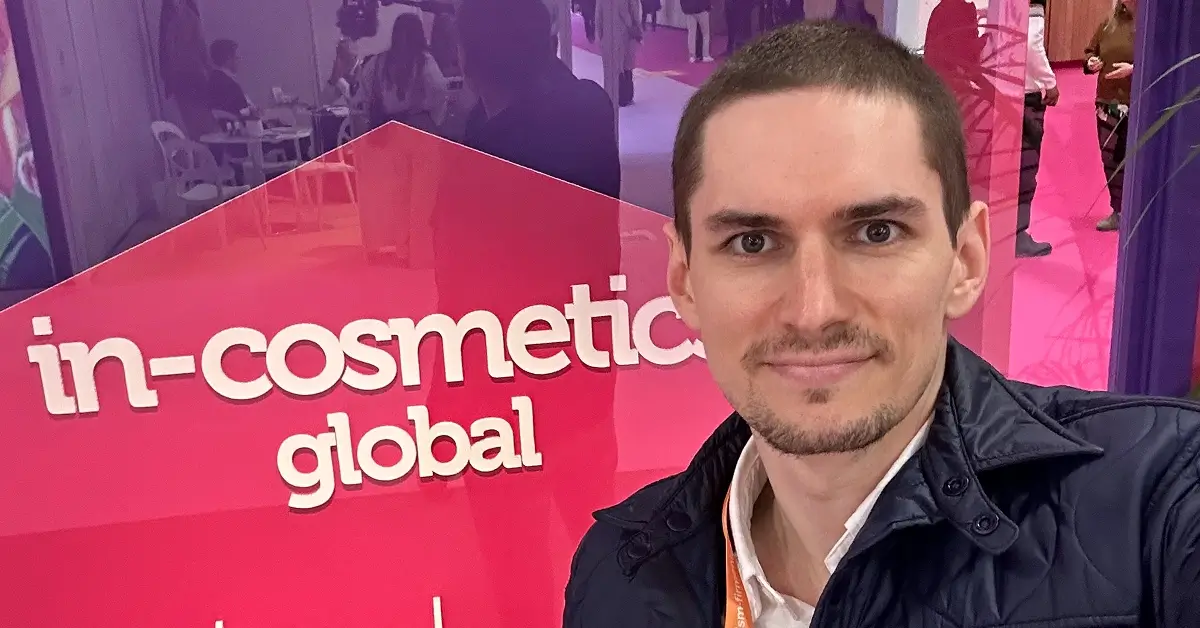
Me on Day 1 at the expo
I sat through several sessions — including WGSN’s deep dive into GLP-1 consumers, K18’s hair longevity biology talk, and a nutricosmetics panel that had a full room on a Wednesday afternoon. And I walked the floor with one goal: find out what the ingredient industry is actually building right now, not what the press releases say.
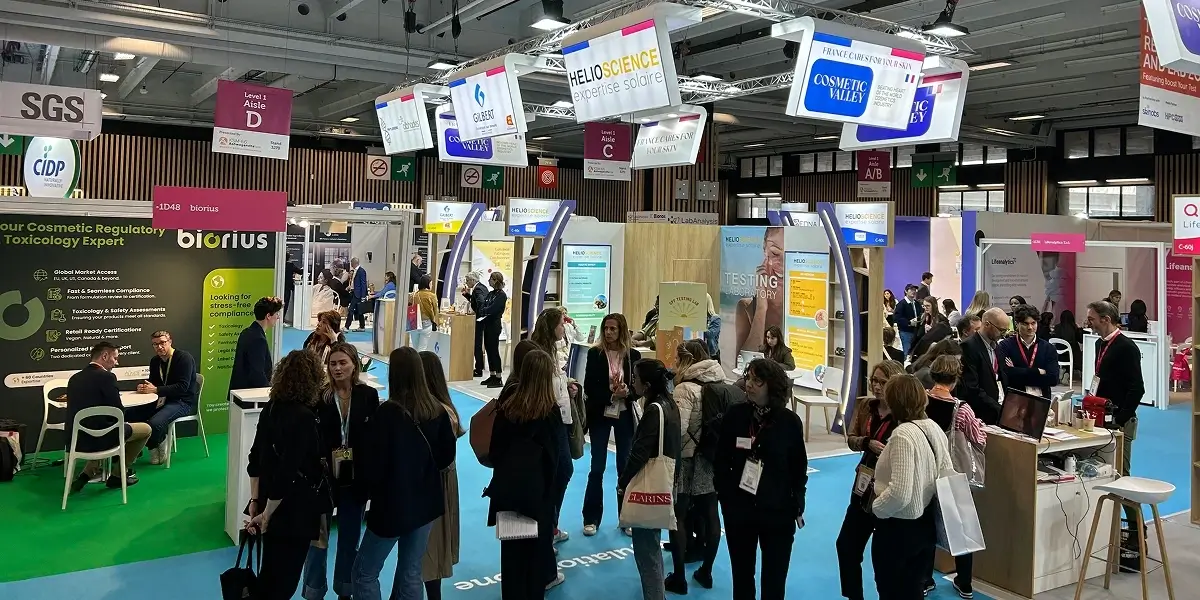
The world’s largest gathering of cosmetic ingredient suppliers, where what ends up on shelves in 2028 gets decided today.
What came back was consistent. Longevity. Multifunctionality. Beauty from within. Proof over promise. Speed.
This report is my attempt to make sense of it and more importantly, to translate what’s happening at the ingredient level into what it means for brands, marketers, and anyone building in the beauty and supplement space right now.
Let’s get into it.
Macro Signal #1: Longevity Is No Longer a Trend, It's the Default
I went into this show expecting longevity to be one of several themes. It wasn’t. It was the theme.
Every single interview I did on the floor — across skincare, haircare, suncare, nutricosmetics — longevity came up. Every supplier brought it up themselves.
Dr. Cornelia Schürch from Mibelle Biochemistry put it plainly:
“I think nobody will come around longevity. Longevity is the password currently.”
She’s right. And the ingredient pipeline confirms it.
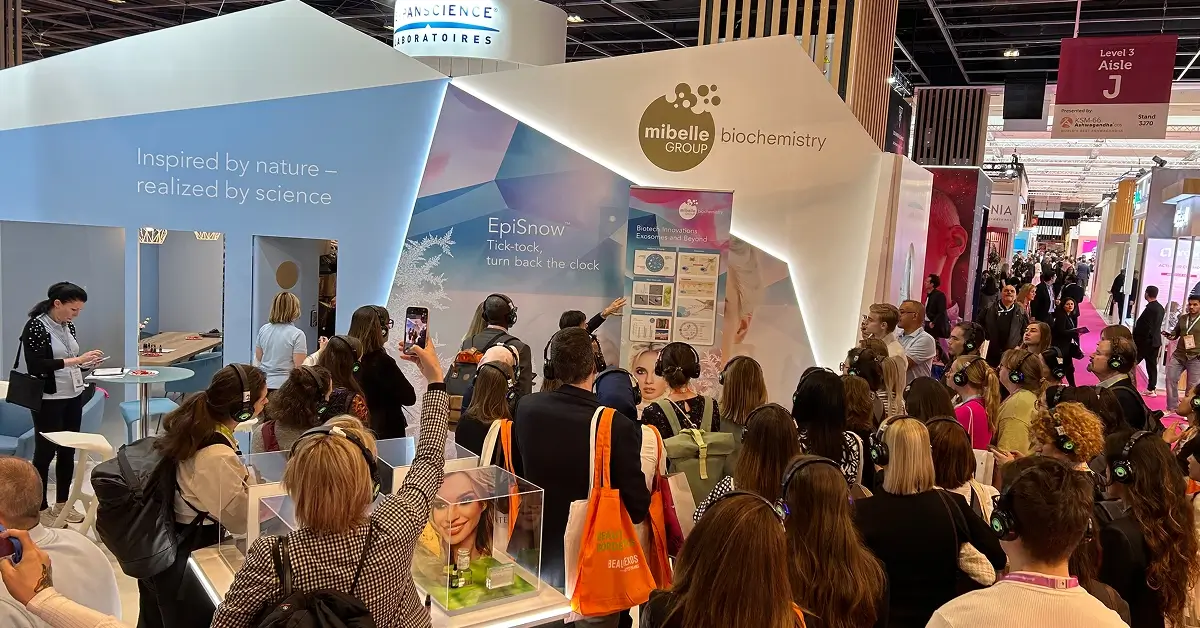
Mibelle Biochemistry brought some of the most science-backed longevity actives at the show.
What’s changed is the level of specificity. Two years ago, longevity was a claim. A positioning. A word you put on a serum. Now it’s becoming a formulation strategy and a much more precise one.
The science has moved from broad anti-aging to targeting the individual hallmarks of aging. There are 14 of them — cellular senescence, mitochondrial dysfunction, epigenetic alterations, stem cell exhaustion, and more. Brands used to say “fights aging.” Now suppliers are launching ingredients that address hallmark 4, or hallmarks 6 and 9 specifically.
- Mibelle’s EpiSnow tackles 8 out of 12 hallmarks of aging through epigenetic modulation — reversing the biological clock using snow algae.
- Algaktiv Vitals targets the telomere-mitochondria axis specifically. Chronolea from Robertet addresses oxidative stress, cellular senescence and extracellular matrix degradation simultaneously.
Brittney Wallat from Hallstar summed it up well: the shift is from saying…
“this is good for longevity as a whole” to “this addresses these specific antagonistic hallmarks, and here’s the data.“
Haircare Has Fully Entered the Conversation
This was probably the biggest surprise for me personally. K18‘s session on Day 1 reframed the entire haircare category. They are mapping all 12 hallmarks of aging to the hair follicle — treating hair not as a cosmetic surface but as a biological system with a health span.
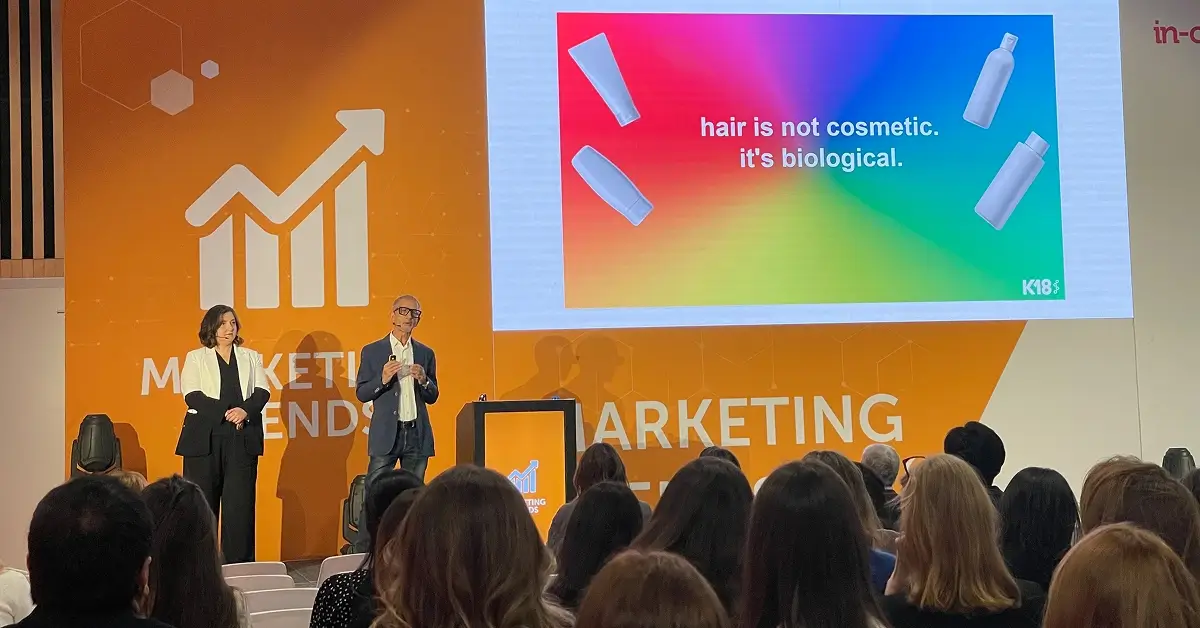
A slide deck that looked more like a pharmaceutical R&D presentation than a beauty brand session.
The goal is no longer repair. It’s prevention. Not fixing damaged hair but extending the functional health of the follicle itself.
And the ingredient floor backed this up.
- Keraduo from LipoTrue is a biomimetic fusion protein combining keratin and collagen to improve follicle anchoring.
- ProCell BaiCare uses RNA-engineered plant exosomes to regulate gene expression in scalp tissue.
Hair longevity is not a sub-trend. It’s the next skincare.
What this means for brands:



Macro Signal #2: One Product, Multiple Effects — The Multifunctionality Shift
Consumers are done managing 10-step routines.
What I heard consistently across the floor is that the brief has fundamentally changed. Brands are no longer asking for the best moisturizer. They’re asking for a moisturizer that also activates SPF when the user steps outside, supports long-term skin health, and feels good enough to actually use every day.
One product. Multiple effects. No compromises.
Fabrice Lefèvre from Givaudan framed it well. In the consumer journey there are three steps — brand loyalty, texture, and claim. Consumers now expect all three to land in a single product. And they expect quick results and long-term results simultaneously.
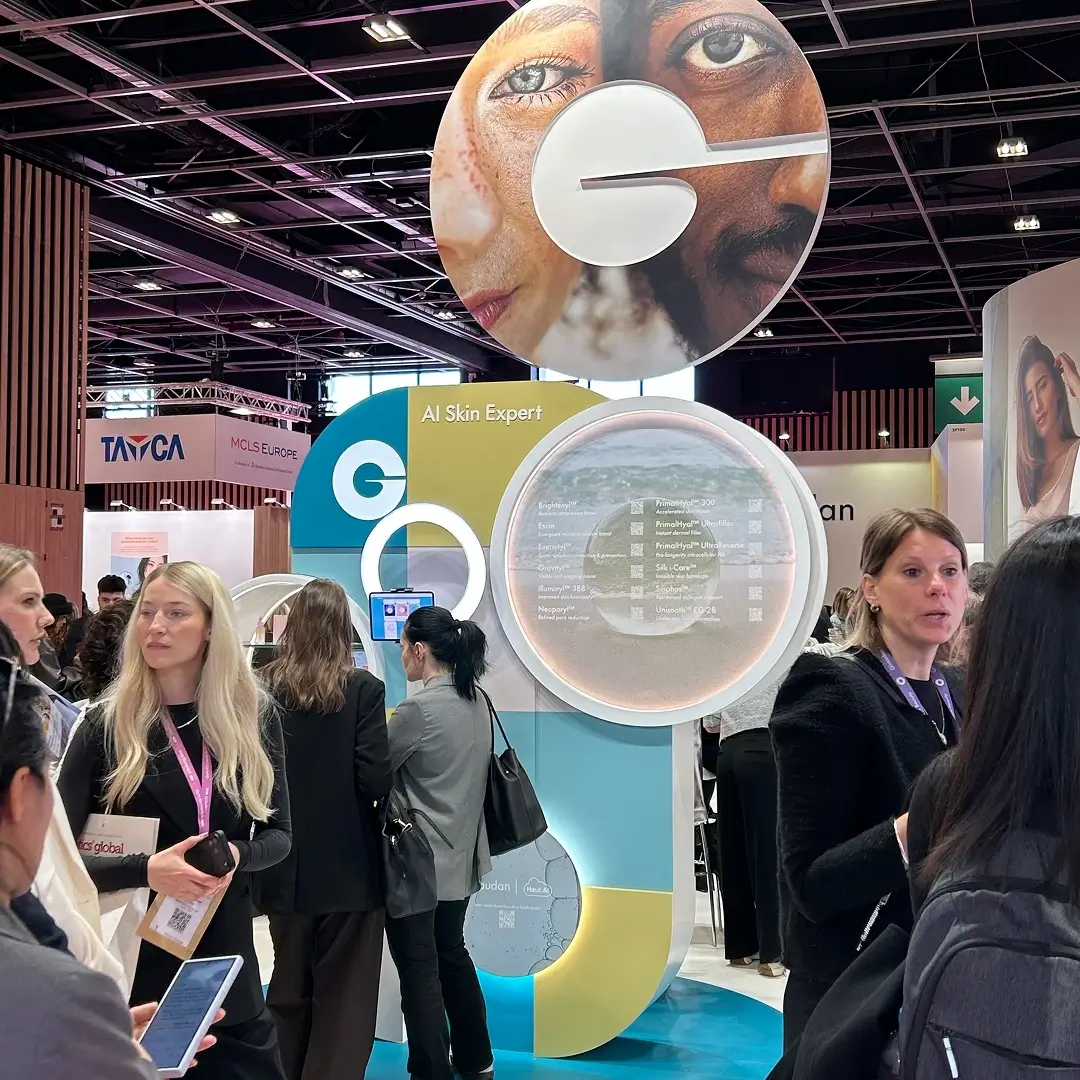
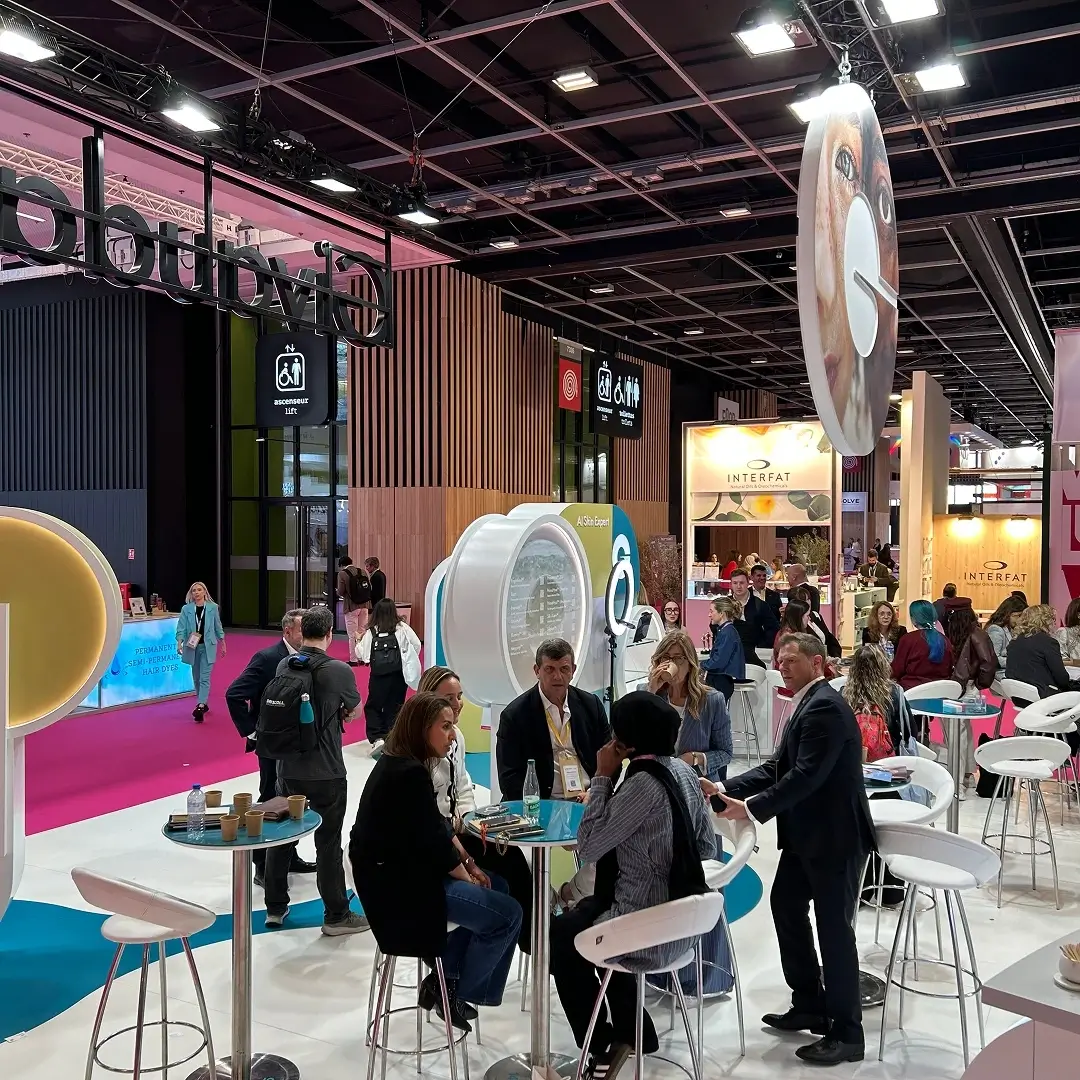
At Givaudan Active Beauty’s booth, visitors could literally see the science work. A live AI-powered facial scan showed in real time how their nerve fiber regeneration active would transform skin over time.
Fernanda Soro from Sentient Technologies confirmed the texture dimension: “The more sensorial a product is, the more you can stimulate the five senses, the better.” K-beauty’s second wave is pushing this further — lighter textures, new formats, new sensations — but now layered on top of genuine functional complexity underneath.
The Innovation Hub ingredient list showed this playing out at the formulation level. Ingredients being launched aren’t single-claim actives anymore.
- ILUMYS from Greentech targets pigmentation and radiance simultaneously.
- Osmolya from Expanscience handles hydration and barrier in one mechanism.
Marble 7 from Melt&Marble is positioned as a 3-in-1 bio-active lipid for skin, scalp and hair.
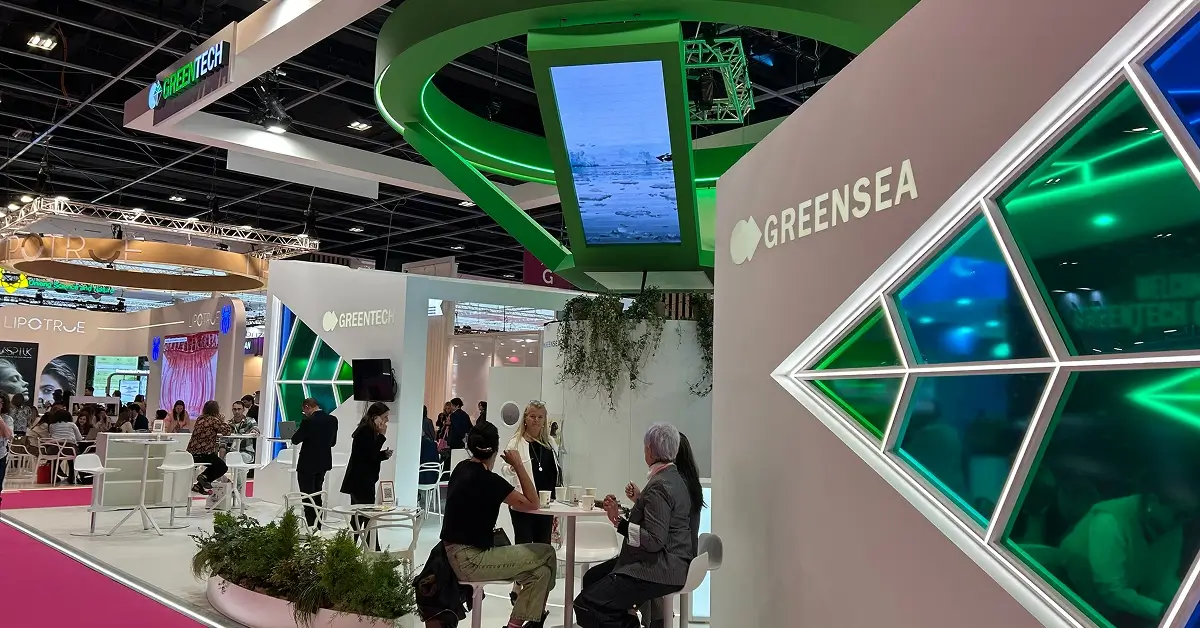
Greentech’s booth was a reminder that French biotech has been quietly leading ingredient innovation for over 30 years.
The SPF angle is particularly important. Brittney Wallat from Hallstar pointed out that the biggest shift in sun care briefs right now is skinification — consumers want UV protection embedded into their daily skincare, not as a separate beach product. The brief is no longer “make a good sunscreen.” It’s “make a skincare product that also has serious sun protection.”
What this means for brands:



That gap is where the opportunity is.
Macro Signal #3: Beauty From Within Has Moved to the Main Stage
A packed room on a Wednesday afternoon at an ingredient show tells you something.
The From Gut to Glow panel — a full nutricosmetics discussion with R&D directors, brand founders, and trend forecasters — had standing room only. That wouldn’t have happened three years ago.
The nutricosmetics market is currently valued at $7–9 billion and growing at 7.8–8.5% annually. But the number that matters more than market size is behavioral: consumers are no longer treating ingestible beauty as an occasional add-on. They are treating it as a daily wellness ritual — the same way they treat supplements. The shopping behavior, the compliance patterns, the channel preferences — all moving toward wellness retail and DTC subscription, away from prestige beauty.
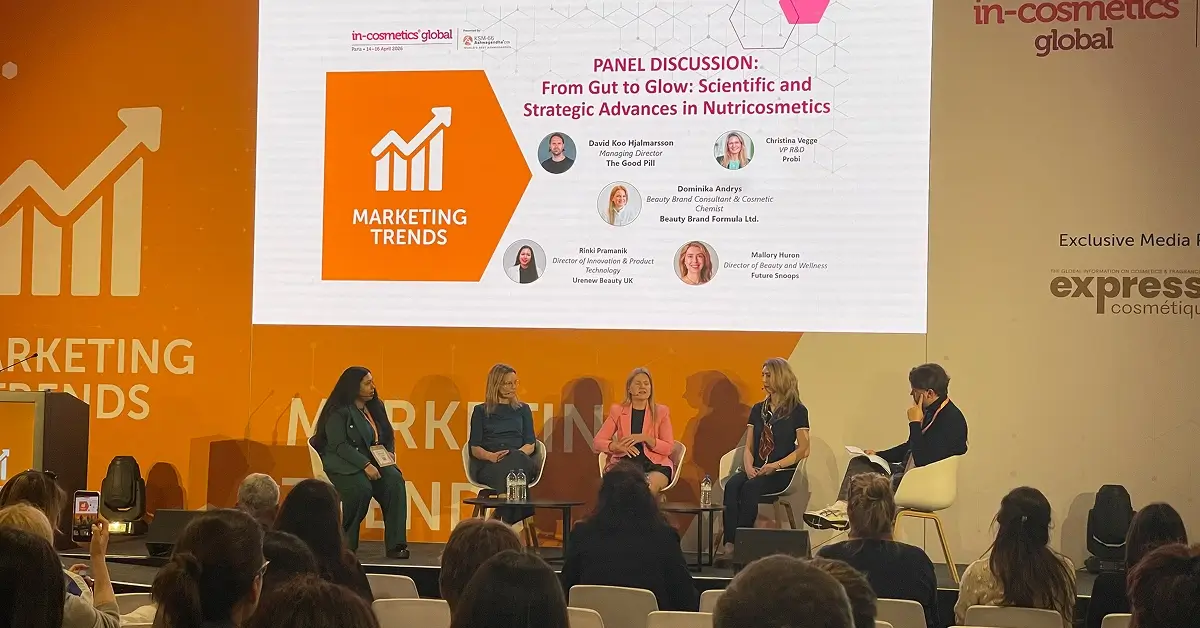
The session that confirmed nutricosmetics is no longer a niche — it’s the category connecting longevity, microbiome science, and the future of beauty from within.
Sephora is already responding. The retailer is actively phasing out supplements from its shelves. The category doesn’t belong in a beauty store anymore. It belongs in a wellness ecosystem.
Rinki Pramanik from Urenew Beauty, who has spent the last three years focused entirely on this category, was direct about where the biggest commercial opportunity sits right now:
“There is a huge tappable consumer gap at the moment — people really do not understand the collagen science enough.”
Collagen peptides are currently the largest nutricosmetics category, followed by ceramides and omegas as the next wave.
But the science is moving faster than the market. Christina Vegge, VP of R&D at Probi, outlined the gut-skin axis mechanism in detail — microbiome metabolites traveling via the bloodstream to the skin, promoting barrier function, dampening inflammation, and inhibiting accelerated aging of fibroblasts. The science is not speculative. The clinical evidence is building.
What’s still missing is clinical proof on real people – diverse, large-scale human trials, not just lab results. Pramanik put it plainly:
“The level of in vivo clinical testing we see in topical skincare — we need to see the same depth in nutricosmetics. Multi-country testing across different demographics, across different ethnicities. Only then does the trust automatically build.”
The format conversation was equally revealing. Dominika Andrys from Beauty Brand Formula argued that format is what drives repeat purchase — not the ingredient. A brilliant active in a format consumers won’t use daily is a commercial failure.
Mallory Huron from Future Snoops added the cultural layer:
“We’re in the era of seeking joy wherever we can find it. If a product has a lovely texture, a lovely scent, and it’s seamless to use — they’re going to adopt it and it’s going to become integral to their daily routine.”
Science wins long term. But format gets you in the door.
What this means for brands:



Macro Signal #4: The GLP-1 Consumer Is a New High-Value Beauty Audience
This one caught the industry off guard.
One in eight US adults have already tried GLP-1 medications. 25-30 million projected users by 2030.
Semaglutide patents expired in China and India in March 2026 — just weeks before this show. More than 50 generic brands are already preparing to launch in India alone. The mass market phase of GLP-1 adoption is not coming. It has started.
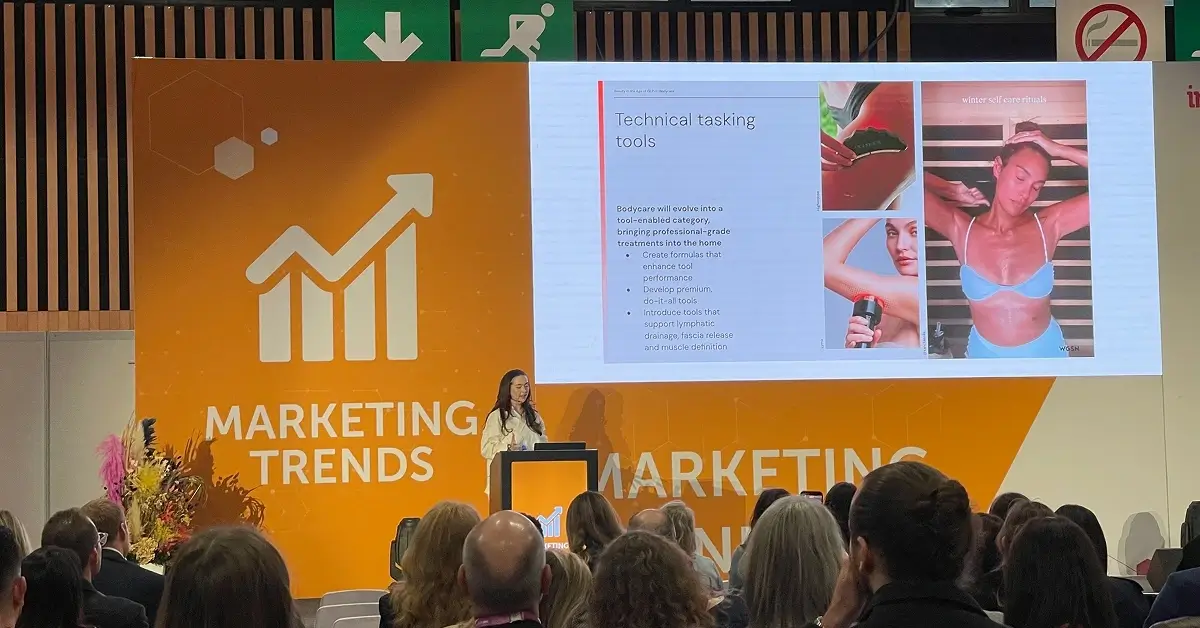
A full breakdown of how weight loss medications are reshaping body care, skincare, wellness, and fragrance — and why the brands that move first will own a category that barely exists yet.
But the beauty angle is what matters here. 40% of GLP-1 users are already spending more on beauty. 80% report improved self-confidence after starting the medication. This is not a sick consumer. This is an engaged, high-spending, appearance-motivated consumer with very specific new needs and almost no products designed for them yet.
The physical concerns are well documented.
- 80% worry about loose, sagging skin.
- 51% notice their overall skin looking worse.
- 47% are losing facial fullness.
On top of that — hair thinning, dehydration, and a body that’s changing faster than most products can keep up with. Nutrient depletion from long-term use. New body zones emerging — the arms, the hands, even what users on Reddit are calling “Zempic feet.”
But the emotional dimension is just as important and far less discussed. Many GLP-1 users experience a disconnection between how fast their body is changing and how they feel inside it. Body care becomes a tool for emotional recalibration, not just physical maintenance.
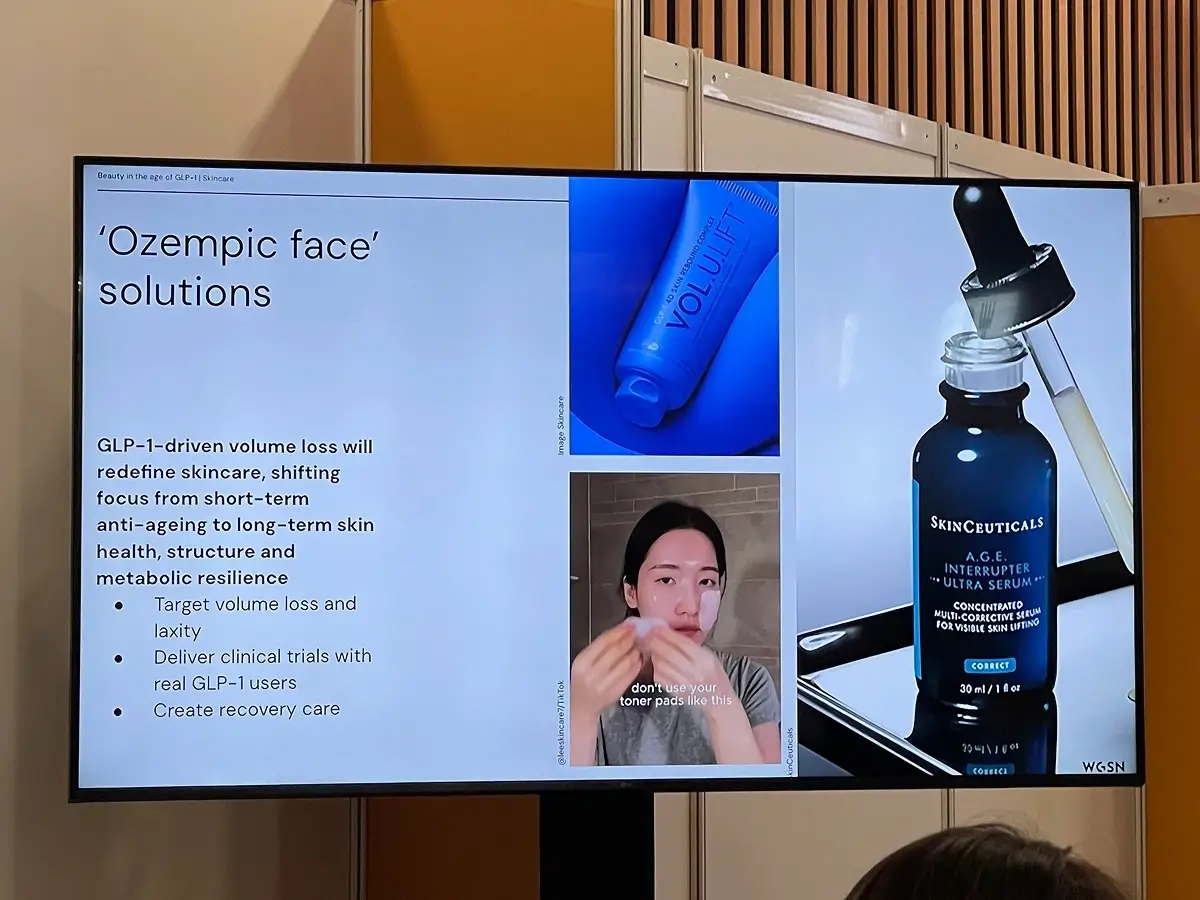
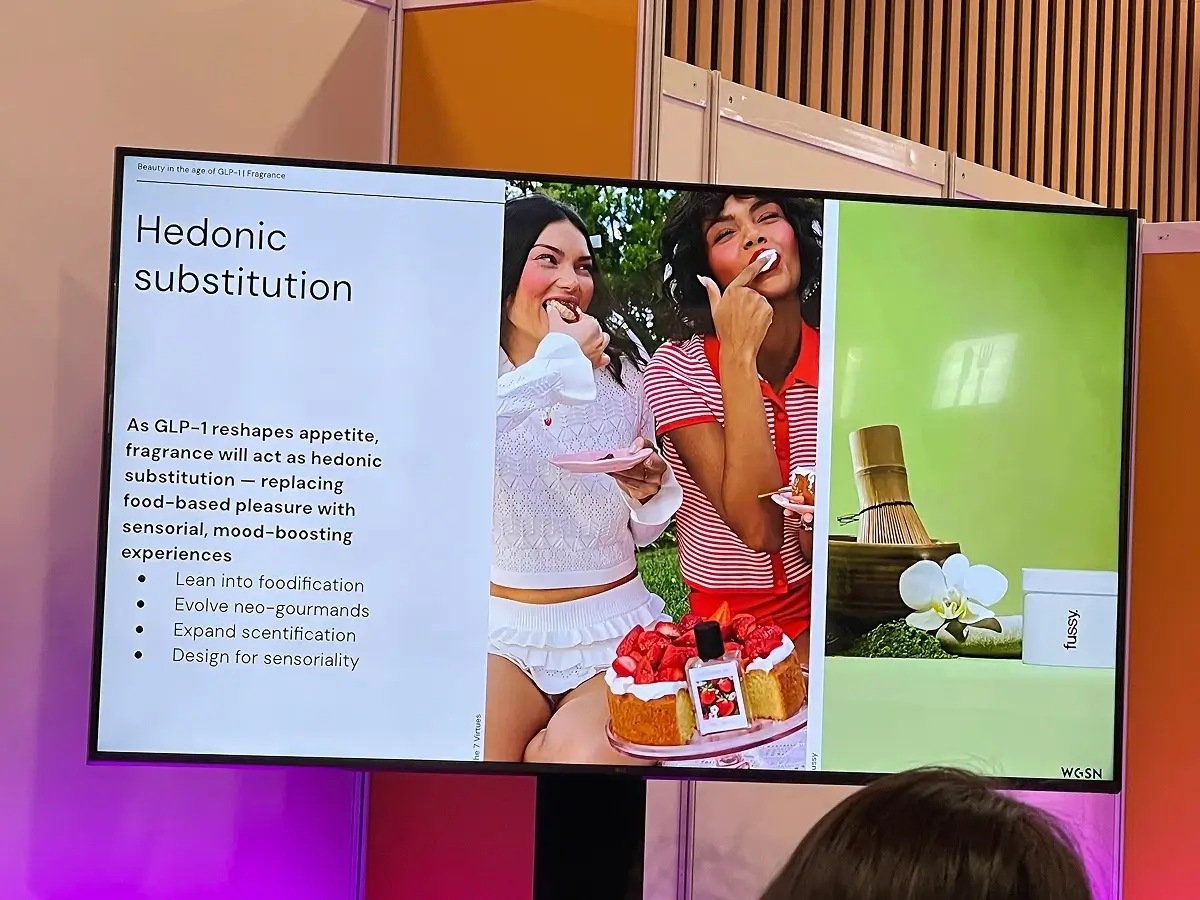
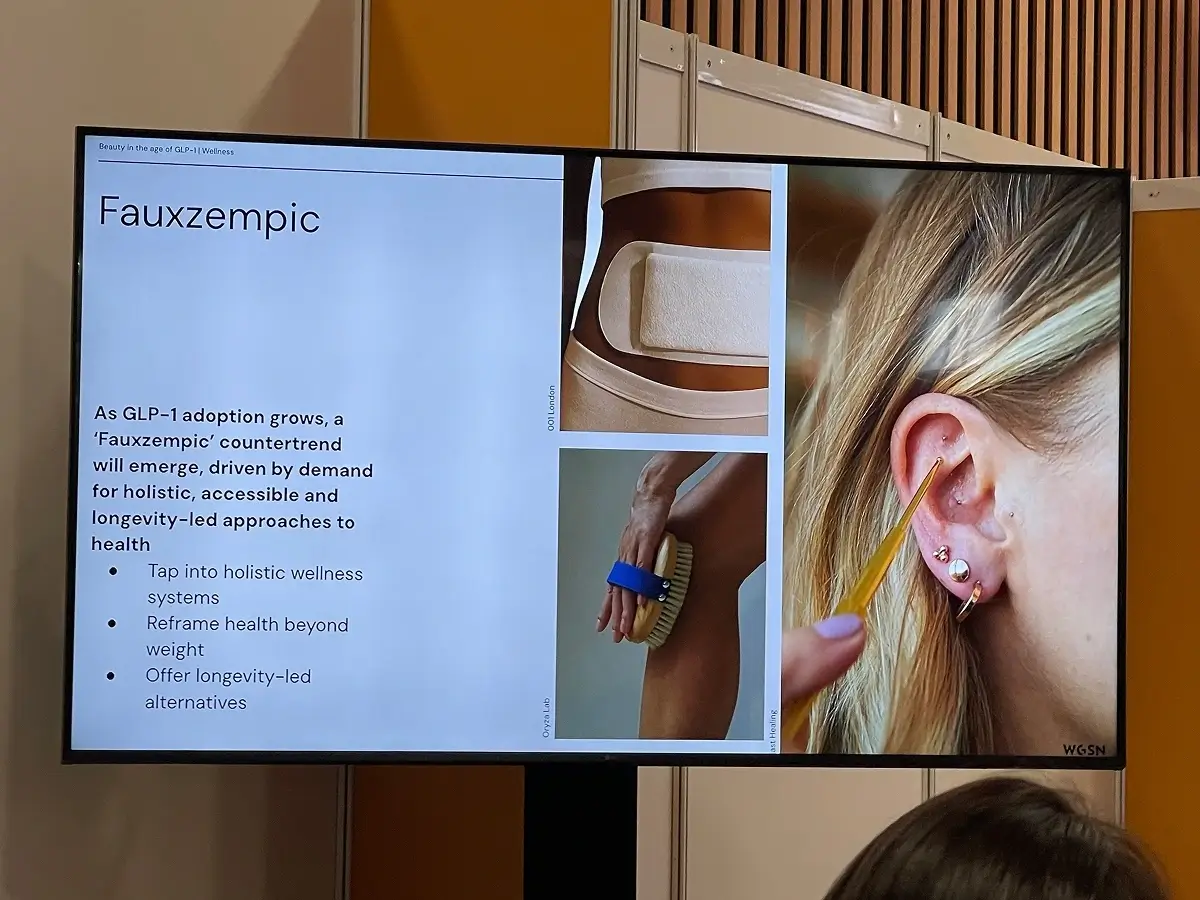
Ingredient manufacturers are already responding.
- Provital’s Intensilk mimics caloric restriction pathways directly.
- SC Labs launched SC Dietskin Tighter specifically targeting elasticity loss from weight loss. The mitochondrial energy actives — NAD+, NMN — are positioning themselves for the skin vitality gap that GLP-1 creates.
Fragrance is also being reshaped. Reduced food intake is driving what WGSN calls hedonic substitution — fragrance filling the sensory and pleasure gap left by changed eating habits. At the same time, nausea and scent sensitivity in higher-dose users is creating demand for quieter, low-intensity formats.
What this means for brands:


The window is open. Not for long.
Macro Signal #5: Biotech Means Nothing If It Doesn't Deliver Results.
Walk the floor at in-cosmetics Global and you will see the word “biotech” approximately every 3 meters.
Fermentation. Precision fermentation. Biotech-derived. Bio-engineered. Biosynthesized. The language is everywhere. And that’s exactly the problem.
Dominika Andrys from Beauty Brand Formula, who has spent 15 years in product development, said it directly on the From Gut to Glow panel:
“Today biotech is positioned as innovation more because of how the ingredients are made, not how the ingredient feels on the skin and how it performs. That is a B2B story rather than a function of the ingredient. Consumers don’t buy a fermentation process or a laboratory process. They buy results.”
She’s right. And the formulators in the room knew it.
Rinki Pramanik pushed it further from the brand side:
“Why are you calling it biotechnology? Have you used a process of biotechnology during development? Is your sourcing story biotech? Unless there is true integration of biotechnology, just do not use the word for the matter of a buzzword just because it’s trending.”
The second problem is scalability. A biotech active that works beautifully in a lab setting but can’t survive a 50,000-unit factory batch is not a commercial ingredient. It’s a press release.
None of this means biotech is wrong. The technology is genuinely powerful — precision fermentation is cutting environmental footprints by a factor of 10 in some cases, solving sourcing problems that traditional extraction can’t.
Givaudan won a COP30 award for their biotech hyaluronic acid production. That’s real innovation.
But real biotech innovation is measured in results and scalability.
What this means for brands:


Process is a footnote. Results are the headline.
Macro Signal #6: Sustainability Has Grown Up
Sustainability used to be a story. Now it’s a standard.
That shift was visible everywhere at in-cosmetics Global 2026 — in the Sustainability Zone, the Upcycling Hub, the supplier booths, and the interview conversations. But the most important shift wasn’t the volume of sustainability messaging. It was the quality of what brands and suppliers are now demanding from each other.
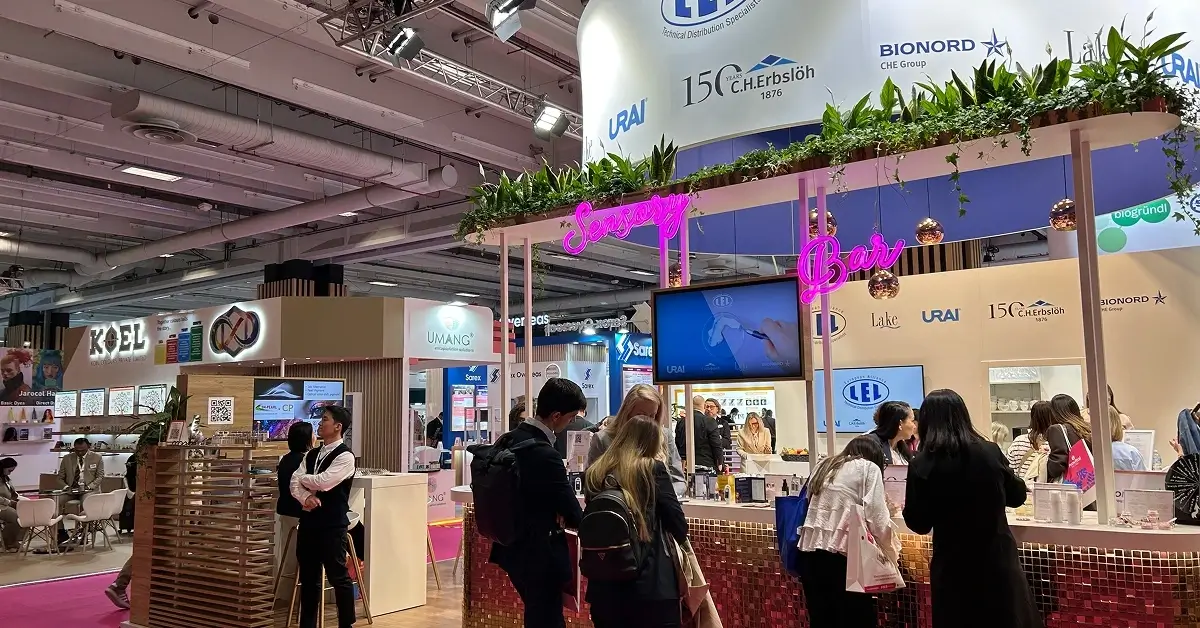
Hands-on testing of the newest textures, formats, and sensorial innovations from exhibitors across the floor.
Vague green claims are losing traction. Fast.
Fernanda Soro from Sentient Technologies framed the change well:
“In the beginning we saw this behavior much more in German consumers, in French consumers. But now we can see it everywhere — even Asia is becoming more sustainable, Latin America is becoming more sustainable.”
The demand is no longer regional. It’s global. And it’s moving from consumer preference to commercial expectation.
The TRASCE traceability alliance — a consortium of 15 cosmetics companies including Chanel and Susonity — is a signal of where this is heading. Full supply chain transparency. Ingredient origin tracking from source to shelf.
Upcycling has quietly become a formulation strategy rather than a sustainability footnote. The Upcycling Hub at the show featured ingredients built from coffee cherry waste, onion extraction residues, pineapple rhizomes, and upcycled lignin.
- Provital’s Intensilk is derived from upcycled apple blossom.
- Lipoid Kosmetik’s Cascara Pro from upcycled coffee cherry.
These aren’t compromise ingredients. They’re performing actives with a circular sourcing story attached.
Biotechnology is also being reframed through a sustainability lens. Dr. Cornelia Schürch from Mibelle was clear about why:
“We use biotechnology so as not to harvest from the fields, not use fields and soil, but to do it in bioreactors — constantly, without being dependent on seasons and harvests.”
Less land use. No seasonal dependency. Consistent quality. The sustainability case for biotech is stronger than the innovation case in many instances.
What this means for brands:



Innovation Spotlight: The Ingredients Worth Watching
250+ new ingredients launched at this show. Most won’t make it past a formulator’s bench. These ones will.
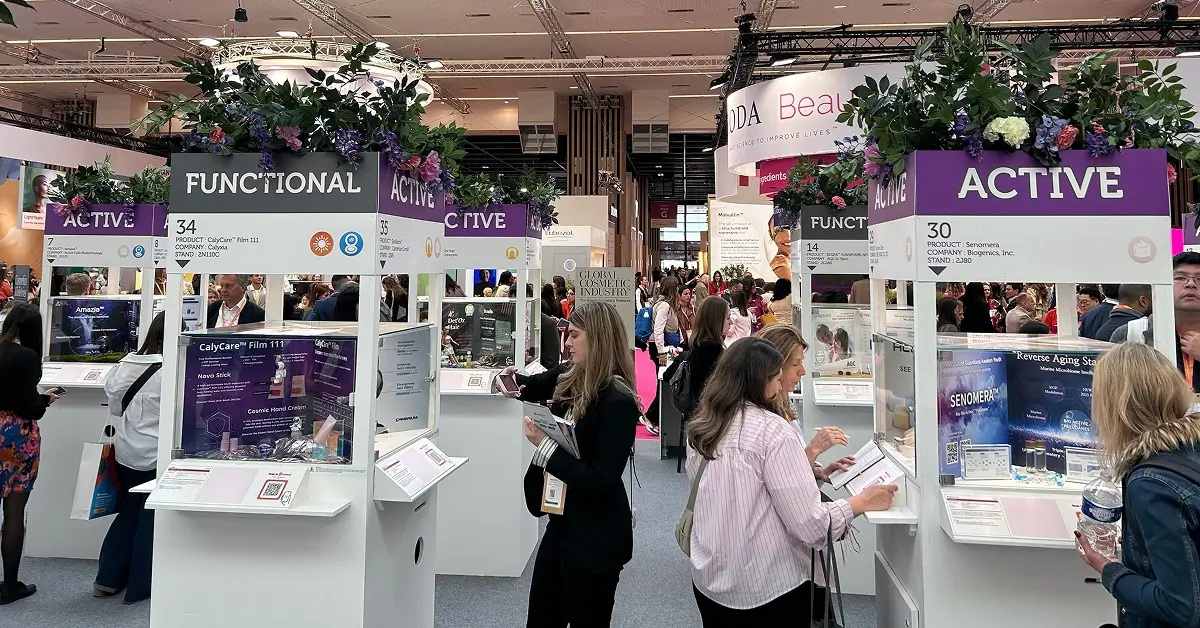
Every booth in the Innovation Hub represented years of R&D, clinical testing, and sourcing decisions — compressed into a single display card
Closing: What's Next
in-cosmetics Global 2026 is done.
Three days, one city, and enough signal to keep any brand strategist busy for the next two years.
The ingredients are being built. The science is moving. The consumer behavior is shifting.
The brands that will win the next chapter of beauty are not necessarily the ones with the biggest budgets or the most recognizable names. They are the ones paying attention right now. The ones connecting longevity science to consumer identity. The ones building genuine multi-benefit systems instead of single-claim products. The ones speaking to consumers — the GLP-1 user, the longevity-minded millennial, the wellness-first shopper — who are already spending and waiting for someone to actually talk to them.
The industry is at an interesting inflection point. The science has never been more advanced. The consumer has never been more engaged. And the gap between what’s possible and what’s actually on shelves has never been wider.
That gap is the opportunity.


