


This article is based on the guest lecture I delivered at the Geneva College of Longevity Science (GCLS).
Why Most Longevity Marketing Underperforms
People come into longevity with huge hopes – more energy, more years, fewer limitations, a sense of control over aging. That demand is real. But the moment you try to convert that emotion into a headline, you run into two hard limits:
- Science is complex.
- The rules are literal.
Most brands treat longevity like a trend category. They sell it like skincare (“visible results fast”), like fitness (“grind your way to transformation”), or like supplements (“take this and feel it”).
And the market has matured enough that this approach now produces one of three outcomes: (1) wasted budgets, (2) reputational damage, or (3) compliance risk.

Longevity brand ads
The 3 Forces That Make Longevity Marketing Hard
1. Demand Is Emotional, But Proof Is Technical
Your customer doesn’t wake up thinking about cell biology. They want to feel younger, stay sharp, recover faster, look good longer, and not fall behind their age. That’s emotional language.
But the moment you claim outcomes, the conversation shifts to evidence. Now you need to explain mechanisms, study types, biomarkers, and “what we know vs what we suspect.”
Most marketers either avoid the science (and become vague), or borrow scientific words (and accidentally imply things they can’t support). That’s how you get content that sounds impressive but builds zero trust.
2. Longevity Is a Time-Horizon Product
The platforms reward speed: quick hooks, quick results, quick proof. Longevity is the opposite. It’s slow, cumulative, and often invisible in the short term. Sometimes, you have to wait 60 to 90 days for the results.
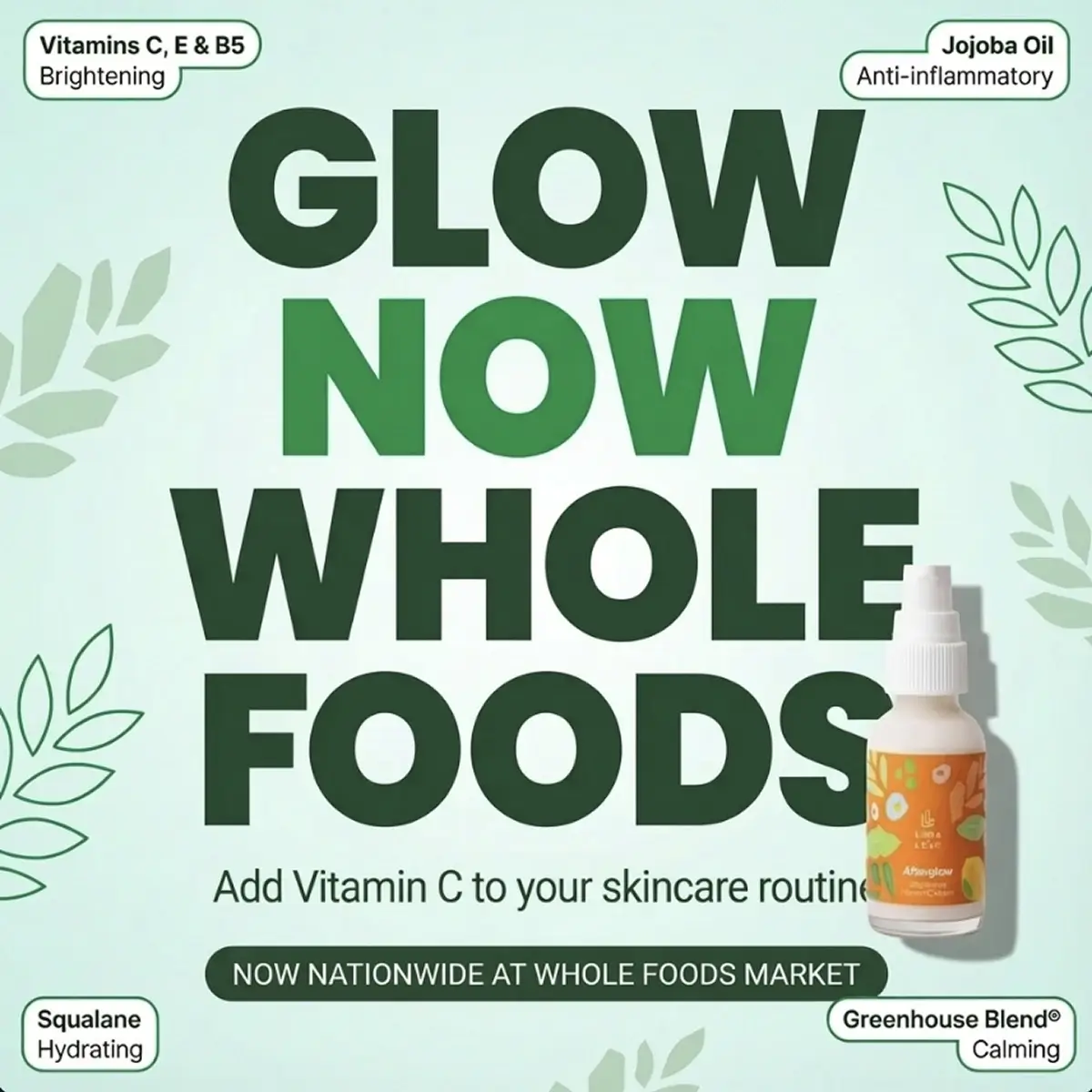
Short-term promise
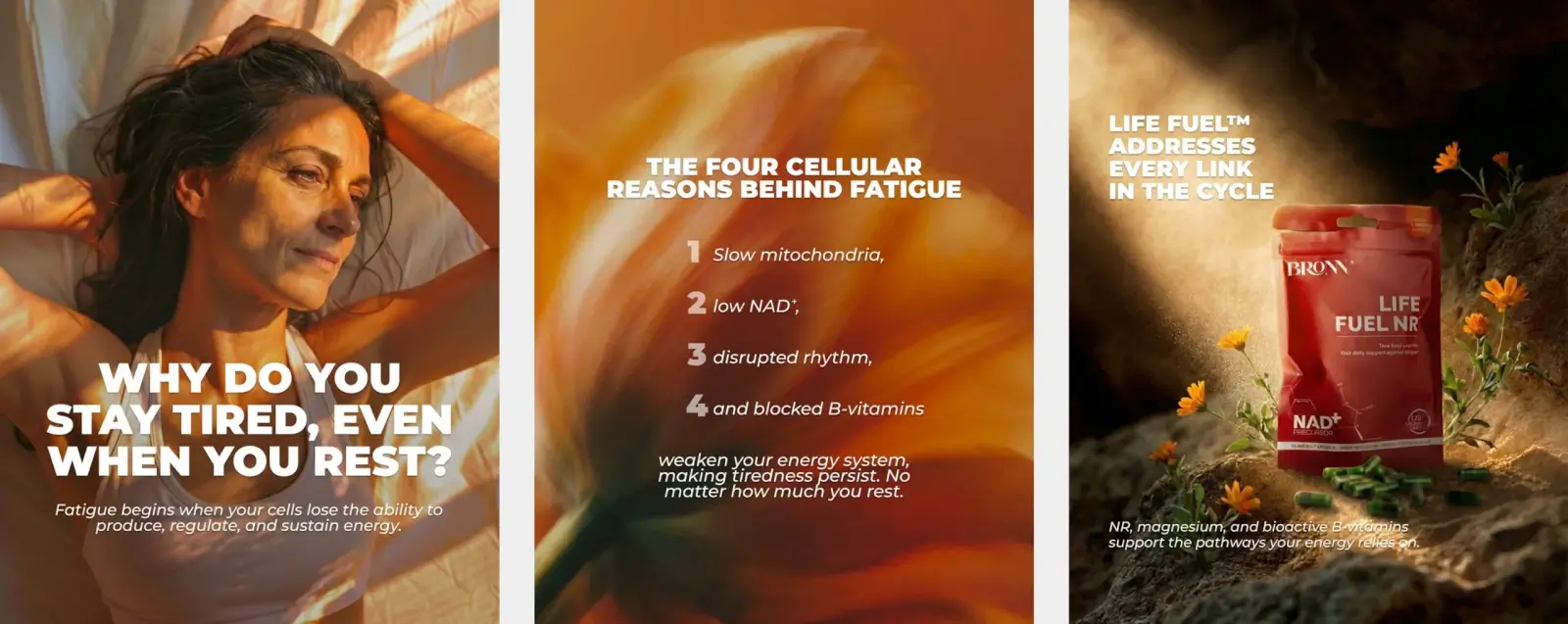
Education focused ad from BRONN, a pioneer longevity brand
So brands overcompensate: before/after vibes, aggressive certainty language (“clinically proven”), dramatic claims (“reverse aging”), or influencer-first storytelling. It may spike short-term metrics, but it fails the long game: repeat purchase, referrals, and clinical credibility.
3. Regulation Doesn’t Care About Your Intent
In longevity, the difference between “safe” and “risky” is often a single verb in the eyes of regulators like EFSA or FDA.
- “Supports” vs “treats”
- “May help maintain” vs “prevents”
- “Associated with” vs “improves”
Many brands assume disclaimers will save them. They won’t. If your headline implies a medical outcome, you’ve already crossed the line. This is why longevity marketing isn’t only creative work, it’s language engineering.
At Evolut, we handle this with “copy bibles”. A simple, shared document that sets the rules for everyone touching your messaging: the do’s and don’ts, safe wording, high-risk phrases to avoid, and ready-to-use sentence patterns that keep the brand stays convincing without getting into trouble.
The Longevity Market Landscape
Most people talk about “the longevity industry” like it’s one thing, some mix of supplements, biohacking, and anti-aging content. That’s why most positioning ends up generic (“science-backed longevity”) and most campaigns feel interchangeable.
In reality, the market is already structured. It clusters into distinct lanes with different customer expectations, different proof standards, and different regulatory risk. If you don’t know which lane you’re in, you’ll copy tactics from the wrong lane and either underperform or get in trouble.
A useful way to see the landscape is with a simple map:
- Performance → Beauty/Aesthetics (what is the desired outcome focus?)
- Emotional/Lifestyle → Rational/Scientific (what is the communication style?)
Put them together and you get four clear groups, each with its own rules for what works.

Longevity Marketing categories
Performance + Scientific
The “quantified optimization” segment
This is where longevity overlaps with prevention, measurement, and high-performing identity. The buyer is often motivated by performance, but they’re convinced by data, biomarkers, and precision.
The Whoop Story
Recently I watched Will Ahmed, the founder of WHOOP, on the The Gstaad Guy Podcast. It’s a fun listen, and he drops a few sharp insights that are especially relevant if you’re building or marketing anything in performance/longevity. I’m linking it here so you can check it out.
Performance + Lifestyle
The “biohacker identity” segment
Here people buy “discipline, energy and edge.” They want community, routines, tools, and the feeling of being ahead of the curve. Science helps, but narrative and identity are the conversion engine.
The Qualia Playbook
A good example of this dynamic is Qualia. Instead of leading with abstract longevity promises, they sell the identity outcome first: sharper focus, amplified drive, clearer thinking, basically “show up better on demanding days.” Their flagship cognitive product page is built around those high-performer payoffs (“focus,” “drive,” “energy,” “creative flow”), which plugs directly into the “discipline and edge” buyer mindset.
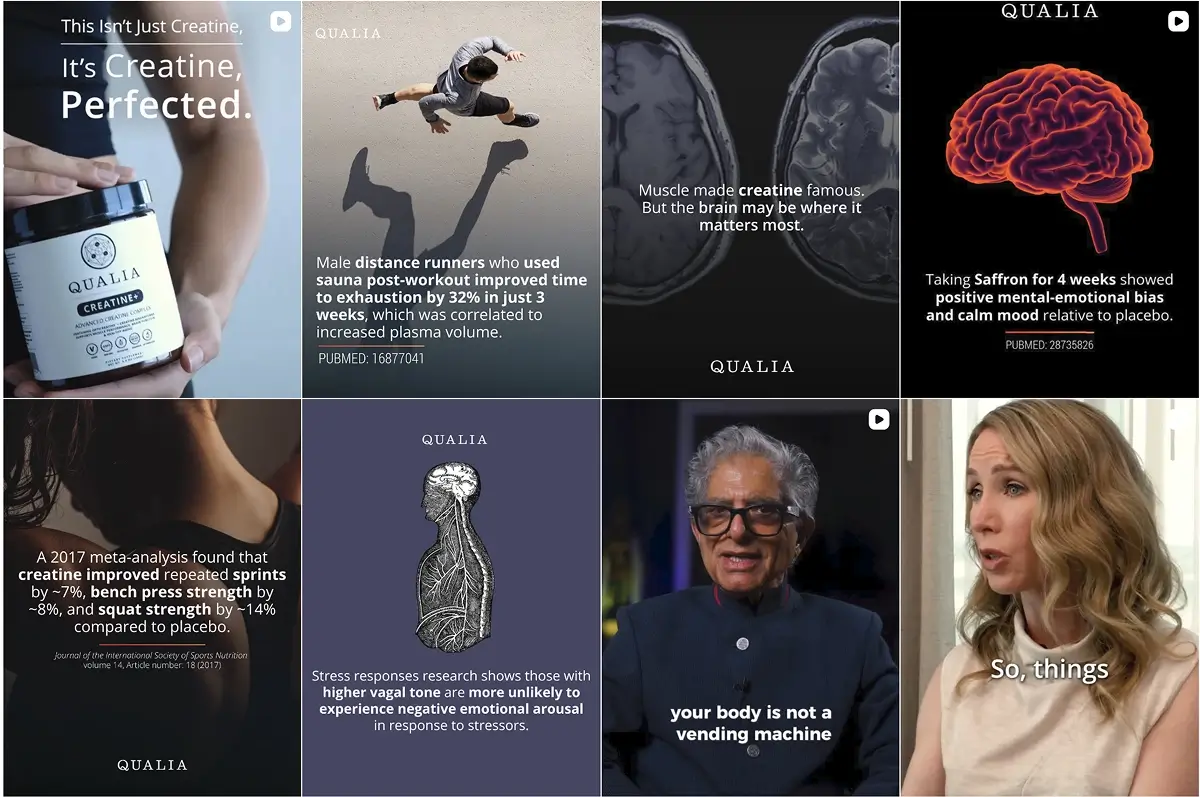
Beauty/Aesthetics + Lifestyle
The “aesthetic longevity” segment
This is about looking and feeling good as you get older, using simple, relatable language. It’s close to skincare: glow, firmness, confidence, and overall vitality. The buyer wants results they can see or feel, but doesn’t necessarily want biology.
The Allies of Skin Approach
Allies of Skin is a great example of “aging well” marketing because they keep it simple: brighter skin, firmer-looking skin, and a healthy glow, no heavy science talk needed. They also lean into a very relatable promise for busy people: high-performance, do-it-all products that fit into a quick routine, so the brand feels practical and modern, not clinical or preachy.
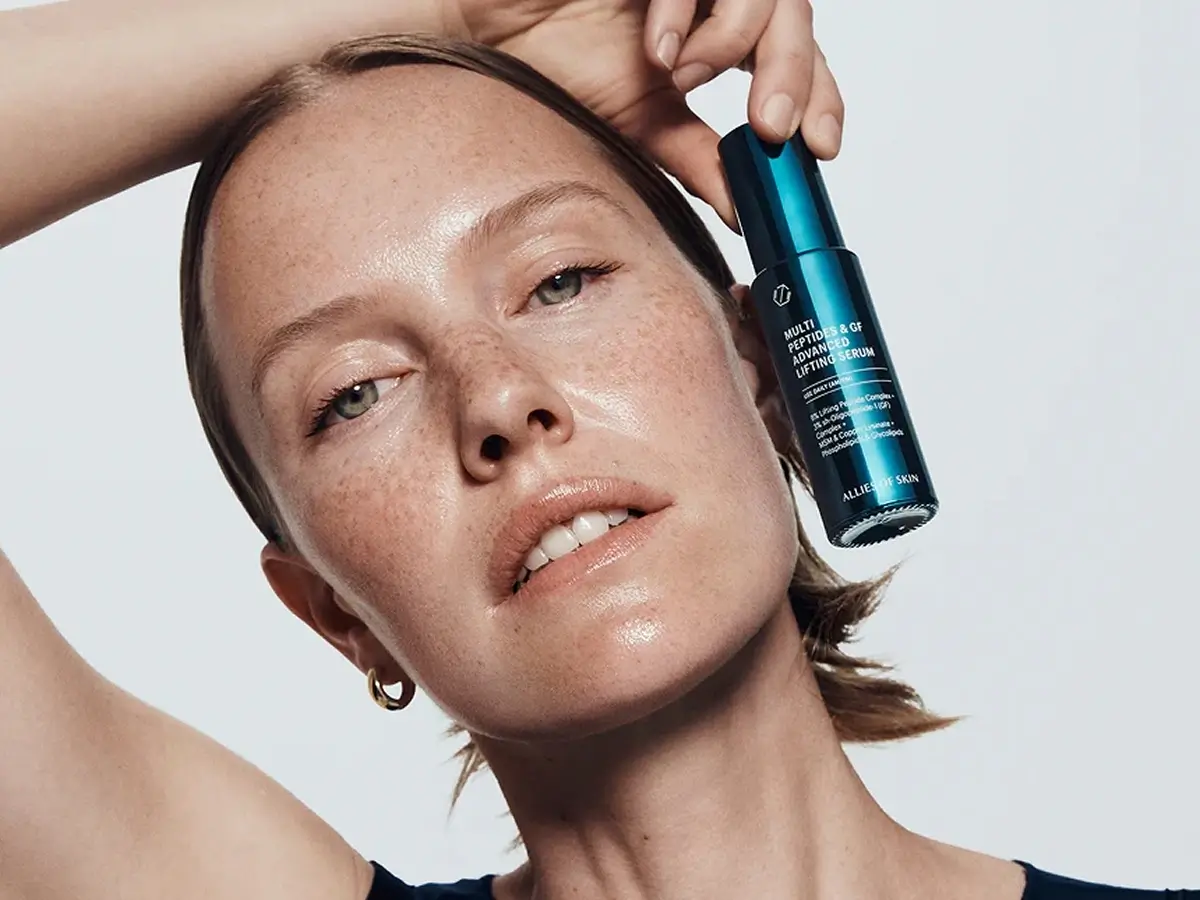
Beauty/Aesthetics + Scientific
The “clinical aesthetics” segment
This is where things get interesting. Brands in this quadrant use science and mechanisms to justify aesthetics and aging-well claims. The buyer expects sophistication: mechanisms, studies, proprietary tech, and a credible narrative.
The Timeline Model
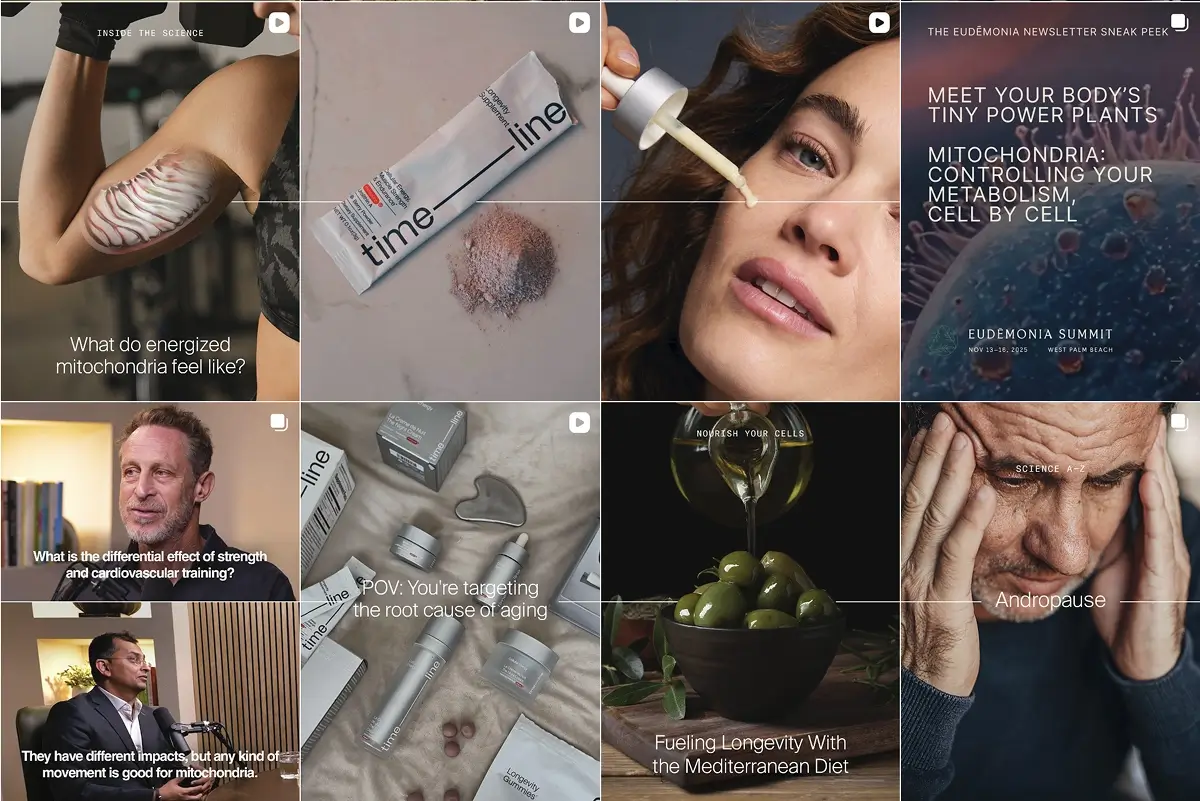
Timeline is a strong example of this “science-to-aesthetics” segment because they don’t try to sell beauty with vague vibes, they justify “aging well” with a clear mechanism story. They lead with cellular renewal and communicate more like a biotech company than a typical supplement brand, anchoring the brand around Mitopure® as a proprietary, clinically studied bioactive.
Customers don’t judge you against “truth.” They judge you against the best brands in your segment.
- If you position yourself as “scientific,” people will expect clear explanations, real sources, and thorough education on the biology behind it.
- If you’re positioned as lifestyle, you’ll be judged on relatability, usability, and habit design.
- If you’re positioned toward beauty, you’ll be judged on perceived results and emotional resonance.
- If you’re positioned toward performance, people will judge you on measurable results, precision, and the context behind your data.
Most longevity marketing underperforms because the brand’s product lane and communication lane don’t match.
In longevity, “science-backed” is the bare minimum and basically meaningless unless you’re clear about what kind of science you’re referencing and how you translate it into responsible, usable messaging.
Real differentiation comes from a handful of levers:




In Longevity, Trust Is the Funnel
Longevity customers don’t buy the way most eCommerce funnels assume they buy. They don’t see an ad, feel inspired, click, and convert because the offer sounded good. In longevity marketing, the product is inseparable from the implications: biology, long time horizons, personal risk tolerance, and the fear of getting fooled.
So the real buyer journey is not linear, it is layered.
People move forward when they accumulate enough trust to believe two things at the same time: “this is credible” and “this applies to me.”
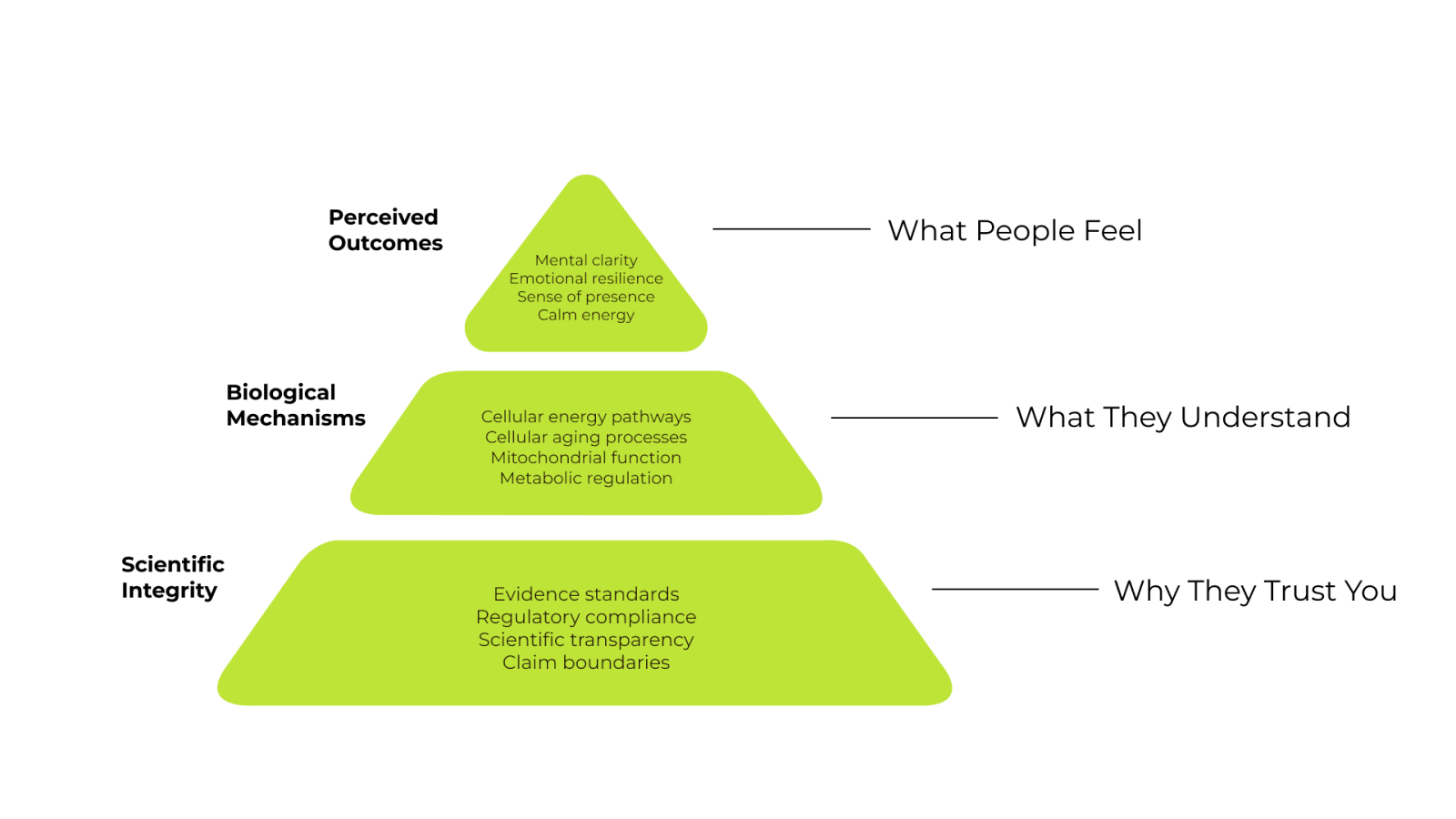
Layers of trust
The 3 Trust Layers That Drive Conversion
Layer 1: Scientific integrity (Why people trust you)
This is the foundation. It’s about behaving scientifically. The signals here are surprisingly simple: clear sourcing, honest uncertainty, consistent claims, and a visible commitment to boundaries.
The strongest brands make it easy to answer:
- Where is this coming from?
- Who is behind it?
- What evidence tier are we talking about?
If this layer is weak, everything above it collapses, because any outcome or testimonial starts to feel like hype.
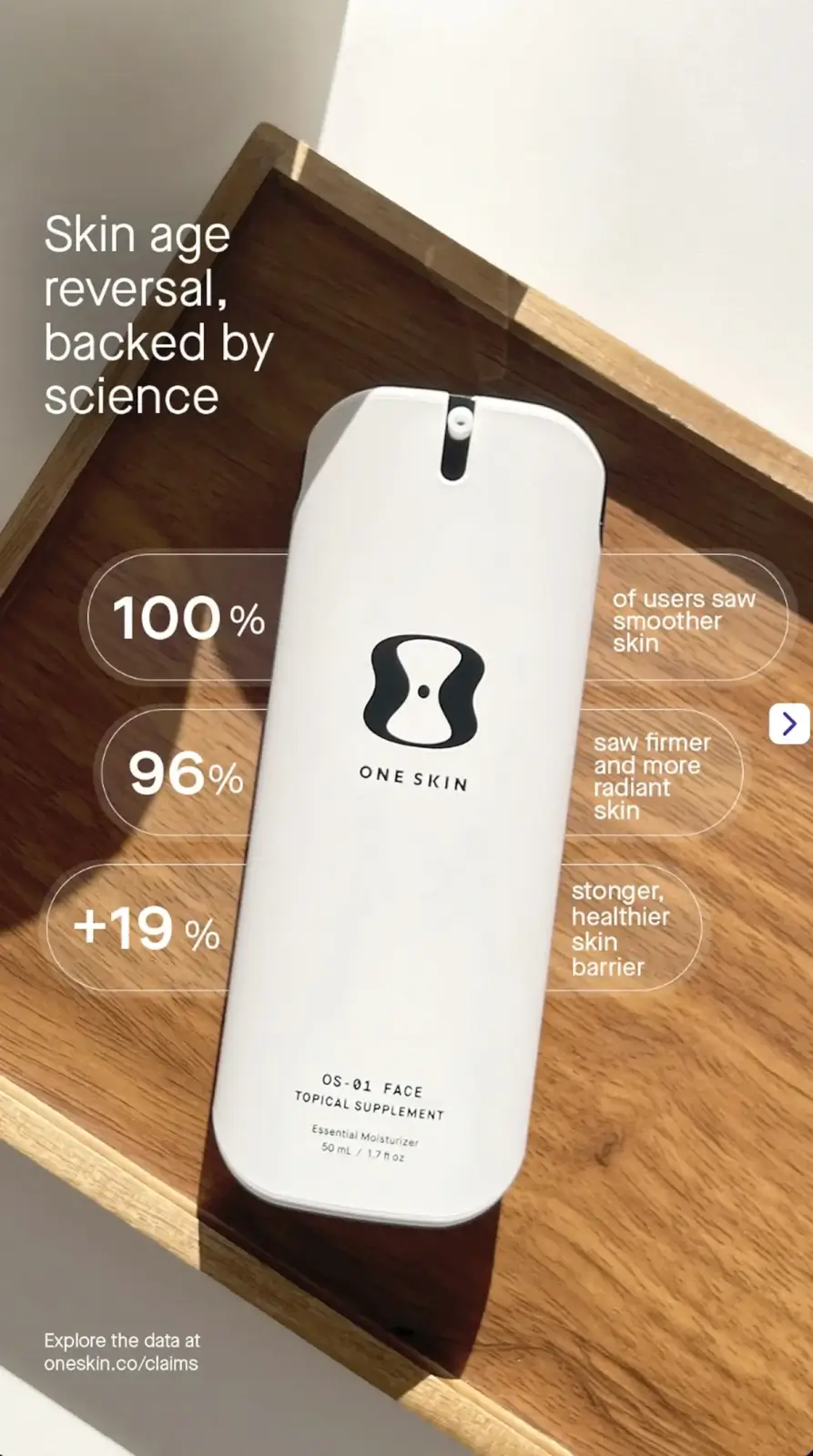
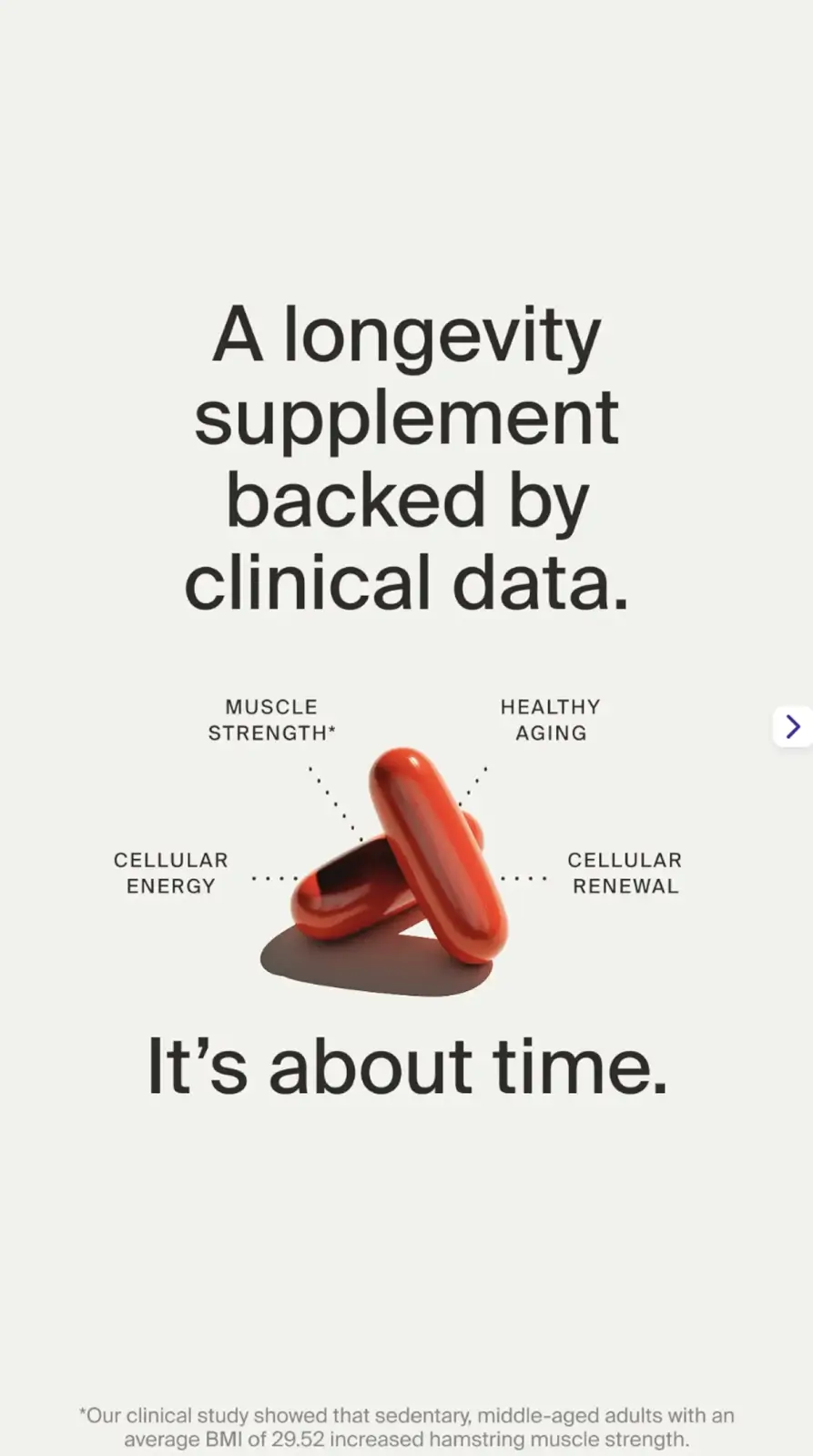
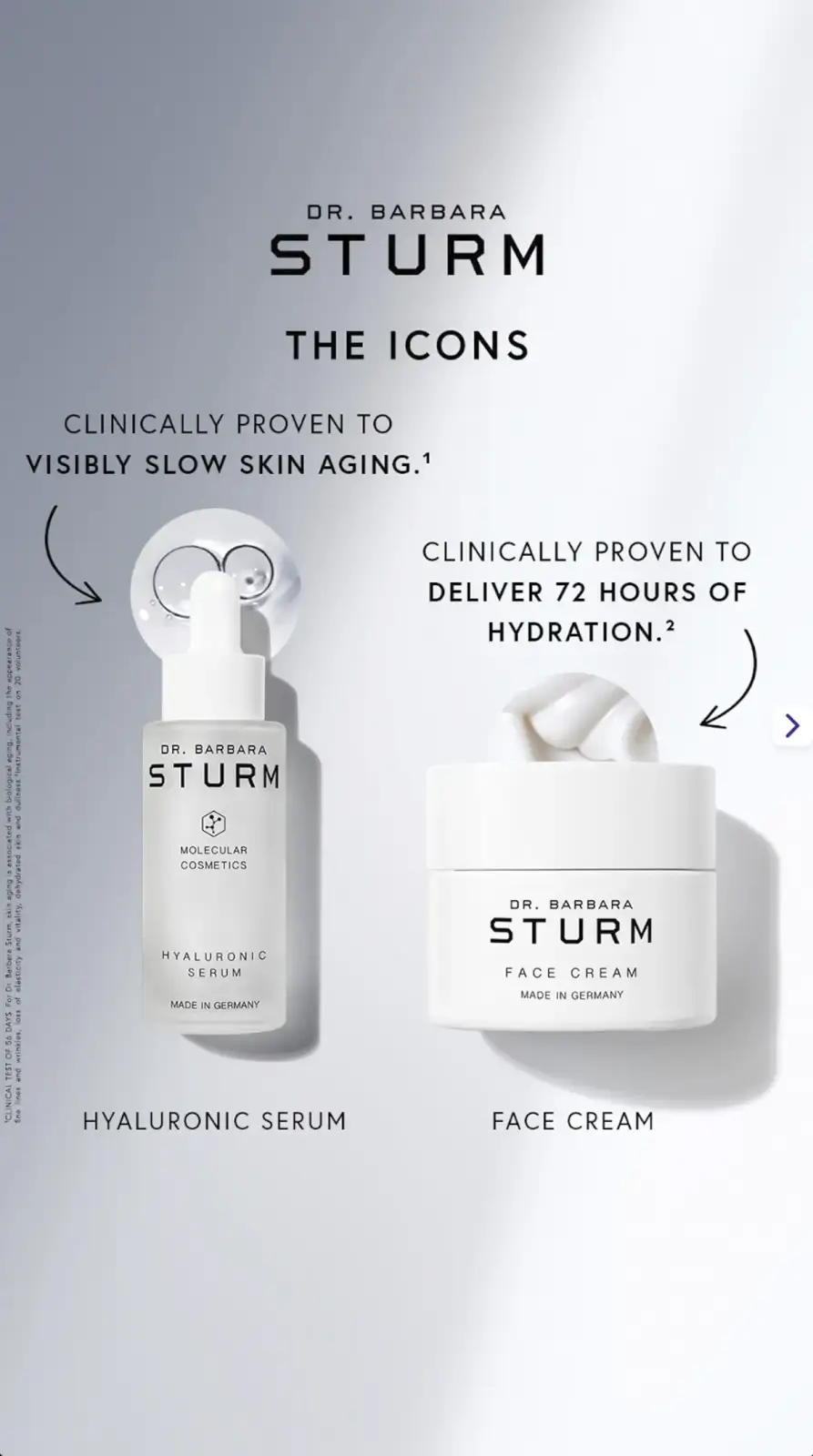
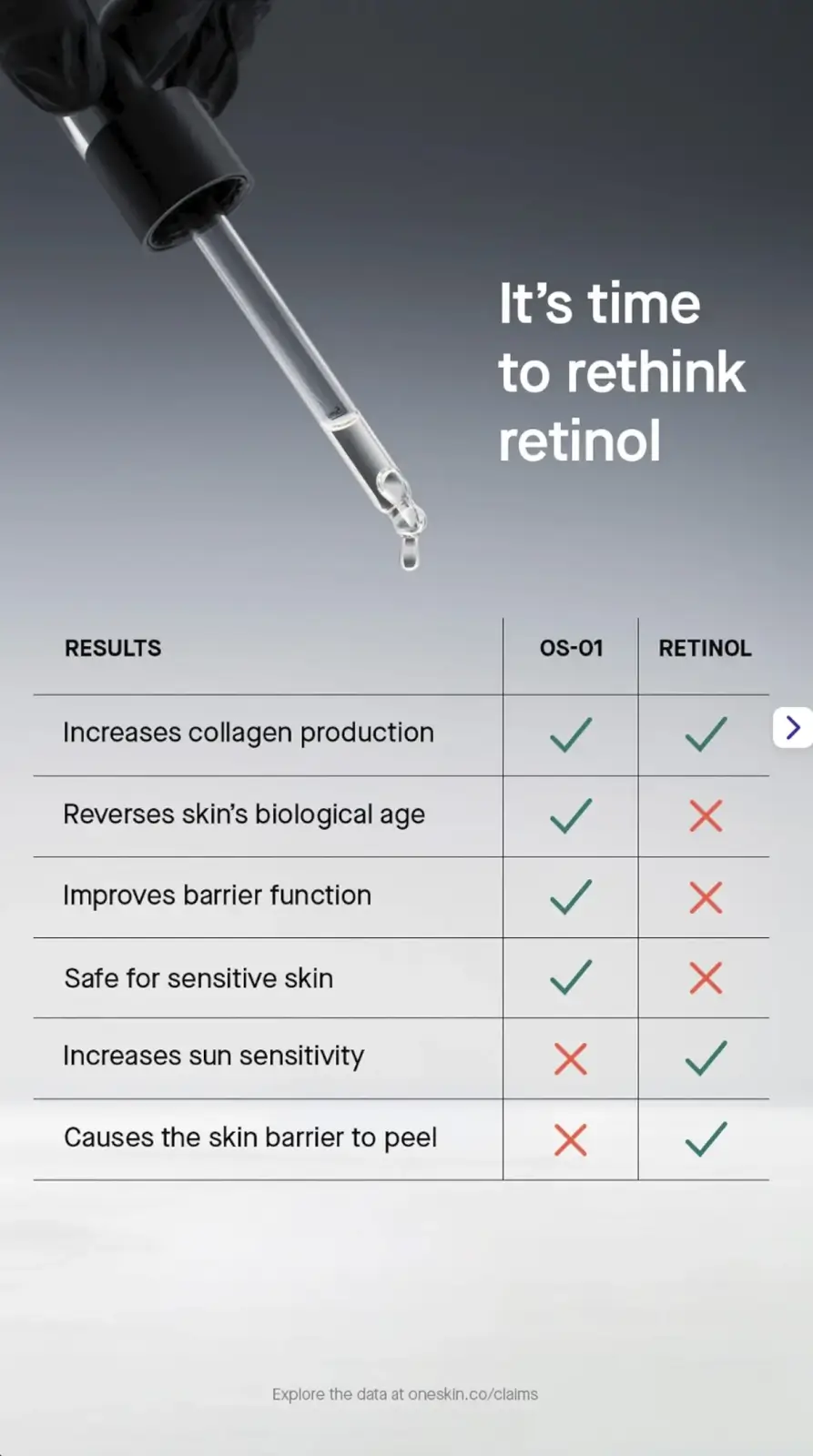
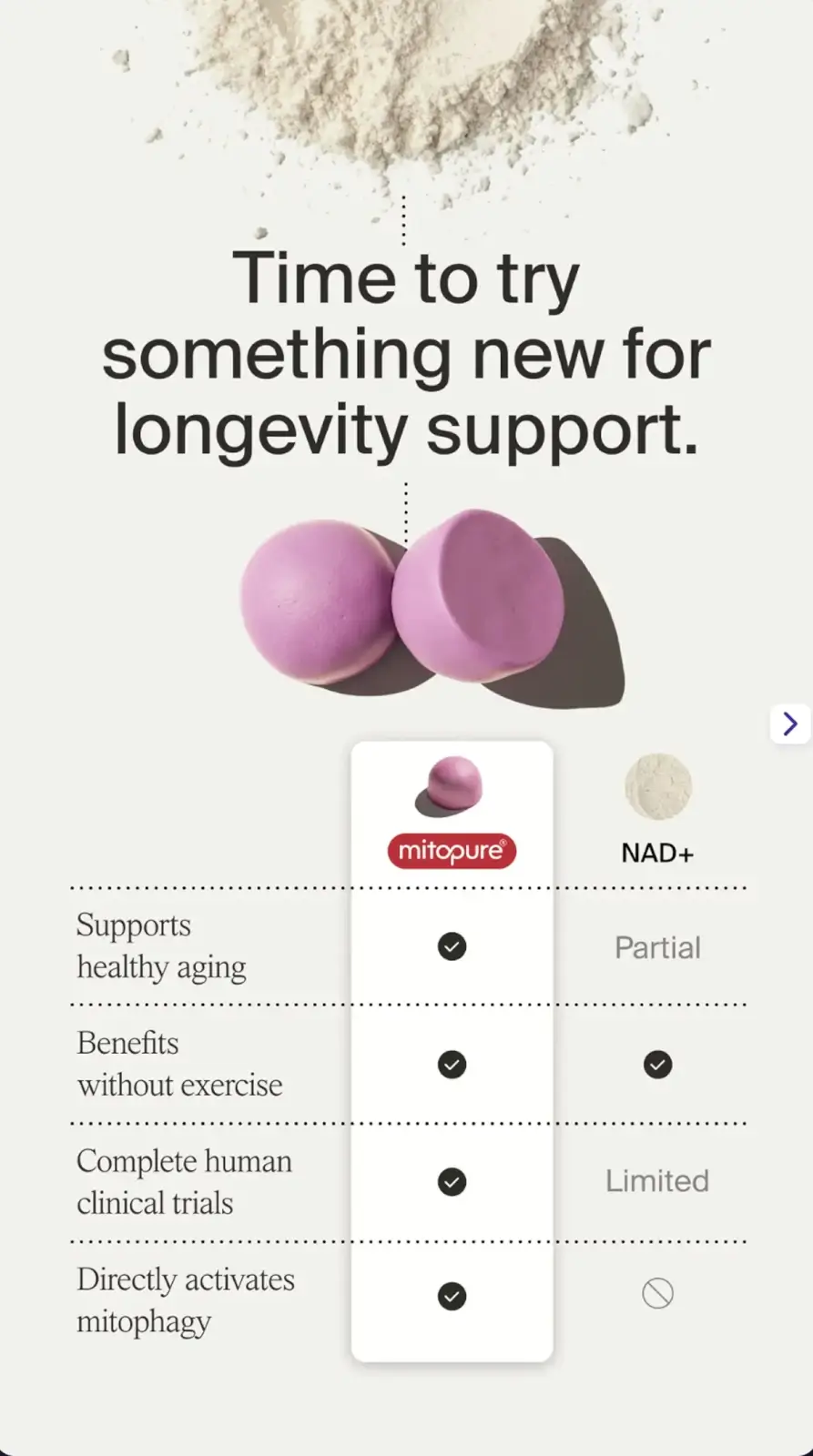
Scientific evidence based ad creatives from 3 iconic brands (One Skin, Timeline, Barbara Sturm)
Layer 2: Biological mechanism (What people understand)
Once people feel you’re credible, they need a model of “how it works.” Not a full lecture, just a coherent mechanism they can repeat back. If you oversimplify, you sound like wellness fluff. If you overcomplicate, you lose the reader because of the jargon.
The goal is translation:
- What process are we supporting?
- Why does that process matter over time?
Great longevity brands teach one mechanism consistently until the customer can explain it to a friend.
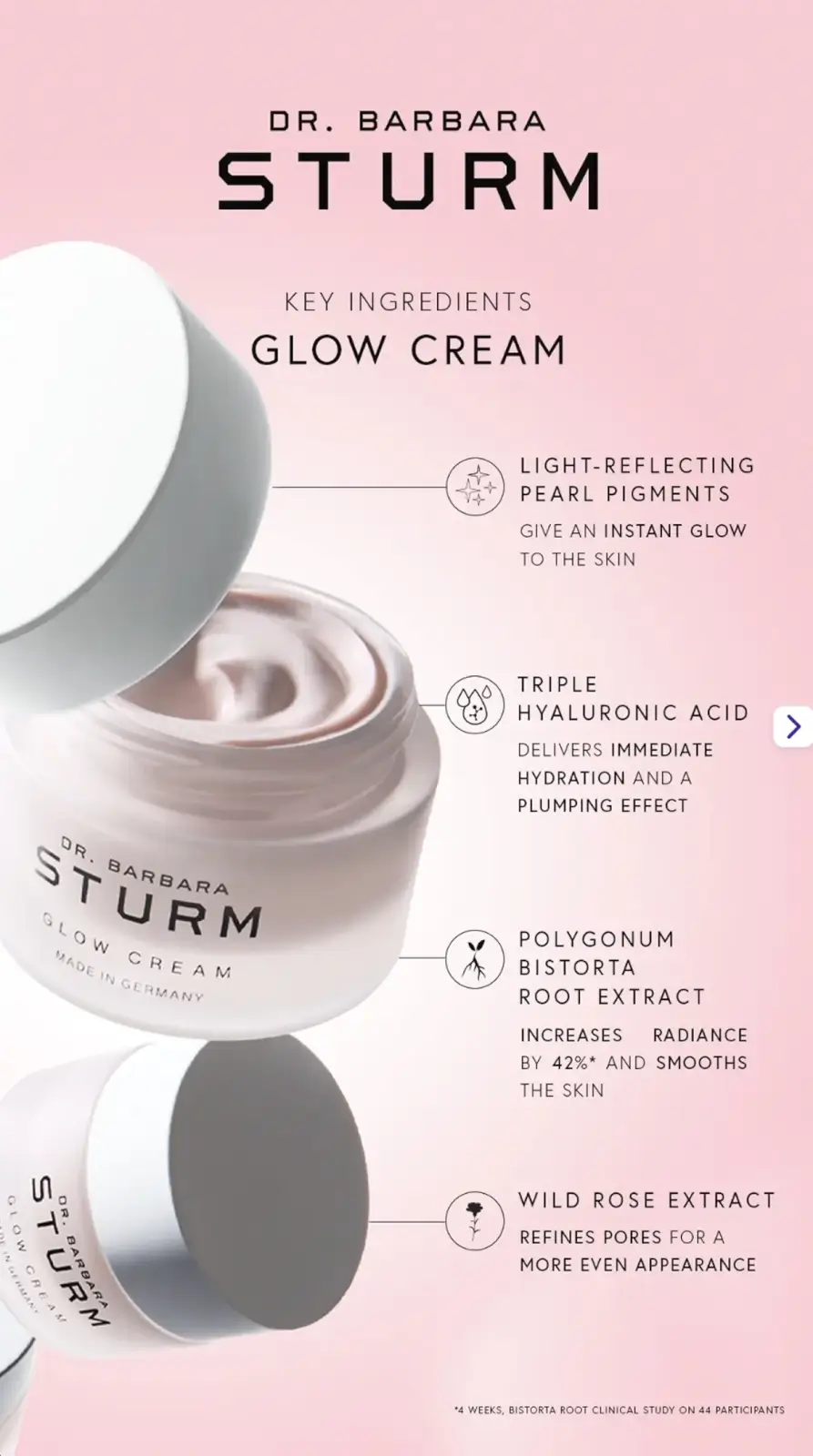
Mechanism / demonstration based ad creatives from these brands
Layer 3: Perceived outcomes & lived experience (What people feel)
Outcomes only convince people after they trust you and understand how it works. And in longevity, outcomes are often best framed as subjective and experiential rather than medical or absolute: resilience, steadier energy, better recovery, clearer routines, improved consistency.
This layer is where conversion content lives – stories, social proof, “day in the life,” habit design, expectations management. But if you lead with outcomes before earning the first two layers, it reads like a promise and promises trigger skepticism (and regulatory risk).
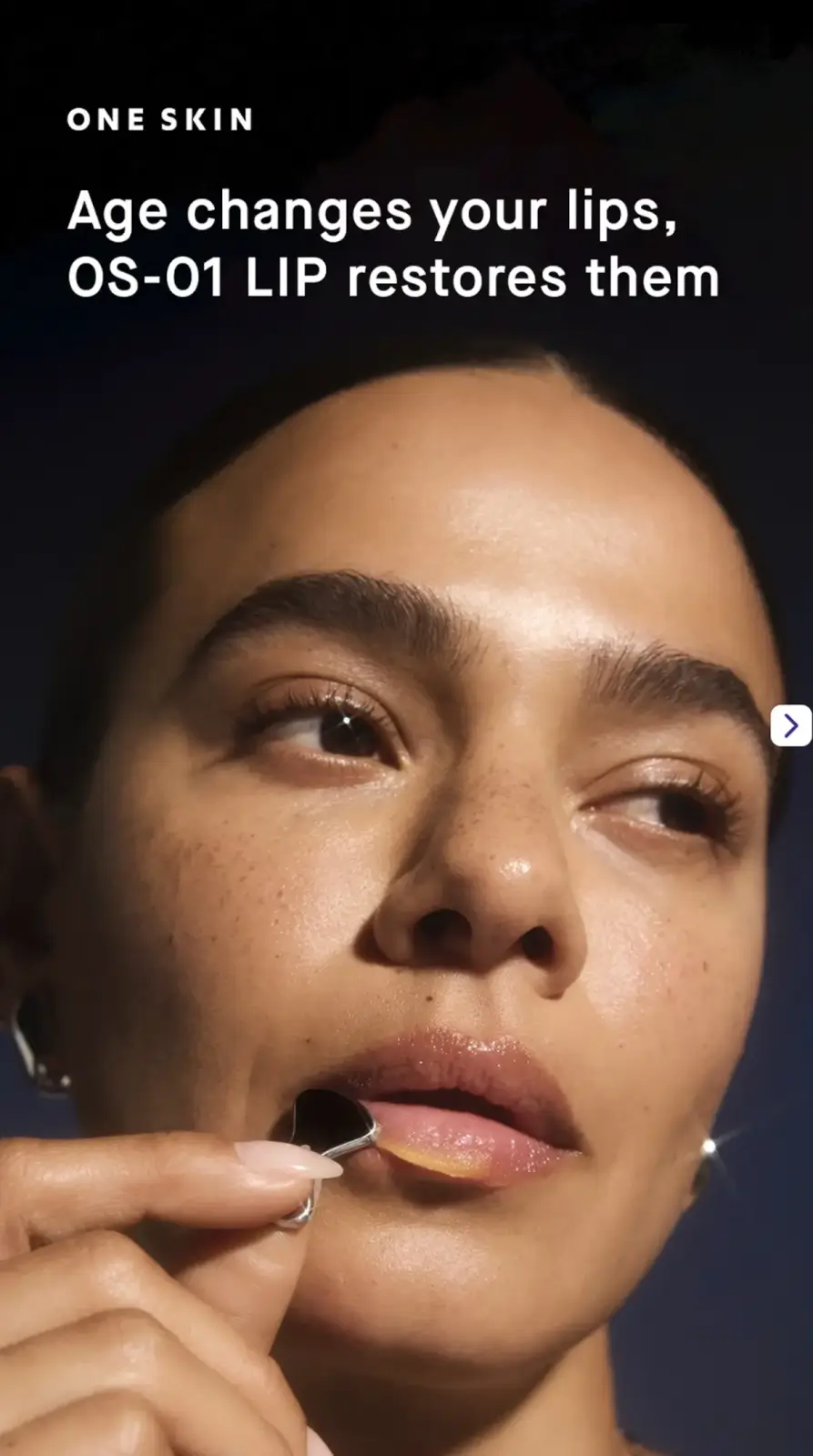

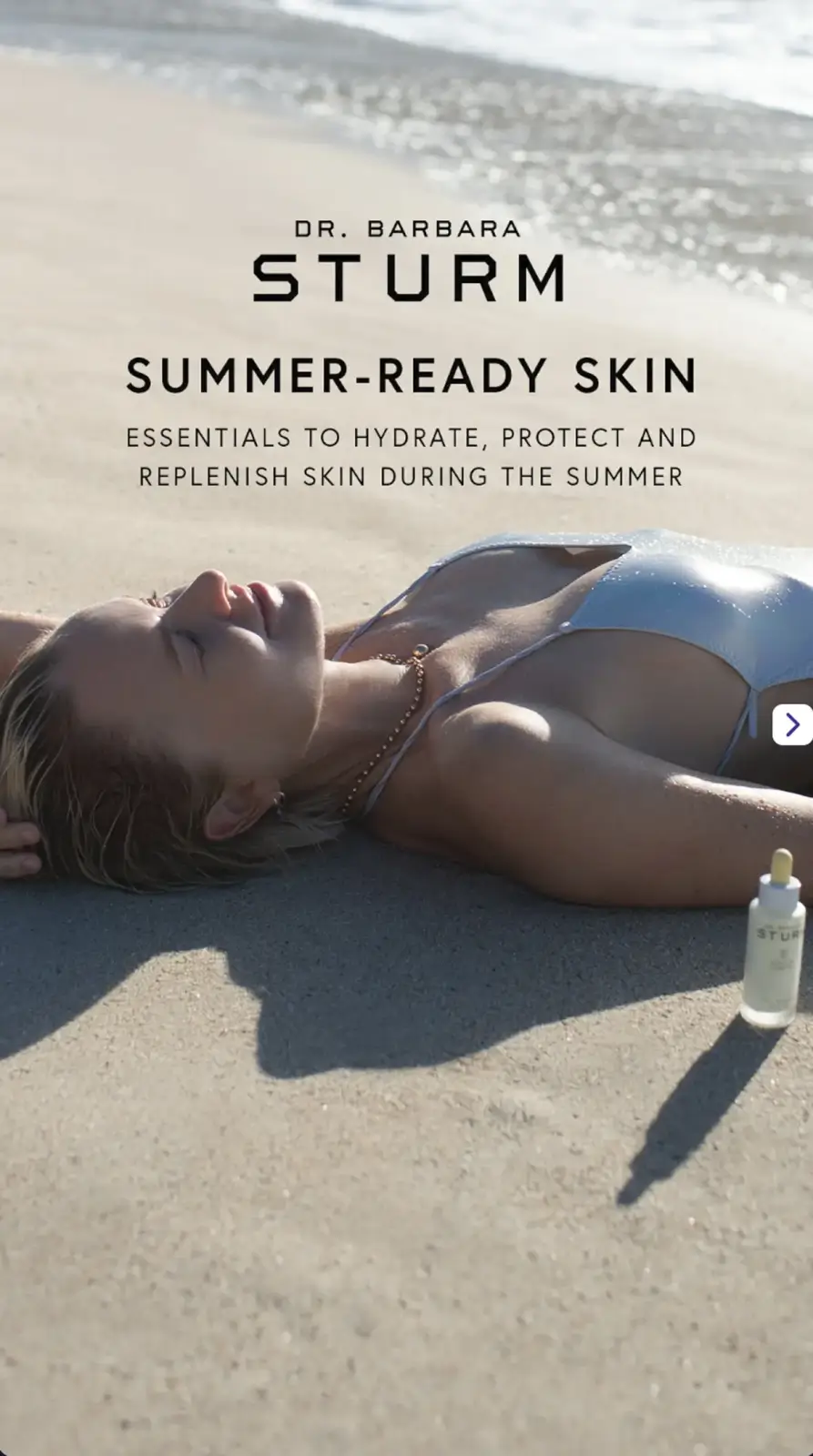
Perceived outcome (lifestyle) based ad creatives from these brands
3 Emerging Trends in Longevity Marketing
Longevity campaigns are getting better, not because brands found a new “hook,” but because they’ve learned where the category punishes shortcuts: claims, visuals, and borrowed authority.
The most effective brands are moving:
(1) from outcomes to biology,
(2) from transformations to trajectories, and
(3) from persuasion to interpretation.
Trend 1 - From “claims” to “mechanisms”
The strongest longevity brands are deliberately stepping away from outcome-heavy language (“anti-aging,” “reverse,” “clinically proven longevity”) and replacing it with mechanism-first explanation, what pathway, what biological process, what it’s involved in, and what it may support when applied consistently.
This shift is happening for two reasons.
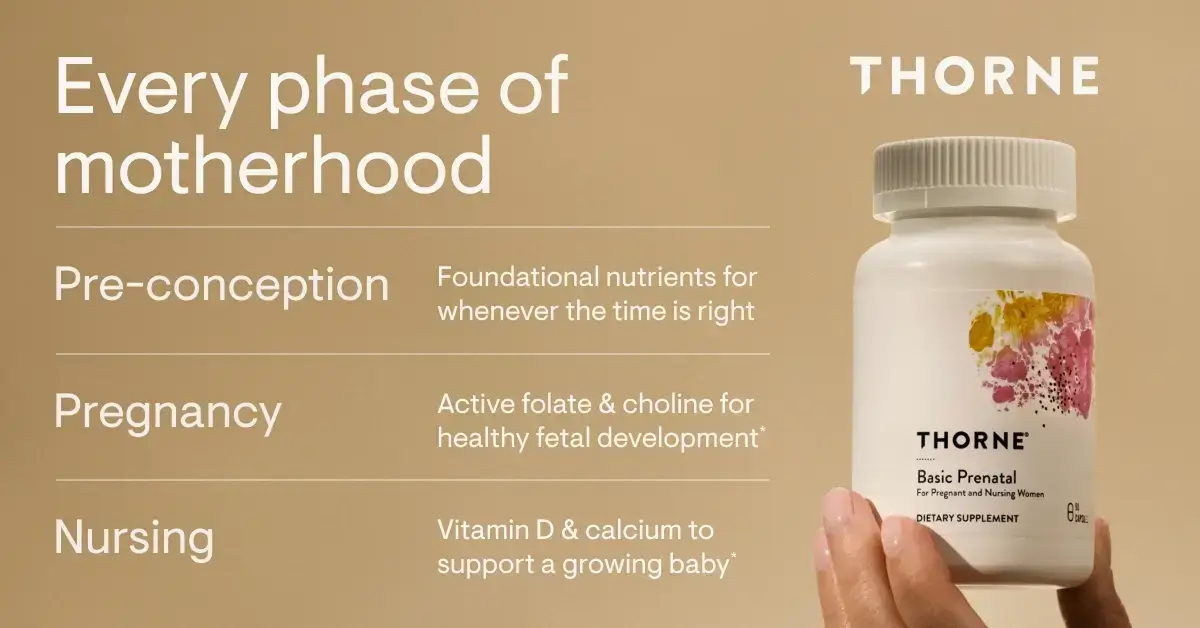
Thorne ad creative showing a mechanism/support-based message instead of broad outcome claims
First, it’s safer: mechanism language helps avoid the regulatory “red zones” triggered by disease claims, lifespan guarantees, absolute certainty, or implied causation.
Second, it converts better in a mature market: sophisticated buyers don’t want louder promises, they want a coherent explanation they can repeat back.
Trend 2 - From before/after to process & time horizon
Longevity is fundamentally a time-horizon category, but most marketing formats reward short-term results. The new winning move is to stop chasing visual “transformations” and start selling trajectories. What shifts little by little, what gets better when you stick with it, and what “staying on track” actually looks like in real life.
That’s why you see a shift from “look what happened” to “here’s what we do, how we measure it, and what to expect over time.”

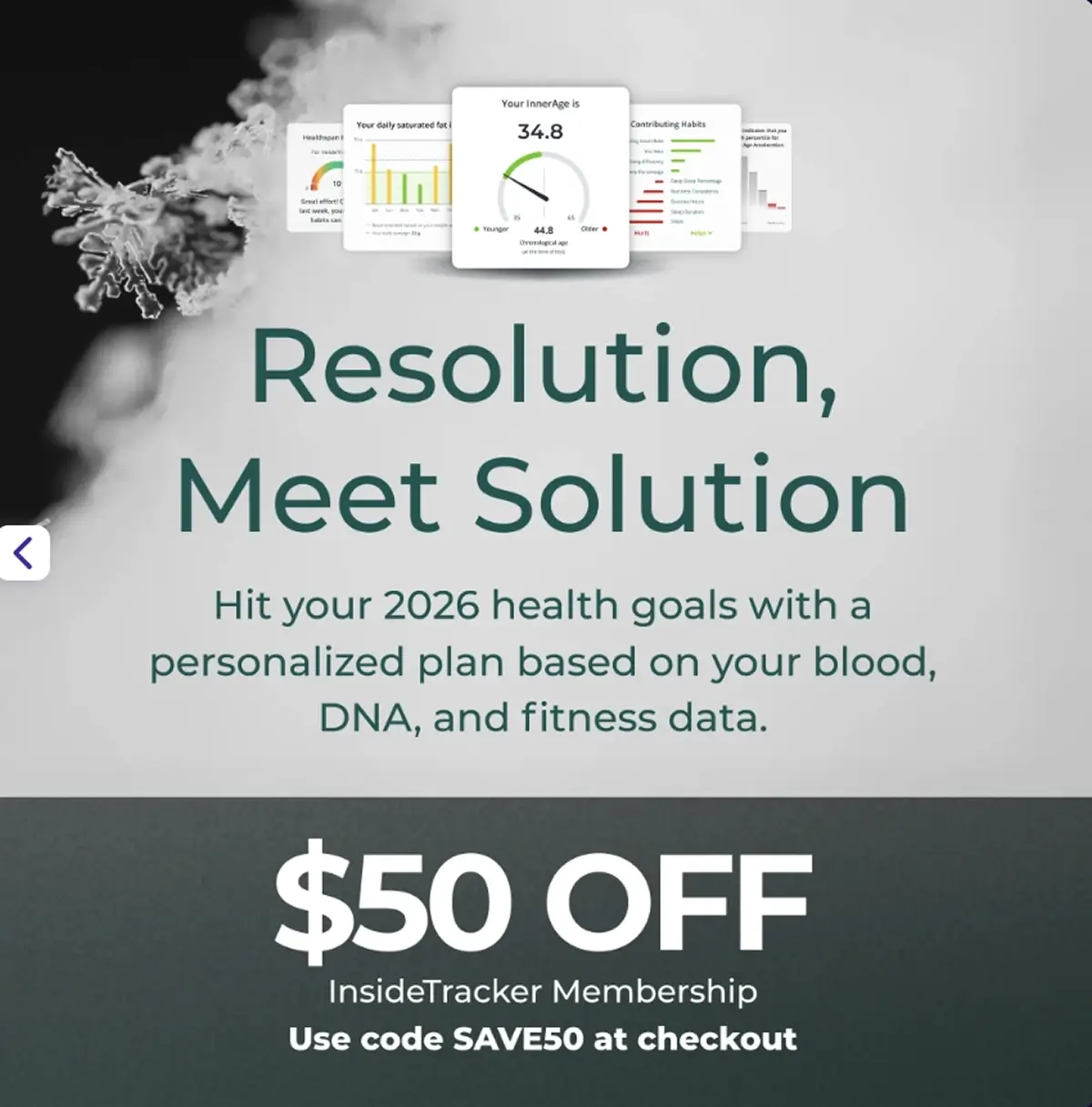
Biomarker ads from Vively and InsideTracker
A major unlock here is biomarkers, not as a marketing trick, but as the backbone of your story. Brands are increasingly using tracking as part of their content and even as an additional product layer, because it supports the process-and-time story without making medical promises.
We will not only have a watch that is looking at our biomarkers…We will accept in our body sensors that will give us real-time information about where we stand. – Pascal Houdayer, the CEO of Boiron
PRO TIP
Trend 3 - From influencers to interpreters
Longevity is too complex for endorsement alone. The space is full of uncertainty, trade-offs, and long time horizons and a smiling “this worked for me” often increases skepticism rather than reducing it.
That’s why the category is moving away from celebrity-style influencer persuasion and toward interpreters: clinicians, scientist-founders, and educators who can translate biology without overpromising.
This looks like the shift toward educator figures such as Peter Attia, clinician-voices like Mark Hyman, and scientist-founders who explain rather than sell (e.g., OneSkin’s co-founder, Carolina Reis Oliveira, PhD).
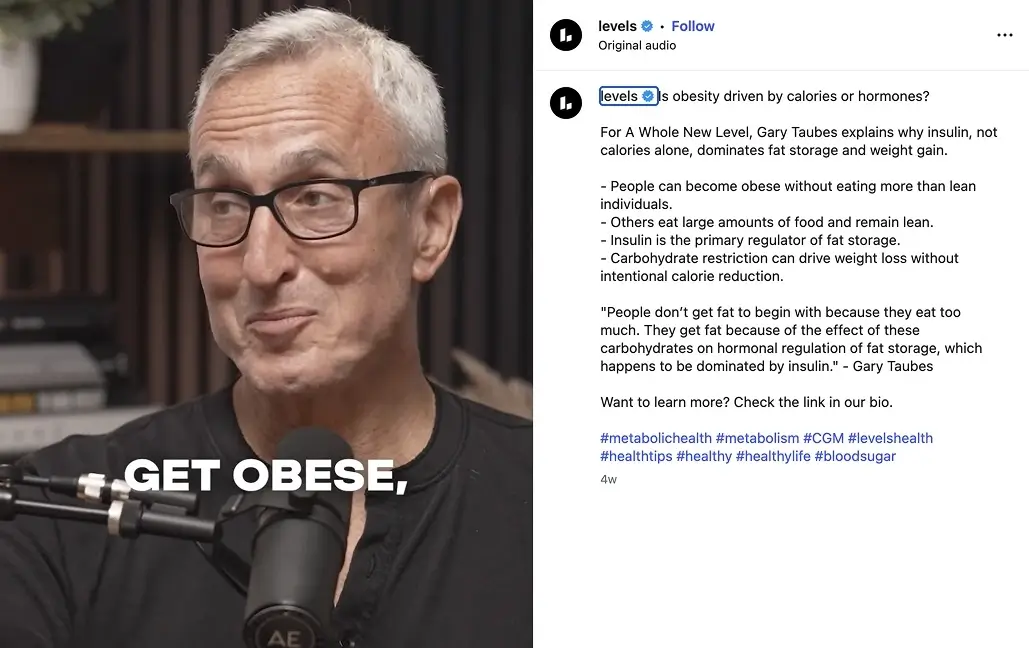
A podcast on nutrition science featuring an expert on Levels’ Instagram.
Evidence-based vs. Evidence-informed messaging
In longevity marketing, 90% of what you communicate can’t legally or scientifically be evidence-based, but 100% must be evidence-informed.
Evidence-based messaging is what you can state directly: approved claims or direct human outcome evidence, used most safely on packaging, product pages, and tightly controlled medical/expert channels, because it sits under strict regulatory regimes (e.g., EFSA/FDA-style scrutiny).
Evidence-informed messaging is how you responsibly build the narrative in public-facing marketing: it’s guided by biological logic, mechanism studies, and emerging research without asserting outcomes, and it typically lives in brand storytelling, educational content, social media, and email – using verbs like “supports”, “plays a role”, “involved in”, “associated with”, “enhance”, and “aligned with research.”
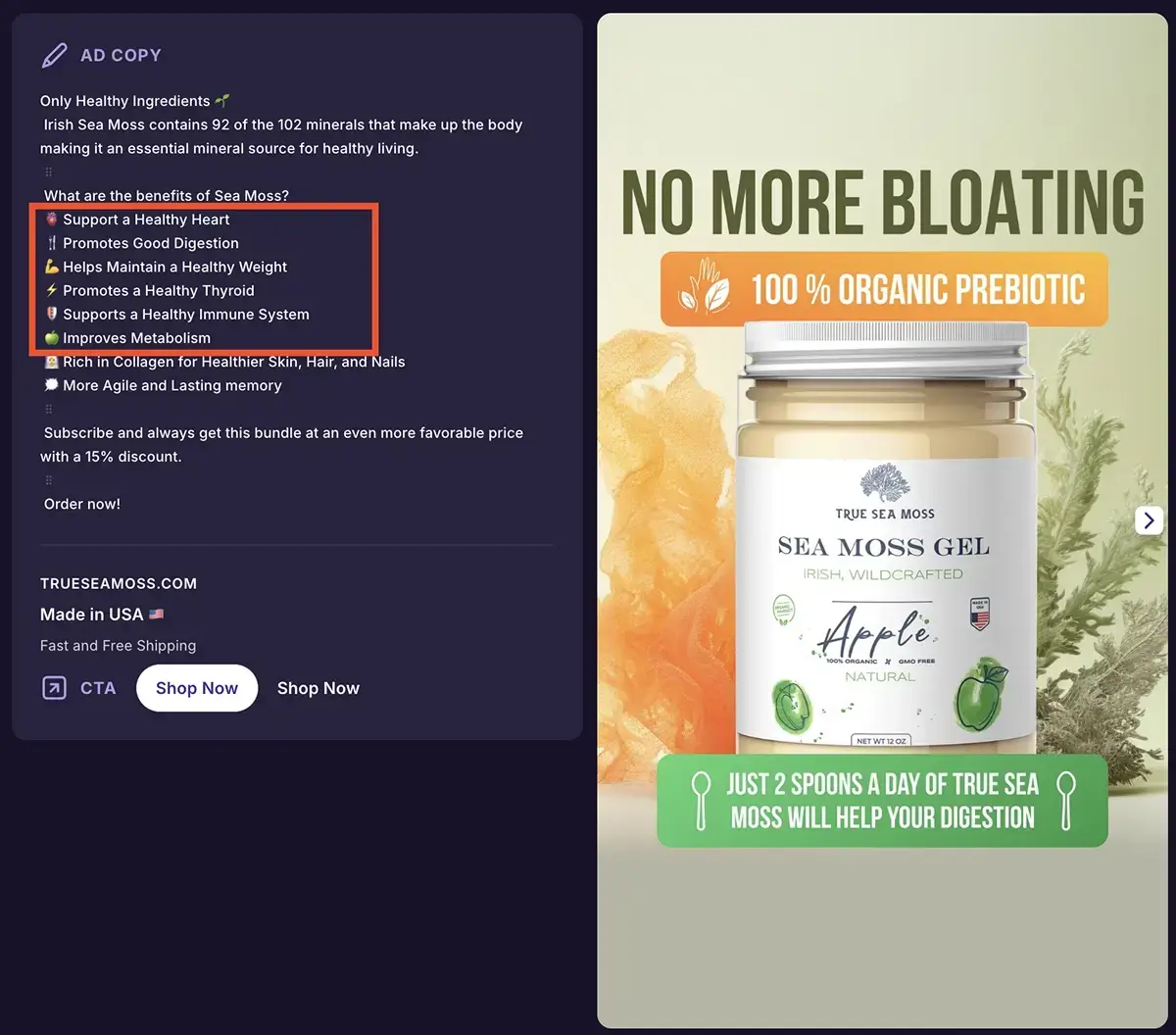
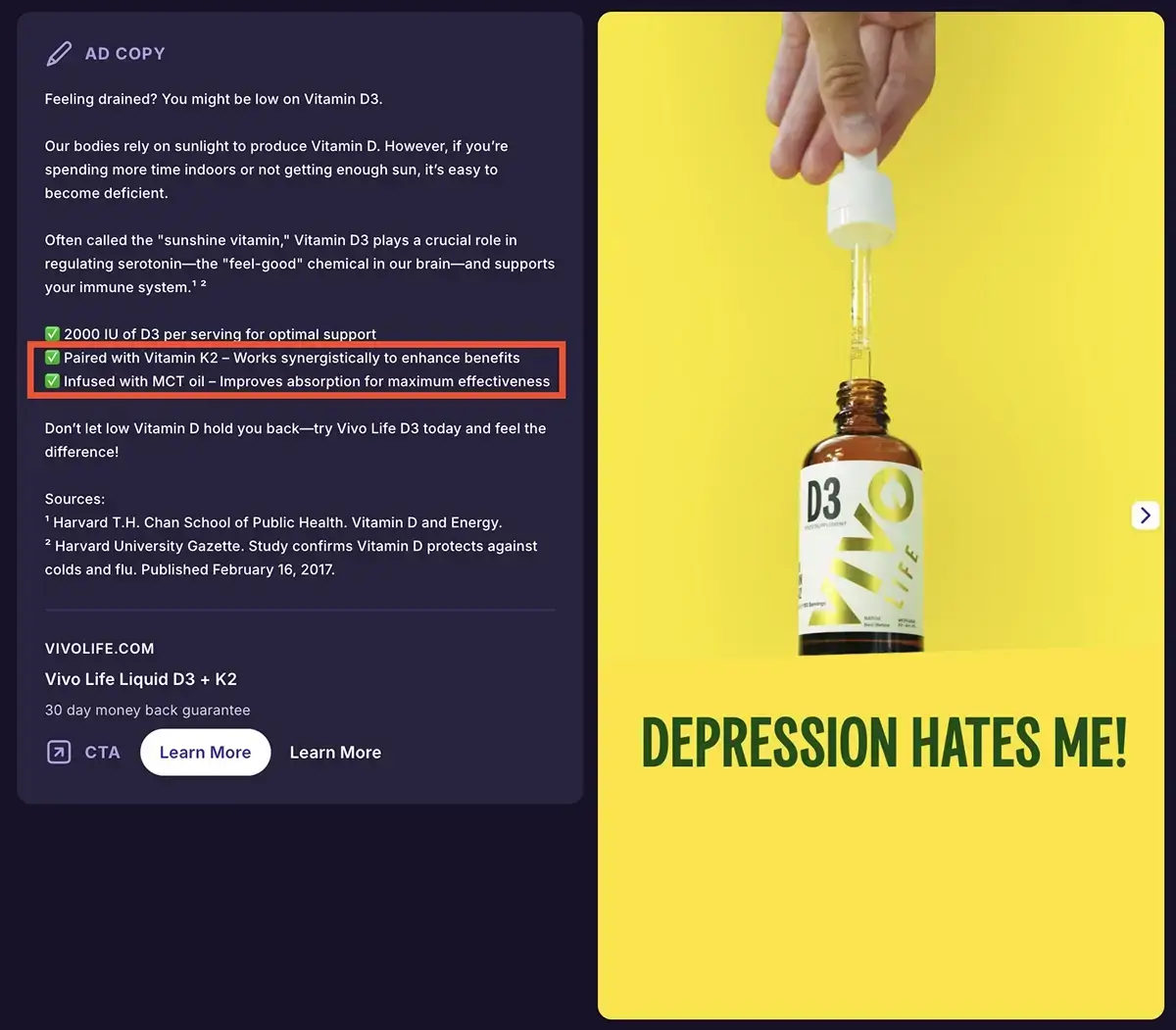
Evidence-informed copies in the ad creatives
The “danger zone” is when marketers blur the line, framing mechanisms as guaranteed outcomes, presenting animal data as human proof, or using “clinically proven” without specifying what was proven and how. Which is why a line like “Clinically proven anti-aging supplement that boosts NAD⁺ for longevity” is risky, while “Designed to support NAD⁺ biosynthesis, a pathway involved in cellular energy and metabolic health” stays persuasive and defensible.
What Fails and What Regulators Watch: The 4 Red Zones
In longevity, what fails is usually not “bad science”, it’s bad phrasing, because…
Regulators don’t react to intent, they react to wording.
The patterns that trigger scrutiny are remarkably predictable:





The 4 Red Zones of longevity marketing
OMNIPRESENCE™ Strategy
Longevity marketing (and now Meta Andromeda) doesn’t reward “one great ad.” It rewards repeated, consistent trust signals delivered in different formats, over time, because your audience is evaluating credibility, interpreting uncertainty, and calibrating expectations before they buy.
OMNIPRESENCE™ is the system that prevents random posting and replaces it with a repeatable content machine that turns one scientific narrative into many trust-building touchpoints, without drifting into hype or risky claims.
What OMNIPRESENCE™ is (and what it isn’t)
OMNIPRESENCE™ is not “be everywhere.” It’s “be consistently understood wherever you show up.” The operating system has two jobs:
- Teach one core mechanism story until the market associates you with it, and
- Express that story through a structured set of angles that match how people actually build confidence in longevity.
The reason it works is simple: in longevity marketing, your audience needs to hear the same truth from multiple directions before they feel safe enough to act.
Closing Remarks
Longevity marketing is about translating science responsibly into public understanding without turning mechanisms into guarantees, or complexity into confusion. The brands and clinics that win in this category won’t be the loudest; they’ll be the most disciplined, the most transparent, and the most patient.
Because in longevity, trust compounds faster than clicks ever will and that’s exactly why proof is the new hook.


