More than 95% of people who looked up a moisturizer picked one that claims hydration. 18% of them said dryness was their concern.
That is the whole problem of skincare ads in two numbers. The claim on the pack and the question in the buyer’s head are different sentences, and most ad accounts are built on the first one.
The figures come from Lóvi, an AI skincare assistant and product scanner that shared its Q3 2026 Beauty Trends report with us. Their data is behavioural, not surveyed, and published as anonymized, categorized, aggregated, sampled data: which products people check, which concerns they bring up with the Lóvi assistant (topics are tagged automatically, and nobody reads the messages), and whether they tap through to a store. It is app users, not a representative sample of all beauty consumers. It is also one of the closest looks the industry has at the moment before purchase, and read next to our own research on 1,000 top-performing beauty ads, it explains something we see in almost every audit: a creative library full of benefits the customer never mentioned.
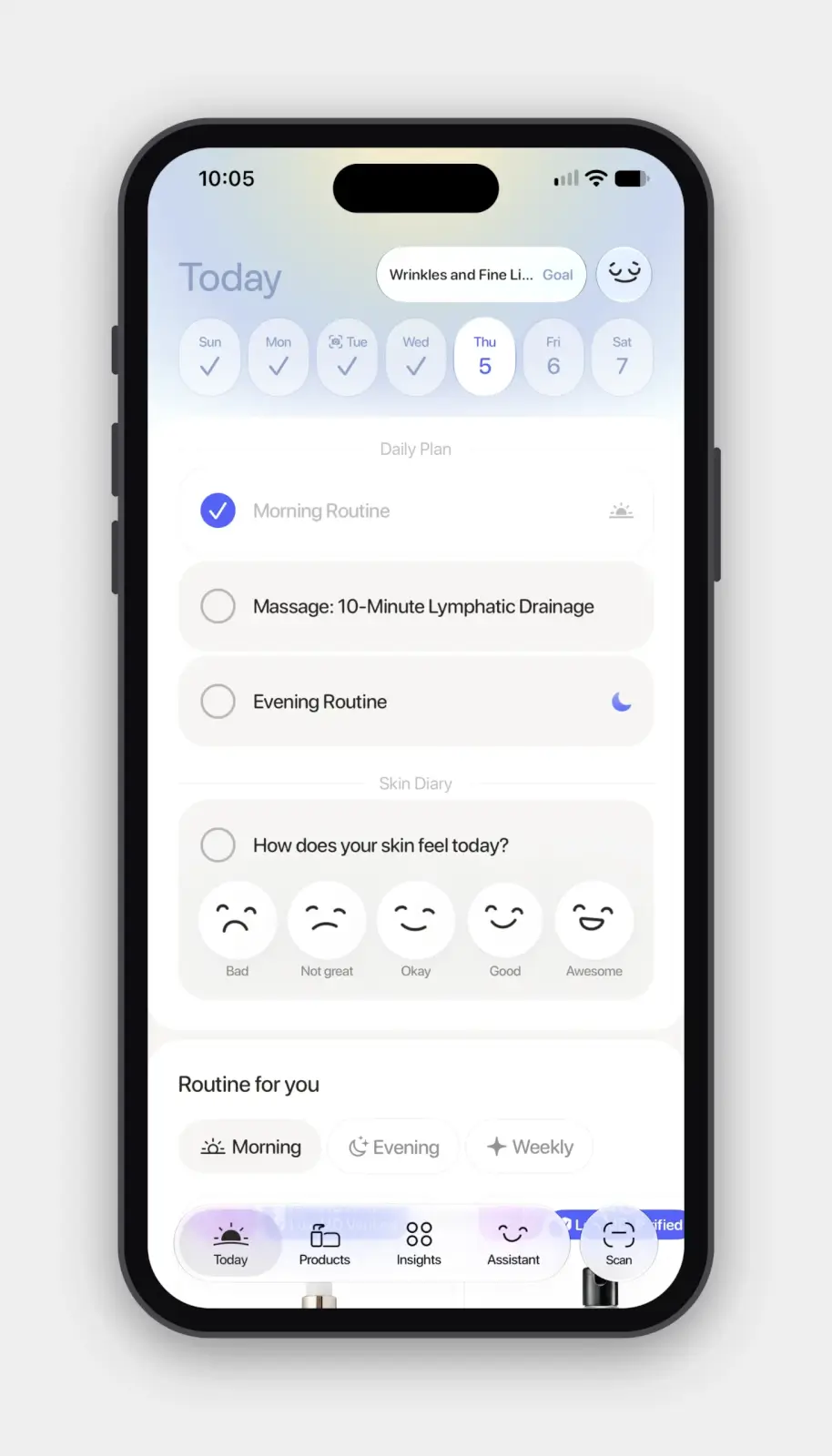
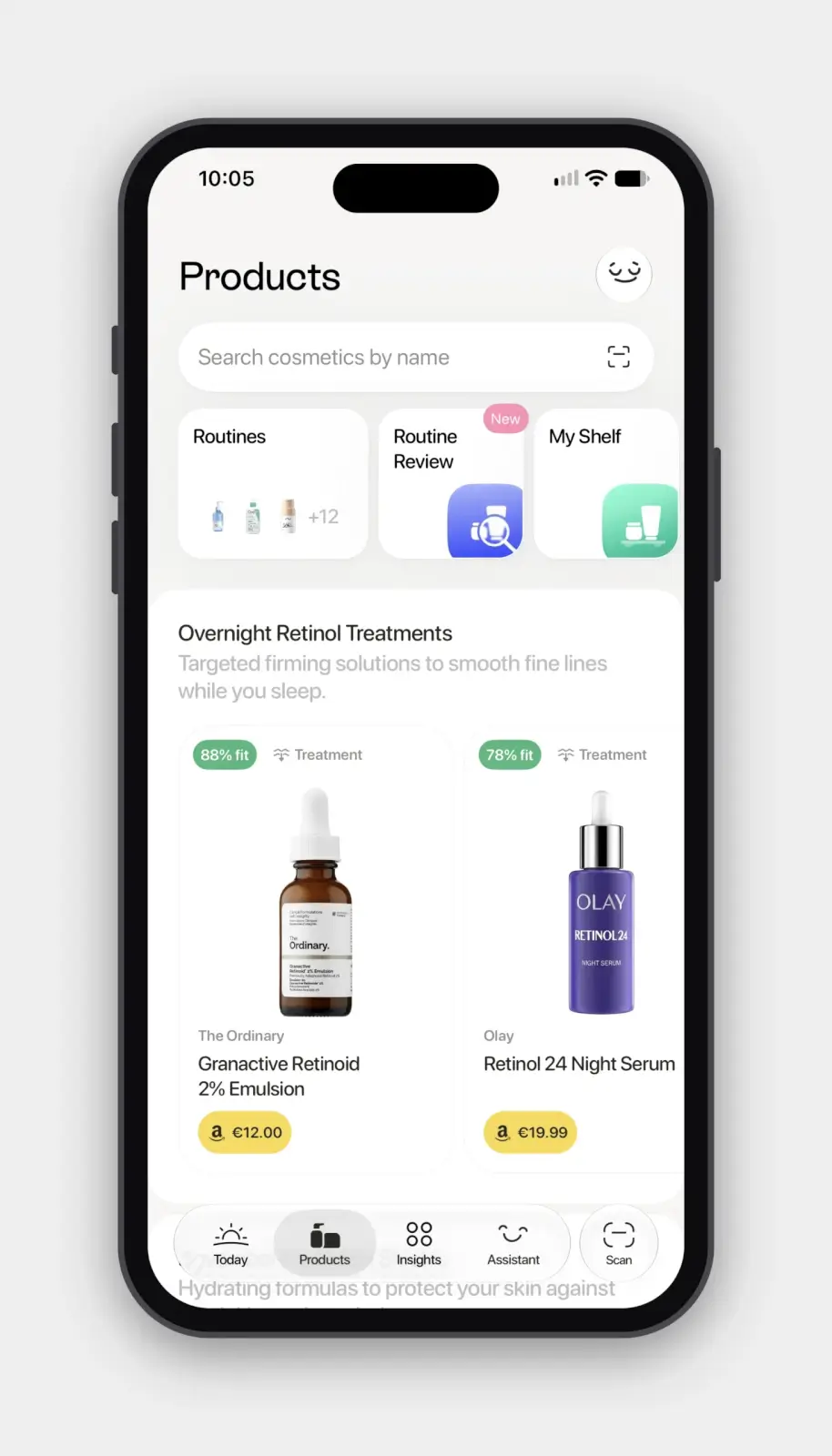
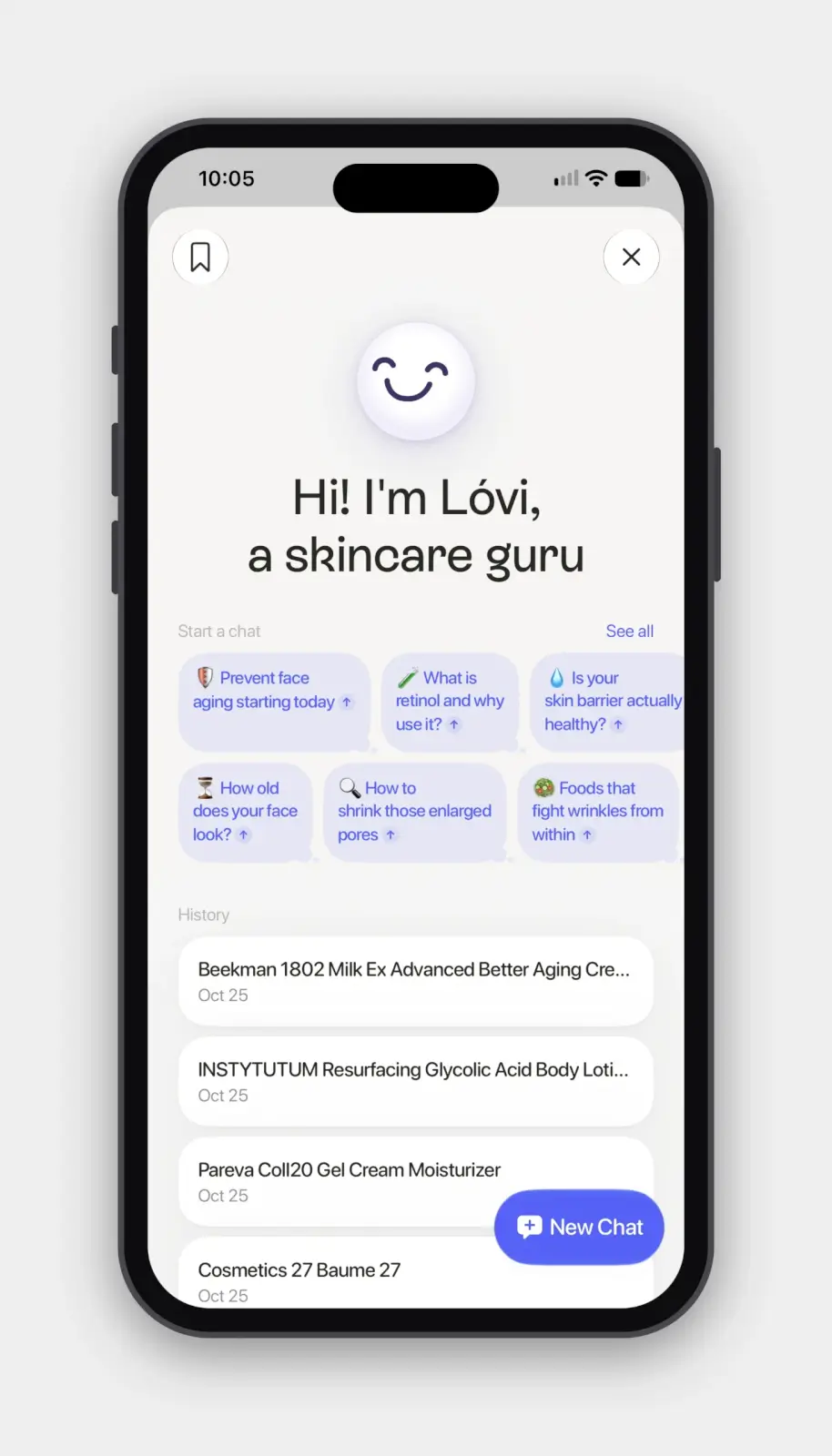
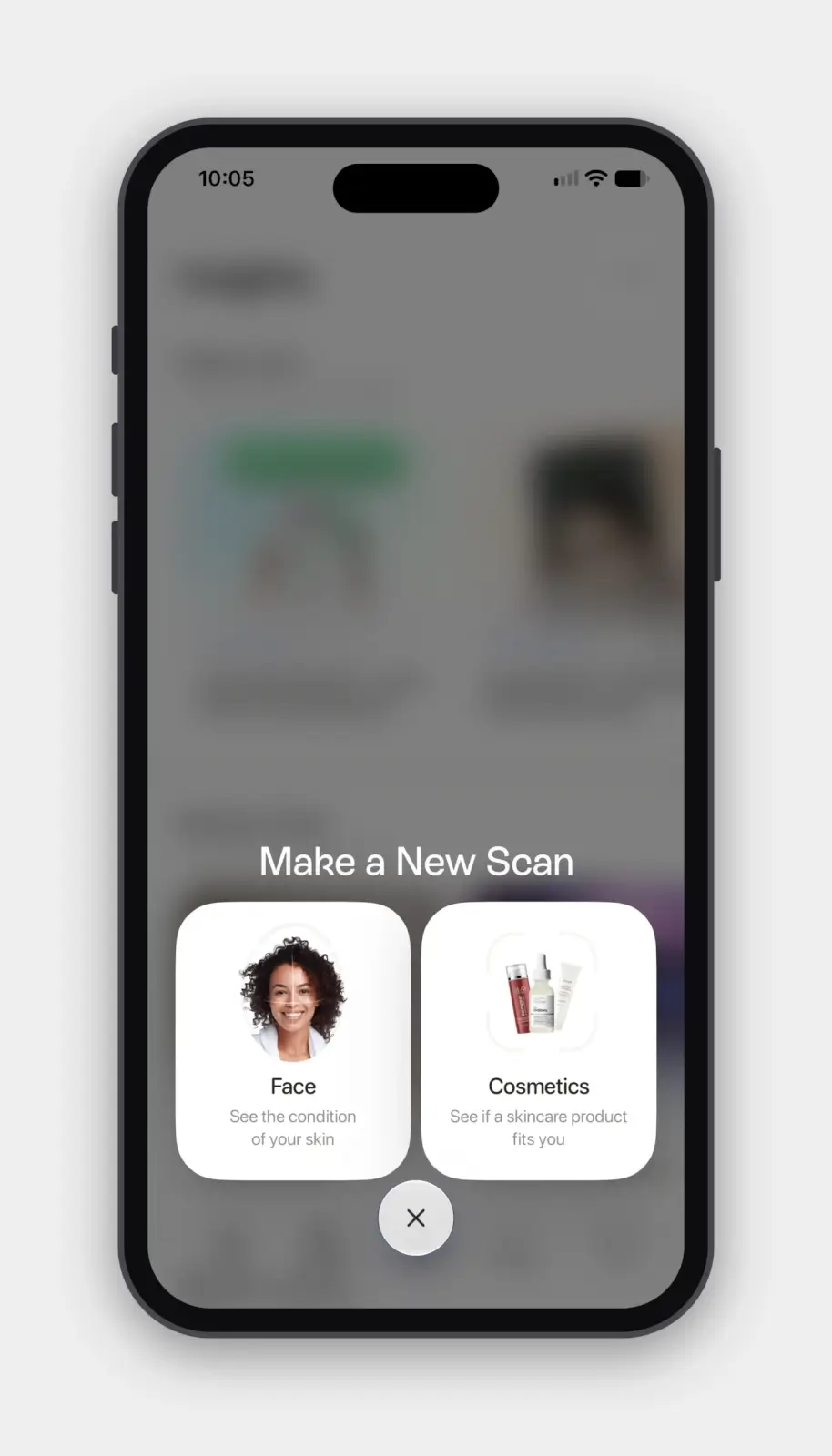
The Lóvi skin app interface
What The Shelf Claims
Take the 4 categories everyone sells. Lóvi compared the claims on the products people check against the concerns those same people brought up unprompted.
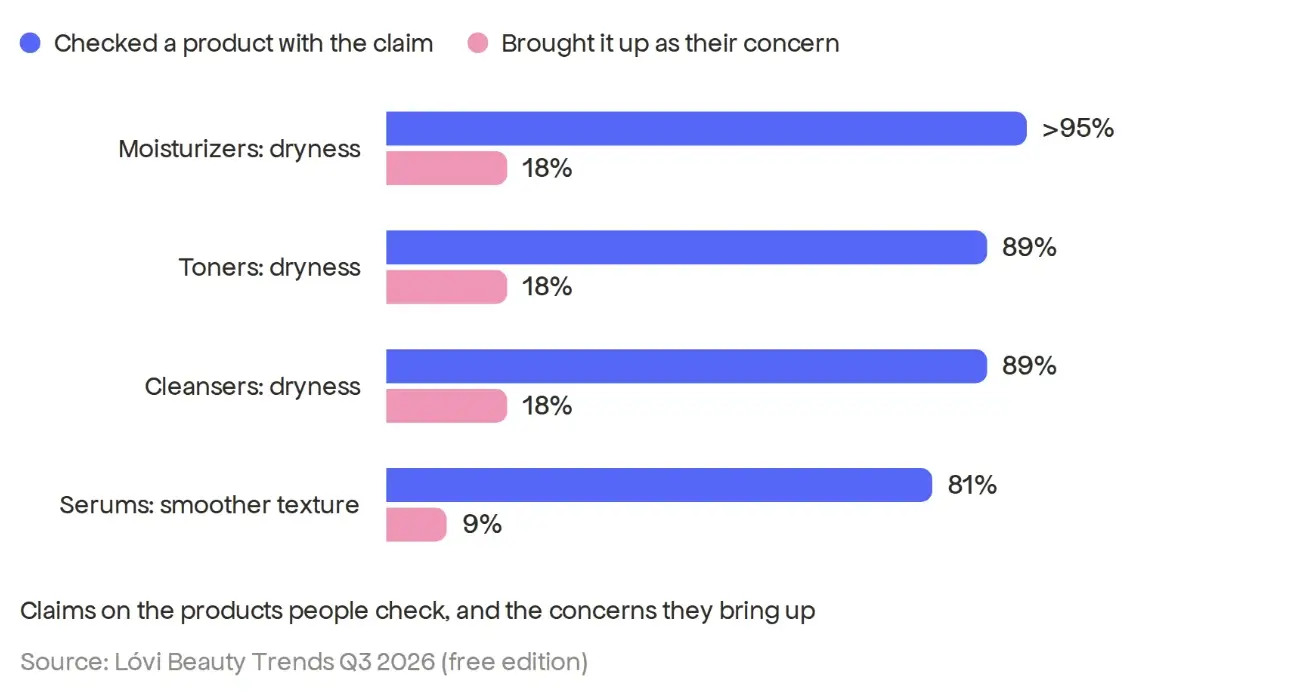
Nearly everyone who checks a moisturizer, cleanser or toner checks one that claims hydration (over 95%, 89% and 89%), and fewer than one in five of those people raise dryness. 81% of people who check serums check one that claims smoother texture, and 9% of them bring up rough texture.
Our own ad library shows the same habit from the brand side. Across 1000 top-performing beauty ads from 100 brands, “hydration” is the single most-used benefit word, ahead of glow, smooth, bright and plump. It is also the shortest-lived: ads built on it ran a median 13 days, against 21 for the rest of the set. Read the copy and you see why.
- “Hydrates, smooths, and plumps.”
- “Immediately hydrate skin.”
- “100 hours of deep hydration.”
The same sentence in six fonts. One brand relaunched its hydration ad five times in a year, and each version died faster than the last: 33 days, 30, 6, 3, 2.
Look at the ads that lasted and the vocabulary flips.
- “Stop settling for sticky, heavy night creams” ran 117 days.
- “Workouts = sweat (and sometimes breakouts)” ran 98.
- “Mighty Patch for Dark Spots,” 41.
None of them opens with a benefit; each opens with the kind of concern people bring up with Lóvi’s assistant. Even the hydration ads that survived did it by attaching hydration to a fear: “hydrate without the shine,” “zero tightness, without the dryness,” “no white cast.”
What People Ask For And Cannot Find
The mirror image is more useful.
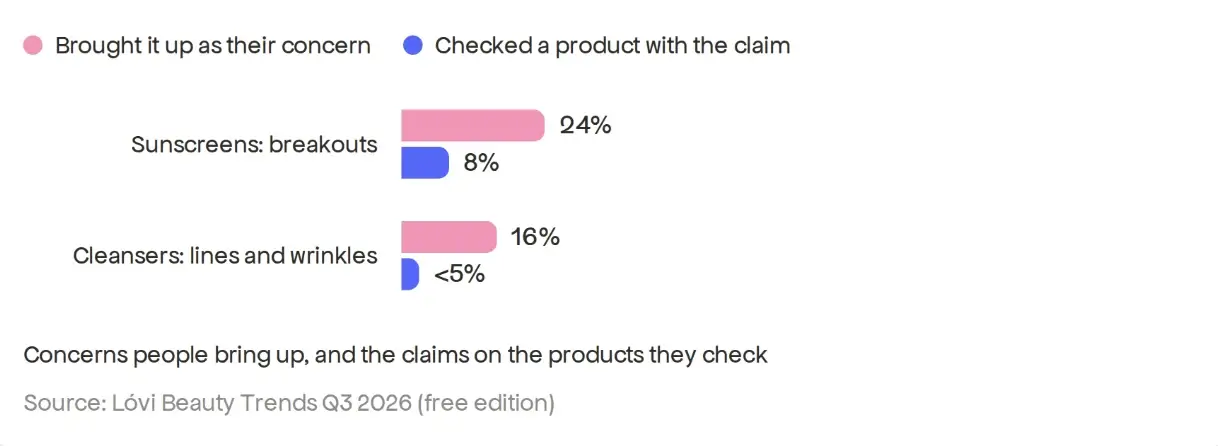
So the two datasets describe one mistake from both ends. On the shelf, more than 95% of people checking a moisturizer check one that says hydration, while 18% of them raise dryness. In the feed, skincare ads use a benefit word four times as often as a concern word, and in headlines it’s 32% against 7%. Hydration isn’t wrong, it’s crowded.
About a quarter (24%) of people who check sunscreens bring up breakouts. 8% check a sunscreen that claims to suit breakout-prone skin. Among people who check cleansers, one in six (16%) bring up lines and wrinkles, and fewer than 5% check a cleanser that claims to help with them.
Then the biggest gap of all.
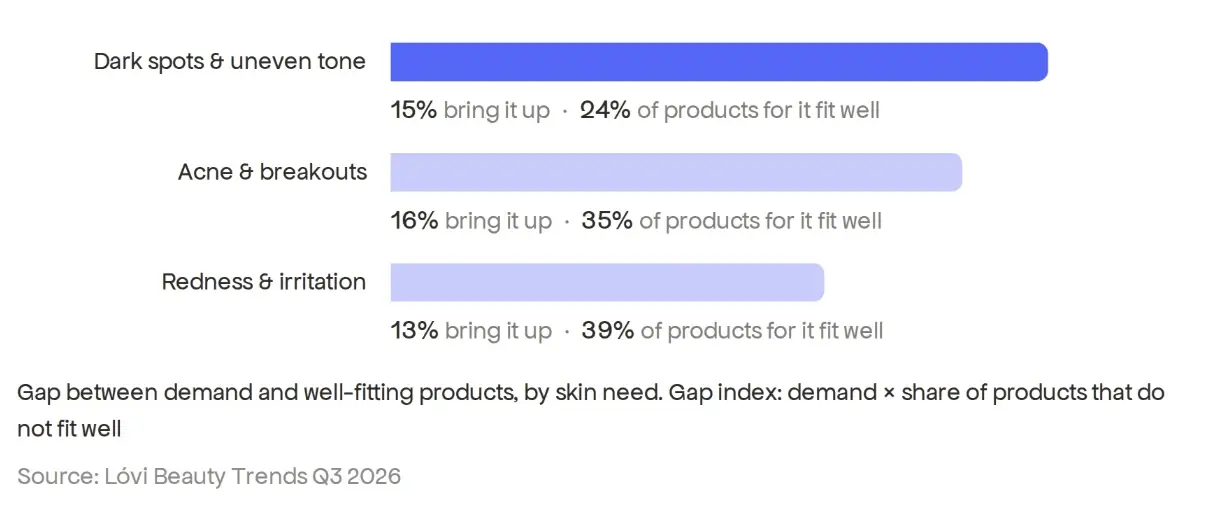
The biggest gap of all is dark spots and uneven skin tone. It’s one of the most common things people ask about, raised by 15% of everyone who types a question, and when Lóvi looks for products that would suit those people, only 24% fit them well. Lots of demand, few good answers. Pores and dryness are the next biggest gaps, at about half the size. Wrinkles and fine lines are near the bottom of the list: there are already plenty of products for them, and the gap got smaller again this quarter.
Read those two charts together and the creative brief writes itself. In the categories everyone uses, people bring up breakouts and lines far more often than the products they check claim to address them. The claims most products lead with are hydration and texture. A brand that moves its first line from the second list to the first is, on this data, talking to a crowd nobody else is addressing.
Needs Come In Sets. Products Come In Singles.
There is a second layer, and it matters for how you build an angle rather than which one you pick.
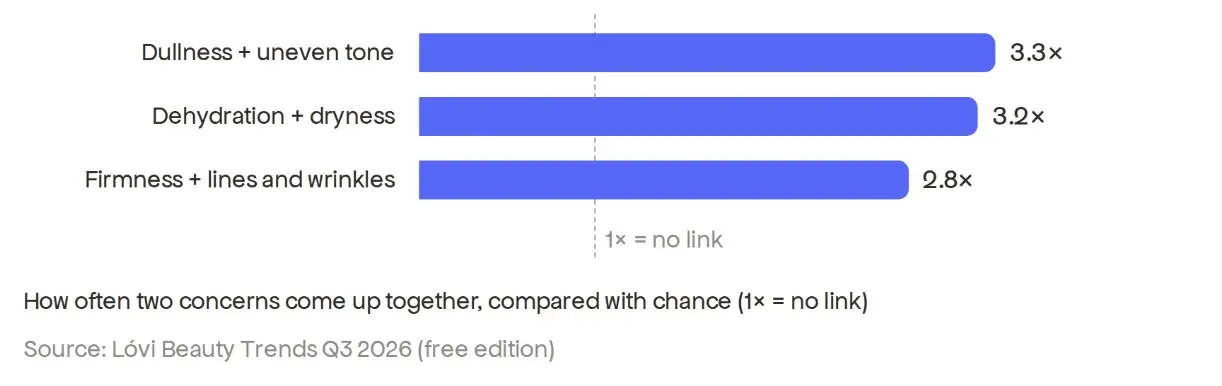
Someone who mentions dullness is 3.3 times as likely as chance to also mention uneven tone. Firmness travels with lines (2.8×), dryness with dehydration (3.2×). Even breakouts and redness, the weakest pair, come together more often than chance.
“People do not describe their skin as one problem. They describe a set.”
A single-claim ad meets one item on that list, and the buyer has to do the work of deciding whether the product covers the rest.
The shelf tells the same story. On average, 20% of the products a person checks have three or more key actives, and among people aged 45+ it is 23%.
Which brings us to the assumption hiding inside most claims.
The Age Assumption Inside The Claim
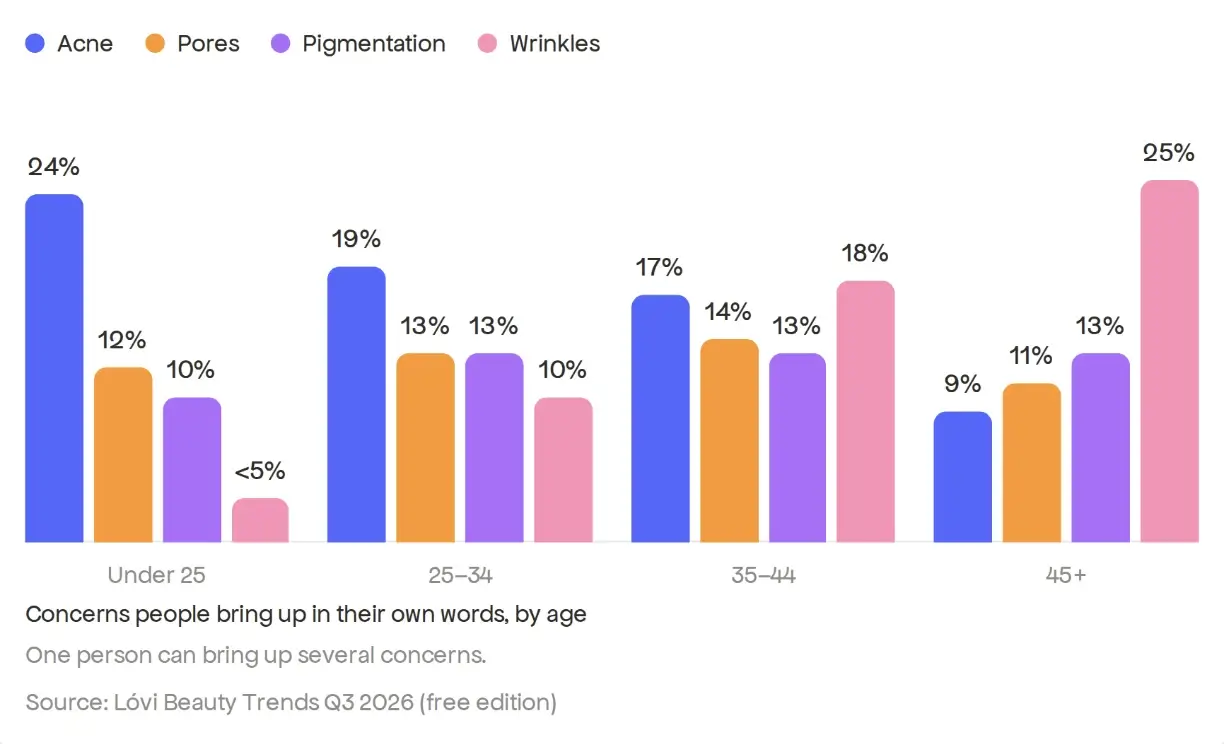
Acne is raised by 24% of under-25s who type to the assistant, by 19% of 25–34s, and by 17% of 35–44s. Wrinkles at 35–44: 18%. The two concerns are level in the band every “anti-ageing” campaign is built for, and 75% of 25–34 scanners scanned a product with a blemish claim.
In these age bands, concerns about ageing do not replace breakouts: at 35–44 people bring up both about equally often. The shift with age is real, but it is slower than age targeting assumes, and a creative set that switches from “breakouts” to “fine lines” at the 35 mark leaves out the people in that age band who still bring up breakouts.
This is where the Lóvi data and the Meta data say the same thing from opposite directions. Lóvi shows who is in the room: at 35–44, as many people raise acne as raise wrinkles.
Meta shows who gets reached: since Andromeda, the audience settings matter less than the signals in the creative, so broad targeting plus the right hook finds the right person, and the wrong hook finds the wrong one. If the hook says “fine lines,” the algorithm finds the people who respond to fine lines and nobody else. The 35–44 customers with breakouts are in the broad audience, Lóvi data shows they are there in numbers, and they never see an ad that is about them.
The Ad Side Of The Same Gap
We studied 1,000 top-performing ads from 100 beauty brands to see which opening lines keep an ad running. An ad that keeps running is an ad that keeps working, because brands switch off the ones that don’t.
Here’s how the different openings compare. The numbers are the chance an ad is still live after 54 days:
- Average ad: 25%
- Opens with a bold claim (“hydrates, smooths and plumps”): 27%, barely above average
- Opens with a problem callout (the buyer’s own worry, in her words): 32%
- Problem callout on video: 50%, though this is from a small number of ads
- Share of ads that use a problem callout: 5.8%
So the opening line with the best odds is the one almost nobody uses. And the shelf data tells you what those lines should talk about: breakouts, pores, dark spots, dullness and uneven tone. Not hydration.
Lóvi and Evolut have built these datasets, for two different reasons, and they point to the same instruction.
One honest caveat. The Lóvi numbers show what people bring up and check, not what they buy; a store tap means interest, not an order. Our numbers show how long an ad survives, which hints at performance but isn’t proof of it. Neither one promises that a “breakout-safe sunscreen” angle will beat your best ad today. What they do show is that almost none of your competitors have tried it, and the demand is sitting there unanswered.
Diagnosis: 3 Questions For Your Current Creative Set
Before the next batch, open your ad library and your product pages and answer three questions.
1. Does any hook name a concern in the buyer’s language?
Not “hydrating,” not “brightening,” not “barrier support.”
- Breakouts after a new product.
- Dark spots that will not fade.
- Pores that show through foundation.
If every headline is a benefit the formula delivers, you are competing on the 95% claim.
2. Does any angle pair two concerns?
The sets are known:
- dullness with uneven tone,
- firmness with lines,
- dryness with dehydration,
- breakouts with oil control.
One concept per batch should speak to a pair, and the product page should show which steps in the routine the product covers and which it does not. Multi-need framing earns nothing if the page cannot back it up.
3. Does the 35+ creative acknowledge breakouts?
If the brand sells to 30–50 and every creative in that segment is about lines, the test is cheap: one problem-callout concept on adult breakouts, broad targeting, same spend as the rest of the batch.
How To Build The Next Batch From Raised Concerns, Not Claimed Benefits



Hydration goes in. It just does not go first.
What is the concern your customers raise most that your ads never mention?